



Active surface area is an important value when specifying an MMO titanium anode. It is used when checking current density, comparing anode designs, and reviewing some coating requirements.
The calculation looks simple: current is divided by area. The difficult part is deciding which area should be used. A flat plate, a tube, and an expanded titanium mesh have different surface geometries. The area basis should therefore be clear before a current density or quotation is compared.
For practical purchasing and manufacturing discussions, active area usually refers to the coated geometric surface that is exposed to the electrolyte and intended to carry current. If a project specification defines the area in another way, that definition should be followed.

1. Define the Active Area Before Doing the Calculation
The overall size of an anode is not always the same as its active surface area.
For calculation purposes, include the coated surfaces that are exposed to the electrolyte and intended to operate as the anode. Areas covered by fixtures, gaskets, clamps, or other insulating parts are normally excluded if they do not take part in the reaction. Uncoated connection sections and areas outside the electrolyte should also be reviewed separately.
The number of working faces matters. A plate coated on both sides and exposed on both sides has more active geometric area than the same plate with only one working face.
It is also useful to distinguish geometric active area from electrochemically active surface area (ECSA). ECSA is a separate electrochemical measurement concept. It cannot be obtained simply by measuring the outside dimensions of a plate or mesh. In most product drawings and quotation discussions, the area basis should be stated as the exposed coated geometric area unless the project specifically requires another method.
2. Calculate the Area of a Flat Plate Anode
For a rectangular plate, the basic calculation is:
Active area = Width × Active length × Number of exposed coated faces
All dimensions should be converted to metres before calculating the area in square metres.
For example, consider a plate with an active width of 100 mm and an active length of 200 mm.
One exposed coated face:
0.1 m × 0.2 m = 0.02 m²
Two exposed coated faces:
0.1 m × 0.2 m × 2 = 0.04 m²
The second result applies only when both faces are coated, exposed to the electrolyte, and intended to work. If one side is against an insulating support or is not part of the active zone, it should not automatically be counted.
Edges can be included when they are coated, exposed, and included in the agreed calculation basis. For many plate designs, the main face area is used, but the drawing or technical specification should make the convention clear.

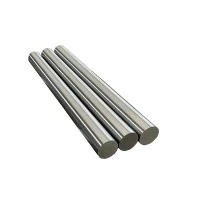
3. Calculate the Area of a Tubular Anode
For a tubular anode, the outer cylindrical surface is calculated using:
Outer active area = π × Outside diameter × Active length
For example, a tube with an outside diameter of 20 mm and an active length of 500 mm has an outer surface area of:
3.1416 × 0.02 m × 0.5 m = approximately 0.0314 m²
This calculation uses the active coated length, not necessarily the full tube length. Uncoated ends, connection sections, and portions covered by holders should be excluded where they are outside the active zone.
If the inside surface is also coated and exposed to the electrolyte, it may need to be counted separately:
Inner active area = π × Inside diameter × Active length
The inner and outer areas can then be added, provided both surfaces are part of the intended working area. This point should be confirmed from the product drawing and the actual cell arrangement.
4. Why Mesh Anodes Need a Different Calculation
Mesh anodes are more difficult to calculate because the visible footprint does not show the full titanium surface.
Three area terms may appear in a mesh drawing or discussion:
- Projected area: The overall width multiplied by the overall length of the mesh panel.
- Open area: The space between the titanium strands.
- Developed strand surface area: The actual exposed surface of the titanium strands, including their broad faces and edges.
These values are not interchangeable. The projected area describes the panel size. The openings are not titanium surface. The developed surface follows the shape and dimensions of the strands.
For an expanded mesh, the calculation should consider the strand width, strand thickness, strand length, opening dimensions, and expansion pattern.
As a first estimate, the exposed perimeter of a strand cross-section can be multiplied by the total exposed strand length. For a simple rectangular strand, that perimeter is approximately:
2 × (Strand width + Strand thickness)
This is only an estimate; junctions and the actual expanded geometry should be handled in the final calculation. The exact area should follow the mesh drawing, a CAD model, or a documented supplier method.
For this reason, multiplying the mesh panel's length by its width and then by two is not a reliable universal method. Different mesh patterns can have different developed surface areas even when their overall dimensions are similar.
When requesting a quotation for an MMO mesh anode, provide the mesh drawing or the strand and opening dimensions. This gives the supplier a basis for calculating the area rather than relying only on the panel footprint.
5. Use the Area to Calculate Current Density
Once the active area has been defined, current density can be calculated as:
Current density (A/m²) = Operating current (A) ÷ Active area (m²)
For example, if an anode operates at 10 A and its agreed active area is 0.04 m²:
10 A ÷ 0.04 m² = 250 A/m²
If the same plate were incorrectly calculated using only one face, the area would be 0.02 m² and the calculated current density would be 500 A/m². The operating current has not changed. Only the area basis has changed.
This is why the area definition matters when comparing technical offers or checking an anode design. A current-density value is meaningful only when the current and the area denominator are both clear.
Some project documents state current density against projected area, while others use exposed coated geometric area. Both conventions may appear in technical discussions, but they describe different bases. Do not compare the values directly unless the area denominator is the same.
The calculated current density should not be treated as a universal performance rating. Suitable operating conditions depend on the MMO coating system, electrolyte, temperature, flow, gas release, duty cycle, and the anode design. The required operating range should be confirmed for the actual application.

6. Information to Confirm Before Ordering
To avoid different area calculations between the buyer and supplier, the following details should be confirmed before production:
- Anode type: Plate, tube, expanded mesh, or another shape.
- Overall dimensions: Width, length, diameter, and thickness where relevant.
- Active zone: The coated and exposed working length or area.
- Working faces: One side, both sides, or inner and outer surfaces.
- Inactive sections: Connection ends, clamping areas, masked zones, and portions outside the electrolyte.
- Mesh details: Strand width, strand thickness, opening size, and mesh pattern.
- Operating conditions: Current, electrolyte, temperature, and duty cycle.
- Calculation basis: Projected area, exposed coated geometric area, or another project-defined area method.
For custom anodes, a drawing with the active zone marked is often the simplest way to avoid misunderstanding. The quotation or technical confirmation should also state the calculated area and the basis used.
Frequently Asked Questions
Q1: Should both sides of an MMO titanium plate be counted?
A: Count both sides when both are coated, exposed to the electrolyte, and intended to carry current. If one side is covered, masked, or outside the active zone, it should not automatically be included.
Q2: Is projected area the same as active surface area?
A: No. Projected area is based on the panel's outside dimensions. Active surface area is based on the coated surface that is exposed and intended to work. The difference is especially important for expanded mesh.
Q3: How is the active area of an MMO tubular anode calculated?
A: For the outer surface, use π × outside diameter × active length. If the inner surface is also coated and active, calculate it separately using the inside diameter and add it to the total.
Q4: Can mesh area be calculated from the opening size alone?
A: No. Opening size is only one part of the mesh geometry. Strand width, thickness, total strand length, and expansion pattern also affect the developed surface area.
Q5: Does a larger active area always mean better anode performance?
A: Not by itself. The area must match the required current, coating system, electrolyte, and operating conditions. A larger area may reduce the calculated average current density at the same current, but it does not guarantee better performance in every cell design.
Q6: What area should be used when comparing supplier quotations?
A: Use the same agreed area basis for each offer. Ask each supplier to state whether the figure is based on projected area, exposed coated geometric area, or another defined method. This is particularly important when comparing mesh anodes.
Contact ZXB
If you are selecting or sourcing custom MMO titanium anodes, send ZXB your drawing, anode dimensions, substrate form, and operating conditions. The team can review the required structure and clarify the active-area basis before quotation.
Email: jack@zxb-titanium.com
Recommended Reading
How Does Titanium Substrate Preparation Affect MMO Anode Quality?