


Titanium Anode for PCB
Your Leading Titanium Anode for PCB Supplier
Founded in 2010, Baoji Zhongxinbao Metal Materials Co., Ltd. is a professional manufacturer and exporter of titanium products, located in Baoji, China's "Titanium Valley." We specialize in titanium bars, plates, tubes, and MMO anodes. Titanium Anode for PCB helps reduce energy consumption by 25% compared to conventional anodes while ensuring stable current distribution and consistent quality in high-load copper recovery systems. Adopted by top PCB manufacturers for efficient waste copper recovery from etching solutions.


Why Choose Us
Rich Experience
With over 15 years of titanium manufacturing experience in Baoji, we supply a full range of industrial-grade titanium materials tailored to demanding environments.
Advanced Equipment
Our facility is equipped with over 30 key production and testing machines, ensuring consistent product performance and long-term durability.
Professional Team
Our team collaborates regularly with clients in the aerospace, medical, and chemical industries to meet exacting tolerances, specialized alloy requirements, and accelerated lead time expectations.
Custom Service
We specialize in delivering customized titanium alloy solutions tailored to the needs of demanding industries, and we support OEM/ODM production based on technical drawings.
Types of Titanium Anode for PCB
Titanium Anode for Vertical Continuous Plating
Field-proven in 7 automotive connector lines (2021-2023) with 99.2% thickness uniformity, the Titanium Anode For Vertical Continuous Plating supports stable, high-efficiency plating while reducing edge buildup by 35% compared to conventional anodes.
Titanium Anode for Reverse Pulse Copper Plating
Titanium Anode for Reverse Pulse Plating is designed specifically for high-frequency and high-load reverse pulse copper plating in automotive and electronic component lines.

PCB Electroplating Etching Solution Titanium Anode
The PCB Electroplating Etching Solution Titanium Anode delivers 98.5% copper recovery (IPC-4552B-2021) with ±3% plating uniformity in 8:1 vias while reducing sludge by 40% in acidic etching baths.
Titanium Anode for Copper Plating
When your copper plating line suffers from uneven through-hole deposition, rapid anode decay under reverse pulse cycles, or mismatched electrode layout with automation tanks, the Titanium Anode For Copper Plating offers a proven technical upgrade.
Parameters of Titanium Anode for PCB
|
Specification |
Typical Value |
|
Substrate |
Grade 1 Titanium (ASTM B265) |
|
Coating |
Ir-Ru MMO or 99.95% Pt |
|
Coating Thickness |
5–15 μm (per ASTM B487) |
|
Current Density |
100–250 A/m² |
|
Operating Voltage |
1.5–2.5 V |
|
Anode Lifetime |
≥16,000 A·h |
|
Operating Temperature |
20–50°C |
|
Cathodic Efficiency |
≥22% cathodic efficiency (Ford Lab STD-4632 Rev.D) |
Features of Titanium Anode for PCB

- The electrode size is relatively stable, and the distance between the electrodes will not change during the electrolysis process, ensuring that the electrolysis operation is carried out under the condition that the cell voltage is stable;
- High catalytic activity and low operating voltage;
- The working voltage is low, so the power consumption is small, and the DC power consumption can be reduced by 10%—20 %;
- Titanium anodes have a long working life. Metal anodes in the Chlor-alkali industry produced by the diaphragm method are resistant to chlorine and alkali corrosion. The life of the anode has reached more than 5 to 7 years, while the graphite anode is only 8 months;
- It can overcome the dissolution problem of graphite anode and lead anode, and avoid the pollution of electrolyte and cathode products, thus greatly improving the purity of metal products;
- It can improve the current density and increase the electrolysis efficiency;
- The oxides of noble metals iridium and ruthenium have oxidation resistance, so titanium electrodes have strong corrosion resistance;
- It can avoid the short circuit problem after the deformation of the lead anode, so as to improve the work efficiency;
- Titanium electrodes are light in weight, which can reduce labor intensity compared with graphite anodes and lead anodes;
- Under the premise of no damage, the substrate can be used repeatedly.
Customization Options
| Material grade | Customizable |
| Multi-process integration | Rolling, forging, CNC, surface treatment |
| Custom labeling | Customizable |
| Export packaging | Customizable |
| Part traceability | Customizable |
| Size | Customizable |
| Delivery Time | 7-12 days |
| MOQ | Customizable |
Things to Note When Working with Titanium Anode for PCB
Current Density Control
Ensure the current density stays within the recommended range (typically 200- 500 A/m2) to avoid excessive consumption of the coating or overheating.
01
Avoid Dry Run & Aeration
Never allow the anode to operate without liquid. Ensure the electrolyte level is always above the anode to prevent coating damage.
02
Periodic Cleaning
Regular cleaning with diluted acid or ultrasonic cleaning is recommended to remove any build-up or contaminants. Avoid abrasive cleaning methods.
03
Proper Electrolyte Compatibility
Select the appropriate MMO coating composition (e.g., Ir-Ru or Ir-Tl) based on the chemical nature of the electrolyte for better performance and longevity.
04
Avoid Short Circuits & Reverse Polarity
Titanium anodes are sensitive to incorrect polarity, which can cause rapid degradation of the electrode.
05
Our Service Advantages
12-Month Warranty
24-Hour Technical Response
Remote Setup Support
Tank-Specific Design Review
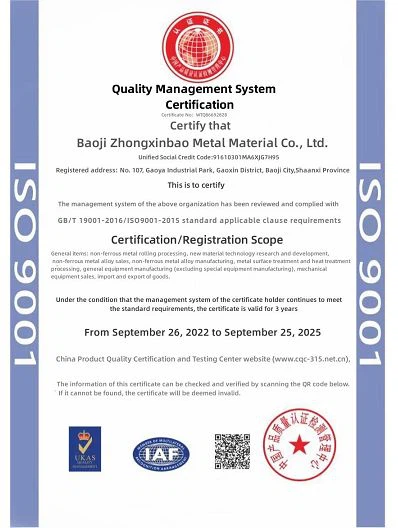
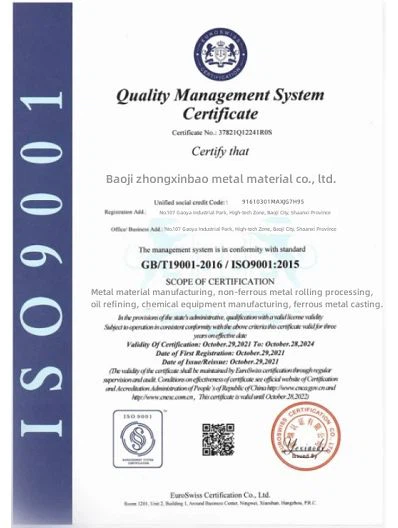
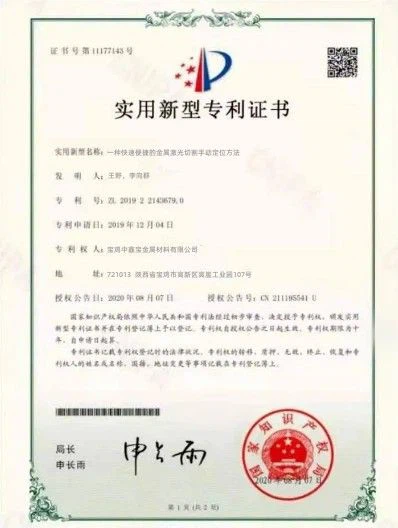
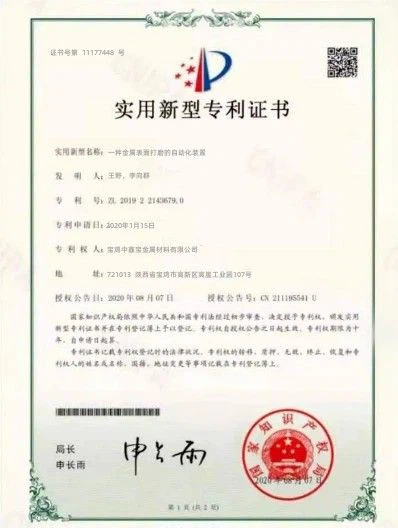
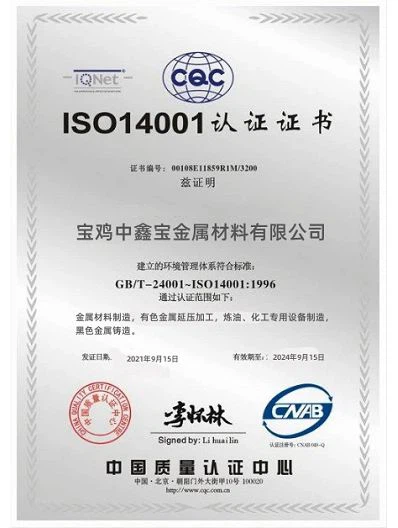
Certificate
Packaging & Shipping
|
Packaging |
Wrapped by proctective film; |
|
Packed by standard import & export wooden cases or carton boxes. |

FAQ
As one of the most professional titanium anode for pcb manufacturers and suppliers in China, we're featured by quality products and good price. Welcome to buy titanium anode for pcb for sale here and get pricelist from our factory. Also, customized service is available.
PCB Electroplating Etching Solution Titanium Anode, Titanium Anode For Vertical Continuous Plating, Titanium Anode For Copper Plating