


Titanium Anode for Cathodic Protection
Your Leading Titanium Anode for Cathodic Protection Supplier
Founded in 2010, Baoji Zhongxinbao Metal Materials Co., Ltd. is a professional manufacturer and exporter of titanium products, located in Baoji, China's "Titanium Valley." We specialize in titanium bars, plates, tubes, and MMO anodes. With an in-house production facility and rich export experience, our products meet ASTM, ASME standards and are exported to over 30 countries worldwide. Titanium Anode for Cathodic Protection, are widely used in the Cathodic Protection industry in applications using Impressed Current systems (ICCP), our customers use them for protecting rebars in reinforced concrete as well as metal structures and pipelines in the Oil&Gas and other industries.


Why Choose Us
Rich Experience
With over 15 years of titanium manufacturing experience in Baoji, we supply a full range of industrial-grade titanium materials tailored to demanding environments.
Advanced Equipment
Our facility is equipped with over 30 key production and testing machines, ensuring consistent product performance and long-term durability.
Professional Team
Our team collaborates regularly with clients in the aerospace, medical, and chemical industries to meet exacting tolerances, specialized alloy requirements, and accelerated lead time expectations.
Custom Service
We specialize in delivering customized titanium alloy solutions tailored to the needs of demanding industries, and we support OEM/ODM production based on technical drawings.
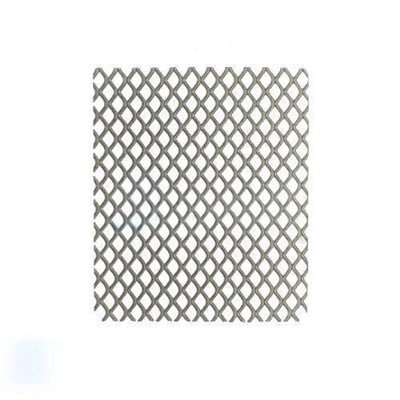
Types of Titanium Anode for Cathodic Protection
Lead Dioxide Titanium Anode
Lead Dioxide Titanium Anode delivers stable performance and extended anode lifetime for the electroplating industry, ensuring precise coating thickness in hard chrome and functional plating.
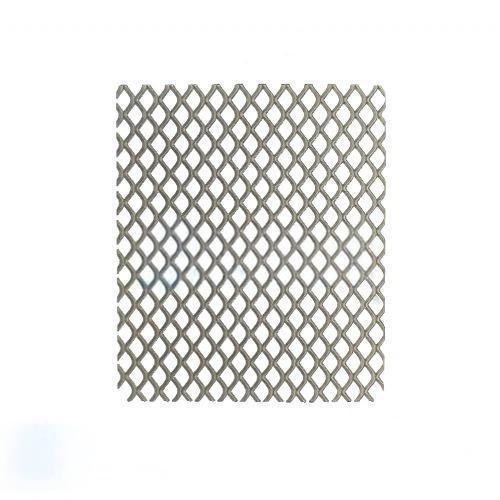
Platinum-Coated Titanium Anode
When your precious metal plating line suffers from purity loss, anode failure in fluoride-rich baths, or uneven deposition in deep cavities, the Platinum-Coated Titanium Anode offers a reliable and field-proven solution.

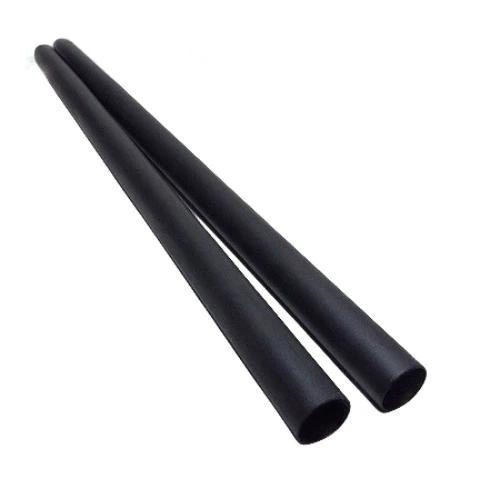
MMO Tubular Titanium Anode
When dealing with plating baths that often produce uneven edges or inconsistent deposits, the MMO Tubular Titanium Anode offers a practical solution to maintain stable plating quality while reducing rework rates.
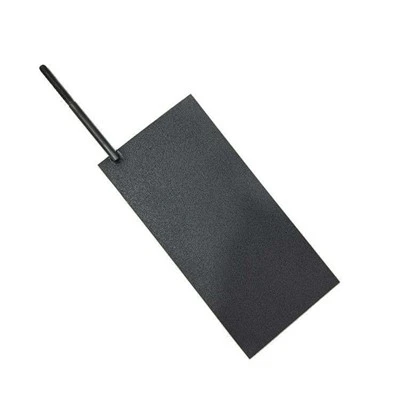
Ruthenium-Iridium Coated Titanium Anode Plate
Ruthenium-Iridium Coated Titanium Anode Plate is used for precision plating requiring stable current control and consistent coating quality. It has shown reliable performance in audited plating lines and helps reduce edge buildup while extending service life under continuous operation.
Parameters of Titanium Anode for Cathodic Protection
|
Specification |
Typical Value |
|
Base Material |
Grade 1 Titanium (ASTM B265) |
|
Coating Type |
Ruthenium-Iridium Mixed Oxide |
|
Ru:Ir Ratio |
70:30 ±1% (XPS Verified) |
|
Crystal Structure |
Rutile Phase >95% (XRD) |
|
Coating Thickness |
5–15 µm (ASTM B487) |
|
Working Voltage |
1.0–2.5 V |
|
Current Range |
50–300 A/m² |
|
Cathodic Efficiency |
≥22% (Ford Lab STD-4632) |
|
Typical Service Life |
18,000 A·h |
|
Customization |
Size and connector customization available |

Durability protection against corrosion
When used as an anode in aqueous media such as seawater, titanium forms a stable insulating oxide film on the surface that is stable below a certain breakdown voltage, thus preventing the flow of current between the aqueous media and the anode.
Environmentally friendly and low consumption
In hard chrome plating applications, the platinum on titanium anodes is environmentally friendly because they are lead-free. They maintain geometry for nearly three years, ensuring low downtime and reducing employee health risks because there is no lead chromate to dispose of. Compared to lead anodes, platinum titanium anodes have a lower energy loss.
Excellent corrosion protection
Platinum-plated titanium anodes synergistically combine the favorable electrochemical properties of platinum (Pt) with the corrosion resistance and other properties of titanium.
Customization Options
| Material grade | Customizable |
| Multi-process integration | Rolling, forging, CNC, surface treatment |
| Custom labeling | Customizable |
| Export packaging | Customizable |
| Part traceability | Customizable |
| Size | Customizable |
| Delivery Time | 7-12 days |
| MOQ | Customizable |
Titanium Anode for Cathodic Protection: Surface Treatment


Anodizing
Anodizing, as a mature process well known to the public, will not be introduced here. In addition to the commonly used aluminum alloy anode, titanium metal can also be used as an anode, and most of the titanium coloring process is achieved through anodic oxidation, which can make more rich colors and patterns, highly differentiated, including ice crystal, thread and other options.
PVD coating
PVD is also a kind of physical vapor deposition, vacuum coating, and the process has been very mature. It is possible to do PVD on the surface of titanium alloy, mainly to increase the functional coating and play a role in protection and protection. However, it is worth noting that at present, PVD can only be functional to barely pass, and the durability needs to be improved, unless the performance of the PVD substrate material is very good.
CNC
CNC machining of titanium alloy mainly plays the role of shaping and finishing. One of the biggest problems in the machining process is the loss of the tool. Because titanium alloy is relatively hard, the processing difficulty is higher than other metals. In the process of processing, the tool is subjected to high temperature, large cutting force, long friction distance, large vibration deformation, and serious tool wear. It is difficult to process titanium alloy with traditional tools, and it is necessary to use special composite coating knives, even diamond knives, and CBN knives to perform better mechanical processing. In the case of smart watches, for example, the average production of 4 watch cases will lose 1 tool, the cost is huge.
Grinding and polishing
Grinding and polishing is almost a necessary step for every material processing, the purpose is to make the product show a more accurate size, a more delicate texture, often need to use small polishing particles or consumables on the surface of the product at each position to be finely polished. At the same time, through a specific process scheme, special effects can also be achieved, such as high gloss mirror, matte scrub and so on.
Drawing
The titanium surface can be brushed to create a matte finish. This titanium wire drawing effect is very high in the consumer electronics industry products, taking into account the delicate touch and visual beauty, and is recognized and favored by more consumers.
Laser carving
There are mainly laser drilling and welding processes.
Sand blasting
The main purpose of the titanium alloy surface sandblasting process is mainly functional. Including improving the surface adhesion of titanium metal, improving the service life (removing surface impurities, etc.) and increasing the surface flatness and beauty of the product. It can also be understood as the effect of serving other surface treatment processes.
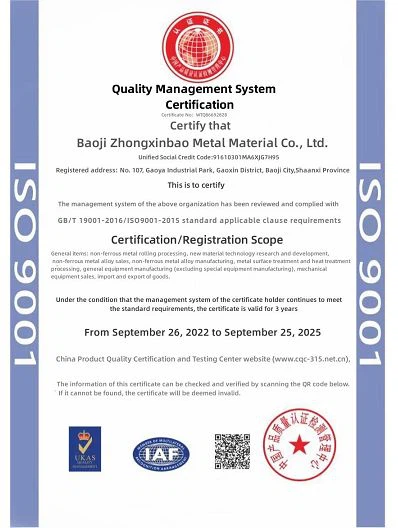
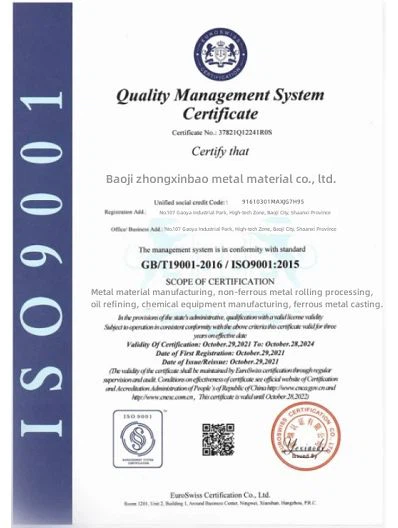
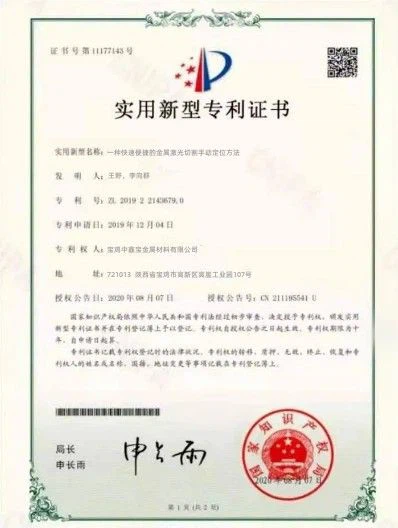
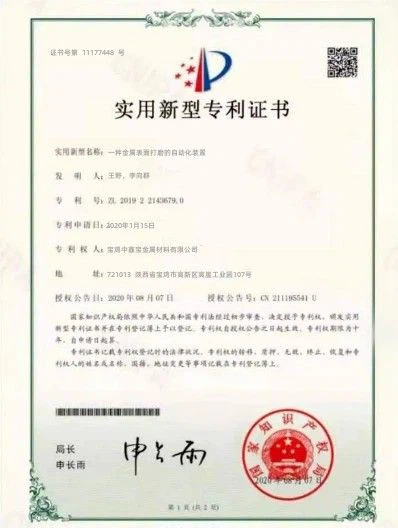
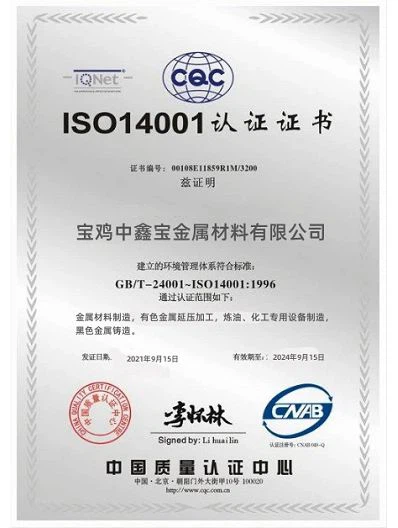
Certificate
Our Service Advantages
12-Month Warranty
24-Hour Technical Response
Remote Setup Support
Tank-Specific Design Review
Packaging & Shipping
|
Packaging |
Wrapped by proctective film; |
|
Packed by standard import & export wooden cases or carton boxes. |

FAQ
As one of the most professional titanium anode for cathodic protection manufacturers and suppliers in China, we're featured by quality products and good price. Welcome to buy titanium anode for cathodic protection for sale here and get pricelist from our factory. Also, customized service is available.
Platinum Coated Titanium Anode, MMO Tubular Titanium Anode, High Purity Iridium Tantalum Coated Titanium Anode Plate