




What is the electrical conductivity of titanium anodes in copper electrowinning?
Copper electrowinning is a crucial process in the copper production industry, where pure copper is obtained from copper - containing solutions through an electrochemical process. In this process, the anode plays a vital role, and titanium anodes have gained significant popularity due to their unique properties. As a supplier of Copper Electrowinning Titanium Anodes, I am often asked about the electrical conductivity of these anodes and its impact on the copper electrowinning process.
Understanding the Basics of Copper Electrowinning
Before delving into the electrical conductivity of titanium anodes, it is essential to understand the copper electrowinning process. The process involves the use of an electrolytic cell, where a copper - rich solution (usually a sulfate solution) is placed. A cathode, typically made of pure copper or stainless steel, and an anode are immersed in the solution. When an electric current is passed through the cell, copper ions in the solution are reduced at the cathode and deposited as pure copper, while oxidation reactions occur at the anode.
Properties of Titanium Anodes
Titanium is a widely used material for anodes in copper electrowinning due to its excellent corrosion resistance. In the highly acidic and oxidative environment of the electrowinning cell, most metals would corrode rapidly. Titanium forms a passive oxide layer on its surface, which protects it from further corrosion. However, pure titanium has relatively low electrical conductivity. To enhance its conductivity and electrochemical performance, titanium anodes are often coated with metal oxides, such as mixed metal oxides (MMO).
Electrical Conductivity of Titanium Anodes
The electrical conductivity of titanium anodes is a complex property that is influenced by several factors. The base titanium material itself has a conductivity that is much lower compared to metals like copper or aluminum. The conductivity of pure titanium at room temperature is approximately 2.38×10⁶ S/m, which is significantly lower than that of copper (5.96×10⁷ S/m).
When titanium anodes are coated with MMOs, the conductivity can be improved. The MMO coating provides a conductive pathway for the flow of electrons during the electrochemical reactions. The composition of the MMO coating plays a crucial role in determining the electrical conductivity of the anode. For example, Ru - Ir Coated Titanium Anode Tube has a different conductivity compared to other types of MMO - coated anodes. The ruthenium - iridium coating is known for its high electrocatalytic activity and relatively good electrical conductivity, which helps in facilitating the oxidation reactions at the anode surface.
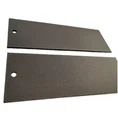
Another type of coated anode is the High - Purity Iridium - Tantalum Coated Titanium Anode Plate. The iridium - tantalum coating also enhances the electrical conductivity of the titanium anode. Tantalum helps in improving the stability of the coating, while iridium contributes to the high electrocatalytic activity and conductivity.
The thickness of the MMO coating also affects the electrical conductivity. A thicker coating may provide more conductive material, but if it is too thick, it can lead to increased resistance due to factors such as porosity and internal stress. Therefore, an optimal coating thickness needs to be determined to achieve the best balance between conductivity and other properties such as coating adhesion and durability.
Impact of Electrical Conductivity on Copper Electrowinning
The electrical conductivity of titanium anodes has a significant impact on the efficiency of the copper electrowinning process. A higher - conductivity anode allows for a more uniform distribution of the electric current across the anode surface. This uniform current distribution is crucial for ensuring a uniform deposition of copper at the cathode. If the anode has poor conductivity, there may be areas of high and low current density on the anode surface. High - current - density areas can lead to excessive oxygen evolution and anode corrosion, while low - current - density areas may result in incomplete oxidation reactions and reduced copper deposition efficiency.
In addition, a higher - conductivity anode can reduce the energy consumption of the electrowinning process. Since less energy is wasted in overcoming the resistance of the anode, more of the electrical energy can be used for the electrochemical reactions, leading to cost savings in the long run.
Our Product Range
As a supplier of Copper Electrowinning Titanium Anodes, we offer a wide range of products to meet the diverse needs of our customers. Our MMO Tubular Titanium Anode is designed for applications where a high surface - area - to - volume ratio is required. The tubular design allows for efficient mass transfer and uniform current distribution, which is beneficial for improving the efficiency of the copper electrowinning process.
Our Ru - Ir Coated Titanium Anode Tube and High - Purity Iridium - Tantalum Coated Titanium Anode Plate are also popular choices among our customers. These products are manufactured using advanced coating technologies to ensure high electrical conductivity, excellent electrocatalytic activity, and long - term durability.
Contact Us for Procurement
If you are in the copper production industry and are looking for high - quality titanium anodes for your electrowinning process, we would be delighted to assist you. Our team of experts can provide you with detailed information about our products, including their electrical conductivity, performance, and suitability for your specific application. We can also offer customized solutions based on your requirements.


Contact us today to start a procurement discussion and take your copper electrowinning process to the next level.
References
- "Electrochemical Engineering" by John Newman and Karen E. Thomas --Alyea.
- "Corrosion and Corrosion Control" by Mars G. Fontana.
- Research papers on copper electrowinning and titanium anode technology from leading academic journals in the field of electrochemistry.