



Hey there! As a supplier of titanium anodes for water treatment, I often get asked a bunch of questions about how these anodes work in different water conditions. One question that pops up quite a bit is, "Does a titanium anode for water treatment work in high - salinity water?" Well, let's dive right into it and find out.
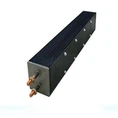
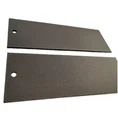
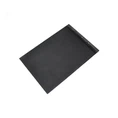
First off, let's understand what a titanium anode is and what it's used for in water treatment. Titanium anodes are super important in the water treatment industry. They're used in a variety of applications, from Titanium Anode Tablets For Swimming Pool Disinfection to Titanium Anode In EDI System and Titanium Anode for Water Treatment Plant. These anodes play a crucial role in processes like electrolysis, where they help in removing impurities, disinfecting water, and even desalination in some cases.
Now, high - salinity water is water that has a high concentration of dissolved salts. Think of seawater, which has an average salinity of about 35 parts per thousand. When it comes to using titanium anodes in high - salinity water, there are a few things to consider.


One of the main advantages of using titanium anodes in high - salinity water is their corrosion resistance. Titanium is a highly corrosion - resistant metal. In high - salinity environments, where the water is full of salts that can cause other metals to rust and corrode quickly, titanium holds up really well. This means that the anode can last a long time, which is great for the overall cost - effectiveness of the water treatment system.
During the electrolysis process in high - salinity water, the titanium anode can generate various oxidizing agents. For example, in the presence of chloride ions (which are abundant in high - salinity water), the anode can produce chlorine gas. Chlorine is a powerful disinfectant, and it can help in killing bacteria, viruses, and other harmful microorganisms in the water. This is especially important in applications like swimming pool disinfection, where you want to keep the water clean and safe for swimmers.
However, it's not all sunshine and rainbows. There are also some challenges when using titanium anodes in high - salinity water. One of the issues is the formation of scale on the anode surface. As the electrolysis process takes place, some of the dissolved salts in the water can precipitate out and form a layer of scale on the anode. This scale can reduce the efficiency of the anode by blocking the flow of current and reducing the surface area available for the electrochemical reactions.
Another challenge is the potential for the production of unwanted by - products. In high - salinity water, along with the desired disinfectants like chlorine, other by - products such as chlorates and perchlorates can be formed. These by - products can be harmful to human health and the environment if they are present in high concentrations. So, it's important to carefully control the electrolysis process to minimize the production of these unwanted substances.
To overcome these challenges, we've developed some strategies. For example, we can use special coatings on the titanium anode. These coatings can help in preventing scale formation and improving the selectivity of the electrochemical reactions. By choosing the right coating, we can ensure that the anode produces the desired disinfectants while minimizing the production of harmful by - products.
We also recommend regular maintenance of the anode. This can involve cleaning the anode to remove any scale that has formed and checking the electrical connections to ensure that the anode is operating at its optimal efficiency.
In addition to the technical aspects, there are also economic considerations. Using titanium anodes in high - salinity water can be cost - effective in the long run. Although the initial investment in a titanium anode may be higher compared to some other types of anodes, its long lifespan and high efficiency can result in lower overall costs over time. You won't have to replace the anode as often, and you can save on the cost of chemicals for water treatment.
Now, let's talk about some real - world applications. In water treatment plants that deal with high - salinity water, such as those located near the coast, titanium anodes can be a great choice. They can help in treating the water before it is distributed to households or used for industrial purposes. In desalination plants, titanium anodes can be used in the pre - treatment stage to remove impurities and disinfect the seawater before it undergoes the desalination process.
In the case of swimming pools filled with high - salinity water (some pools use salt - water systems), titanium anodes can provide a continuous supply of disinfectant. This eliminates the need for frequent addition of chemical disinfectants, making the pool maintenance easier and more convenient.
So, does a titanium anode for water treatment work in high - salinity water? The answer is yes, but with some caveats. It has its advantages in terms of corrosion resistance and the ability to generate disinfectants, but it also faces challenges like scale formation and the production of unwanted by - products. With the right strategies and proper maintenance, titanium anodes can be a reliable and effective solution for water treatment in high - salinity environments.
If you're in the market for a titanium anode for your water treatment needs, especially in high - salinity water applications, we'd love to have a chat with you. We can provide you with more detailed information about our products, help you choose the right anode for your specific requirements, and discuss the best strategies for using it effectively. Whether you're running a water treatment plant, a swimming pool, or an industrial facility, we're here to help you get the most out of your water treatment system.
References
- "Electrochemical Water Treatment Technologies for the Removal of Microorganisms and Chemical Contaminants: A Review" by C. A. Martínez - Huitle and E. Brillas
- "Corrosion of Titanium in Aqueous Solutions" by G. S. Frankel