






Hey there, folks! As a supplier of Ru-Ir Coated Titanium Anode Tube, I'm often asked about the difference between Ru - Ir coated titanium anode tubes and Ir - only coated titanium anode tubes. So, I thought I'd write this blog to clear things up and give you a better understanding of these two types of anode tubes.
Composition and Structure
Let's start with the basics. The main difference between these two anode tubes lies in their coating composition. As the name suggests, a Ru - Ir coated titanium anode tube has a coating that contains both ruthenium (Ru) and iridium (Ir). On the other hand, an Ir - only coated titanium anode tube has a coating made up solely of iridium.
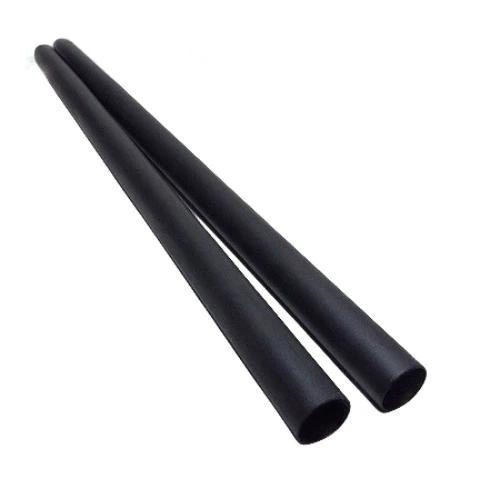
The coating is applied to a titanium substrate. Titanium is a great choice for the substrate because it's lightweight, corrosion - resistant, and has a good mechanical strength. The coating process is crucial as it determines the performance and durability of the anode tube.
Performance in Different Environments
Chemical Resistance
In many chemical environments, the Ru - Ir coated titanium anode tube shows excellent chemical resistance. The combination of ruthenium and iridium in the coating creates a synergistic effect. Ruthenium is known for its high catalytic activity and good resistance to a wide range of chemicals. Iridium, on the other hand, is extremely stable in oxidative environments.
For example, in a chloride - rich environment, the Ru - Ir coating can withstand the corrosive action of chloride ions better than an Ir - only coating in some cases. The ruthenium in the coating helps to enhance the overall chemical stability and reduces the likelihood of pitting corrosion.
However, in highly oxidative environments where there are strong oxidants like perchlorates or permanganates, the Ir - only coated anode tube might have an edge. Iridium is highly resistant to oxidation, and its single - element coating doesn't have the potential for any interaction between different metals that could cause oxidation - related failure.
Electrical Conductivity
When it comes to electrical conductivity, both types of anode tubes perform well. But there are some nuances. The Ru - Ir coated titanium anode tube has relatively higher electrical conductivity in some common electrolytes. The presence of ruthenium helps to lower the electrical resistance of the coating, which means that it can conduct current more efficiently.
This is particularly important in applications where a large amount of current needs to be passed through the anode tube, such as in some electroplating processes. In these processes, a lower electrical resistance can lead to energy savings and more uniform deposition of the plating material.
The Ir - only coated anode tube has good electrical conductivity too, but in some cases, it may have a slightly higher resistance compared to the Ru - Ir coated one. This isn't always a big deal, though, depending on the specific requirements of the application.
Applications
Ru - Ir Coated Titanium Anode Tube
The Ru - Ir Coated Titanium Anode Tube is widely used in various applications. One of its major applications is in electroplating. It can be used to plate different metals such as copper, nickel, and gold. The high electrical conductivity and chemical resistance of the Ru - Ir coating make it suitable for providing a stable source of current during the electroplating process.
It's also commonly used in cathodic protection systems. Cathodic protection is a technique used to prevent corrosion of metal structures by making them the cathode of an electrochemical cell. The Ru - Ir coated anode tube can be used as the anode in these systems, providing a long - lasting and efficient way to protect underground pipelines, storage tanks, and offshore platforms.
Another application is in water treatment. In electrolytic water treatment processes, the anode tube is used to generate disinfectants such as chlorine and ozone. The Ru - Ir coating can withstand the harsh chemical environment in the water and maintain its catalytic activity over a long period.
Ir - only Coated Titanium Anode Tube
The Ir - only coated titanium anode tube has its own set of applications. It's often used in applications where high - purity and extremely stable performance are required. For example, in the production of high - quality electronic components, the Ir - only anode tube can be used in electro - forming processes. These processes require a very precise and stable current supply, and the Ir - only coating can provide the necessary stability.
It's also used in some high - end chemical synthesis processes. In these processes, the presence of any impurities or the potential for side reactions needs to be minimized. The single - element Ir coating reduces the risk of any unwanted interactions, making it a preferred choice.

Cost and Durability
Cost
The cost of these anode tubes is an important factor to consider. Generally, the Ru - Ir coated titanium anode tube is relatively more cost - effective than the Ir - only coated one. Ruthenium is less expensive than iridium, so by combining ruthenium with iridium in the coating, the overall cost of the anode tube can be reduced without sacrificing too much performance in many applications.
However, the cost can also vary depending on the specific requirements of the coating, such as the thickness of the coating and the purity of the metals used.
Durability
In terms of durability, both types of anode tubes have a long service life if used under the right conditions. The Ru - Ir coated titanium anode tube can last for a long time in many common applications. The combination of the two metals in the coating provides good corrosion resistance and mechanical stability.
The Ir - only coated anode tube is often very durable in highly oxidative and corrosive environments. Its single - element coating reduces the potential for galvanic corrosion between different metals, which can extend its service life in some extreme conditions.
Conclusion
So, to sum it up, the main differences between Ru - Ir coated titanium anode tubes and Ir - only coated titanium anode tubes lie in their composition, performance, applications, cost, and durability. The Ru - Ir coated titanium anode tube offers a good balance of performance and cost, making it suitable for a wide range of applications such as electroplating, cathodic protection, and water treatment.
On the other hand, the Ir - only coated titanium anode tube is better suited for applications where high - purity and extremely stable performance are required, like high - end electronic component production and some chemical synthesis processes.
If you're in the market for anode tubes and are still not sure which one is right for your application, don't hesitate to reach out. We can provide more in - depth advice based on your specific needs. Whether you're interested in Ru - Ir Coated Titanium Anode Tube, Ruthenium - Iridium Coated Titanium Anode Plate or High - Purity Iridium - Tantalum Coated Titanium Anode Plate, we're here to have a chat and discuss your requirements. Contact us to start the procurement process and find the perfect solution for your project.
References
- Jones, A. "Electrochemical Anodes: Properties and Applications". Electrochemical Society Publications, 20XX.
- Smith, B. "Performance of Coated Titanium Anodes in Different Environments". Journal of Applied Electrochemistry, Vol. XX, No. XX, 20XX.