


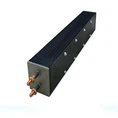

As a supplier of MMO Titanium Anodes, I understand the critical importance of testing the performance of these anodes. MMO (Mixed Metal Oxide) Titanium Anodes are widely used in various industries due to their excellent electrochemical properties, high durability, and resistance to corrosion. In this blog, I will share some key methods and considerations for testing the performance of MMO Titanium Anodes.
1. Understanding the Basics of MMO Titanium Anodes
MMO Titanium Anodes are made by coating a titanium substrate with a mixture of metal oxides. This coating enhances the anode's performance in terms of conductivity, electrocatalytic activity, and resistance to corrosion. The performance of MMO Titanium Anodes can be affected by several factors, including the composition of the metal oxide coating, the thickness of the coating, and the operating conditions.
2. Electrochemical Testing
2.1 Potentiodynamic Polarization
Potentiodynamic polarization is a widely used method for evaluating the electrochemical behavior of MMO Titanium Anodes. This test involves applying a gradually increasing potential to the anode and measuring the resulting current. The polarization curve obtained from this test can provide valuable information about the anode's corrosion resistance, electrocatalytic activity, and passivation behavior.
To perform a potentiodynamic polarization test, a three - electrode cell is typically used, consisting of the MMO Titanium Anode as the working electrode, a reference electrode (such as a saturated calomel electrode), and a counter electrode (usually a platinum electrode). The test is carried out in an electrolyte solution that is representative of the actual operating conditions.
2.2 Electrochemical Impedance Spectroscopy (EIS)
EIS is another powerful technique for analyzing the electrochemical properties of MMO Titanium Anodes. It measures the impedance of the anode as a function of frequency. By analyzing the impedance spectra, we can obtain information about the electrical resistance, capacitance, and charge transfer processes occurring at the anode - electrolyte interface.
EIS can help us understand the mechanisms of corrosion and electrocatalysis on the anode surface. For example, a low impedance at high frequencies indicates good electrical conductivity, while a high impedance at low frequencies may suggest the presence of a passive film or a slow charge transfer process.
3. Physical and Chemical Testing
3.1 Coating Thickness Measurement
The thickness of the MMO coating is an important factor that affects the anode's performance. A proper coating thickness ensures good electrocatalytic activity and corrosion resistance. Coating thickness can be measured using techniques such as scanning electron microscopy (SEM) or X - ray fluorescence (XRF).
SEM can provide high - resolution images of the anode surface, allowing us to observe the morphology and structure of the coating. XRF, on the other hand, can quantitatively measure the elemental composition and thickness of the coating.
3.2 Chemical Composition Analysis
Analyzing the chemical composition of the MMO coating is crucial for understanding its performance. Energy - dispersive X - ray spectroscopy (EDS) is a commonly used technique for this purpose. EDS can identify the elements present in the coating and their relative proportions.
The chemical composition of the coating can affect its electrocatalytic activity and corrosion resistance. For example, certain metal oxides may have better catalytic properties for specific electrochemical reactions, while others may enhance the coating's resistance to corrosion.
4. Performance Testing under Real - world Conditions
4.1 Accelerated Life Testing
Accelerated life testing is used to simulate the long - term performance of MMO Titanium Anodes under harsh conditions. This test involves subjecting the anode to a higher current density and more aggressive electrolyte than in normal operating conditions. By monitoring the anode's performance over time, we can estimate its service life.


During accelerated life testing, parameters such as cell voltage, current efficiency, and coating degradation are monitored. A significant increase in cell voltage or a decrease in current efficiency may indicate the degradation of the anode coating.
4.2 Field Testing
Field testing is the most reliable way to evaluate the performance of MMO Titanium Anodes in real - world applications. By installing the anodes in actual industrial processes, we can observe their performance under the specific operating conditions.
Field testing allows us to assess the anode's long - term stability, compatibility with the electrolyte, and resistance to fouling. It also provides valuable feedback for improving the design and manufacturing of the anodes.
5. Importance of Testing for Different Applications
MMO Titanium Anodes are used in a wide range of applications, including OEM Titanium Anode, Titanium Anode for Electrolytic Copper Foil, and MMO Titanium Anode. Each application has its own specific requirements, and testing is essential to ensure that the anodes meet these requirements.
For example, in the electrolytic copper foil industry, the anode's performance can directly affect the quality and production efficiency of the copper foil. Therefore, rigorous testing is required to ensure that the anode has high electrocatalytic activity, good corrosion resistance, and stable performance over time.
6. Conclusion and Call to Action
Testing the performance of MMO Titanium Anodes is a complex but essential process. By using a combination of electrochemical, physical, and chemical testing methods, we can accurately evaluate the anode's performance and ensure its quality and reliability.
If you are in need of high - quality MMO Titanium Anodes for your specific application, we are here to help. Our team of experts can provide you with professional advice and customized solutions. Contact us to discuss your requirements and start a procurement negotiation.
References
- Bard, A. J., & Faulkner, L. R. (2001). Electrochemical Methods: Fundamentals and Applications. John Wiley & Sons.
- Conway, B. E. (1999). Electrochemical Supercapacitors: Scientific Fundamentals and Technological Applications. Kluwer Academic Publishers.
- Pourbaix, M. (1974). Atlas of Electrochemical Equilibria in Aqueous Solutions. National Association of Corrosion Engineers.