


Measuring the performance of a copper electrowinning titanium anode is crucial for both suppliers and users. As a supplier of Copper Electrowinning Titanium Anodes, I've seen firsthand how important it is to accurately assess an anode's performance. In this blog, I'll share some practical ways to measure the performance of these anodes.
1. Current Efficiency
One of the key performance indicators of a copper electrowinning titanium anode is current efficiency. Current efficiency is the ratio of the actual amount of copper deposited at the cathode to the theoretical amount that should be deposited based on the amount of electrical current passed through the cell.
To measure current efficiency, you first need to know the amount of electrical charge passed through the cell. This can be calculated using the formula (Q = It), where (Q) is the charge in coulombs, (I) is the current in amperes, and (t) is the time in seconds.
The theoretical amount of copper deposited can be calculated using Faraday's law. The molar mass of copper is (M = 63.55\ g/mol), and the number of electrons transferred in the copper deposition reaction ((Cu^{2+}+ 2e^-\rightarrow Cu)) is (n = 2). According to Faraday's law, the theoretical mass of copper deposited (m_{theoretical}) is given by (m_{theoretical}=\frac{Q\times M}{nF}), where (F = 96485\ C/mol) is the Faraday constant.
To find the actual mass of copper deposited, you simply weigh the cathode before and after the electrowinning process. The current efficiency (\eta) is then calculated as (\eta=\frac{m_{actual}}{m_{theoretical}}\times100%).
A high - current efficiency indicates that the anode is effectively facilitating the electrowinning process, minimizing waste of electrical energy.
2. Anode Potential
The anode potential is another important parameter. It reflects the energy required to drive the oxidation reaction at the anode surface. A stable and appropriate anode potential is essential for efficient copper electrowinning.
You can measure the anode potential using a reference electrode, such as a saturated calomel electrode (SCE). Connect the reference electrode to the anode through a high - impedance voltmeter. During the electrowinning process, continuously monitor the potential difference between the anode and the reference electrode.
If the anode potential is too high, it may lead to side reactions, such as the evolution of oxygen or the formation of other unwanted compounds on the anode surface. On the other hand, a too - low anode potential may result in incomplete oxidation reactions and poor electrowinning performance.
3. Anode Wear Rate
The wear rate of the anode is also a significant factor in assessing its performance. Over time, the anode material will gradually dissolve or corrode during the electrowinning process.
To measure the wear rate, you can weigh the anode before and after a certain period of operation. The wear rate is calculated as the change in mass divided by the time of operation and the surface area of the anode. A lower wear rate indicates better anode durability.
Factors such as the composition of the electrolyte, the current density, and the temperature can all affect the wear rate. For example, a high - current density may increase the wear rate, while a properly formulated electrolyte can help reduce it.
4. Coating Integrity
Most copper electrowinning titanium anodes are coated with special materials to enhance their performance. The integrity of the coating is crucial for the anode's long - term performance.
You can visually inspect the anode surface for signs of coating damage, such as cracks or peeling. Microscopic examination can also be used to detect any hidden defects in the coating.
If the coating is damaged, it can lead to increased anode wear, reduced current efficiency, and even contamination of the electrolyte. Regular inspection of the coating integrity can help identify potential problems early and take appropriate measures, such as re - coating the anode.
5. Product Quality
The quality of the copper produced during electrowinning is also an indirect measure of the anode's performance. High - quality copper should have a high purity and a smooth surface.
You can analyze the copper product using techniques such as atomic absorption spectroscopy (AAS) to determine its purity. A smooth and uniform surface of the copper cathode indicates that the electrowinning process is stable and the anode is performing well.
Our Product Offerings
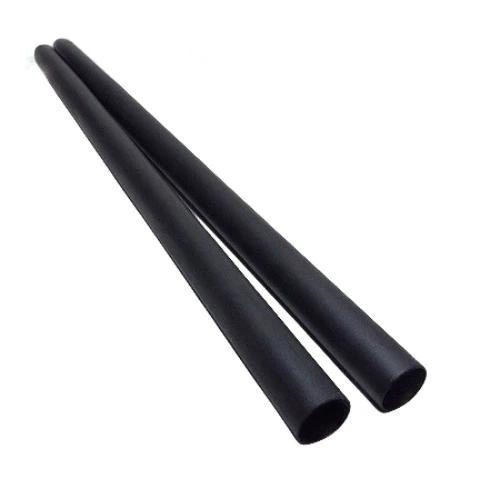
As a supplier, we offer a variety of copper electrowinning titanium anodes. For example, we have the Ru - Ir Coated Titanium Anode Tube, which is known for its excellent corrosion resistance and high current efficiency. The MMO Coated Titanium Disc Anode is another popular choice, offering good stability and performance. And our Platinum - Coated Titanium Anode provides high catalytic activity and long service life.
If you're in the market for high - quality copper electrowinning titanium anodes, we'd love to have a chat with you. Whether you need to measure the performance of your existing anodes or are looking to purchase new ones, we can offer you the expertise and products you need. Contact us to start a discussion about your specific requirements.

References
- Bockris, J. O'M., & Reddy, A. K. N. (1970). Modern Electrochemistry. Plenum Press.
- Pourbaix, M. (1974). Atlas of Electrochemical Equilibria in Aqueous Solutions. National Association of Corrosion Engineers.