Products Description
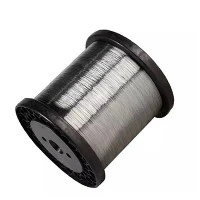
- Gr2 Titanium Wire for Chemical & Process Equipment is a commercially pure titanium wire intended for structural fixing, binding, and support purposes inside chemical and industrial process systems.
- Unlike titanium welding wire, this product is not designed as a filler metal.
It is used as a mechanical element that remains in the equipment during operation, where corrosion resistance and material stability are critical.
- Manufactured from ASTM Grade 2 titanium, the wire offers a balanced combination of corrosion resistance, formability, and long-term reliability.
It performs well in acidic, humid, or chloride-containing environments where conventional stainless steel wires may corrode or introduce contamination.
- The wire can be supplied in coil or straight lengths and is suitable for cold forming, tying, and on-site adjustment during equipment assembly or installation.
Material & Grade Explanation
This product is manufactured from ASTM Grade 2 commercially pure titanium, a material widely used in chemical and process equipment due to its stable performance and predictable behavior.
Compared with Grade 1 titanium, Grade 2 provides higher strength while maintaining sufficient ductility for cold bending and tying operations.
This makes it more suitable for use as a structural and fixing wire that must retain shape and tension during long-term service.
Compared with titanium alloys such as Grade 5, Grade 2 offers better formability and lower residual stress after bending.
This reduces the risk of springback, surface cracking, or stress concentration during installation and on-site adjustment.
Grade 2 titanium also shows excellent resistance to acidic and chloride-containing environments, with a low tendency to release metallic contaminants into the process stream.
For this reason, it is commonly selected for internal components that remain in contact with process media over extended periods.
Actual Applications in Chemical & Process Equipment
Structural Support in Filtration and Separation Assemblies
- In titanium-based filtration and separation systems, the wire often serves as a support or retaining element, not as the filtration medium itself.
- It is used to hold filter materials in position, maintain geometry, and prevent displacement under flow or pressure fluctuations.
- This approach is commonly adopted in acidic or chloride-containing services where stainless steel support wires may suffer from localized corrosion.


Corrosion-Resistant Binding Inside Tanks and Reactors
- Inside chemical tanks, reactors, scrubbers, and heat exchangers, Gr2 titanium wire is used as a binding or tying material for internal assemblies.
- It provides mechanical stability while avoiding iron contamination or corrosion products that could affect process purity.
- The wire's resistance to moisture, acid vapors, and chemical condensates makes it suitable for long-term internal exposure.
Adjustable and Removable Fixing During Installation and Maintenance
- During equipment installation, commissioning, or maintenance, the wire is frequently used for temporary or adjustable fixing.
- Its ductility allows repeated bending and adjustment on site without cracking, making it practical for alignment and positioning tasks before final assembly.
- In many cases, the same wire remains in service after installation, eliminating the need for later replacement.

Typical Supply Forms & Size Range

Supply Form
- Straight wire (cut length)
- Coil / spooled wire
- Soft annealed condition
Diameter Range
- Common sizes: 0.5 mm – 5.0 mm
- Larger diameters available upon request
Standard Length
- Straight length: 500 mm / 1000 mm
- Coil length: customized by weight or length
Surface Condition
- Clean metallic surface
- Pickled or mechanically cleaned
- No oil, no visible oxidation
Quality Control
Material check comes first.
- The wire is drawn only from Grade 2 commercially pure titanium.
- Before production, the heat chemistry is reviewed.
- Oxygen and iron are checked carefully, because they decide whether the wire will stay flexible or turn brittle during use.
Diameter is controlled during drawing, not only at the end.
- Wire thickness is monitored along the full length.
- Local thinning, uneven diameter, or oval sections are rejected, even if the average size is within range.
- Straight lengths are checked for waviness and residual stress, since these issues show up later during fixing and tying.
Surface condition matters more than appearance.
- The wire must be clean.
- No oil, no heavy oxide, no deep drawing marks.
- Small surface defects may look harmless, but inside chemical equipment they often become corrosion starting points. Those batches are not released.
Ductility is checked by simple handling tests.
- Samples are bent, re-bent, and adjusted by hand.
- The goal is not a lab value, but to confirm the wire can survive on-site installation without cracking or springback.
Final inspection is visual and practical.
- Before packing, wires are straightened, aligned, and checked again.
- Coils and straight lengths are packed to avoid deformation, because shape loss during transport usually shows up only after unpacking at site.
Routine testing


Packaging & Delivery
The wire is packed with shape protection as the first priority.
For straight lengths, wires are aligned and bundled to avoid bending or crossing.
Each bundle is fixed before packing, so the wire does not shift during transport.
Coiled wire is wound with controlled tension.
Over-tight coils are avoided, as they are difficult to straighten at site and may introduce residual stress.
Surface protection is kept simple and clean.
The wire is packed dry, without oil or grease.
Direct contact between bundles is avoided to reduce friction marks during long-distance shipping.
If required, additional inner wrapping can be used to protect surface condition for sensitive chemical applications.
Packing method depends on wire form and shipment size.
Small quantities: carton with internal fixation
Larger quantities: wooden crate with separated layers
The goal is to make sure the wire arrives in the same condition as it left the workshop.
Delivery is arranged after packing condition is confirmed.
Standard export packing is used for international shipments.
For projects with specific handling or unpacking requirements, packing details can be adjusted before dispatch.


Customization Options Available
- Diameter range available upon request
- Supplied as straight wire or coil form
- Cut length adjustable for site installation
- Surface condition selectable (clean / annealed)
- Small batch and project-based supply supported
Specifications are usually confirmed based on handling method, installation space, and service environment rather than diameter alone.
Typical Supply Forms
- Straight cut wire (bundled & protected)
- Coiled wire on spool
- Mixed packing for installation convenience
FAQ
Q: We've used stainless wire before. It failed. How do I know titanium wire will not cause the same problem?
A: Most customers come to titanium wire after stainless steel corrodes, flakes, or breaks inside the equipment.
Titanium is usually chosen when replacement later is difficult or shutdown is costly.
It is not about higher strength, but about staying stable once installed.
Q: This wire will stay inside the equipment. Will it still be OK after years of operation?
A: That is exactly why titanium wire is used.
It is intended to remain in place and not become a corrosion or contamination point during long-term service.
Q: We need to bend and adjust the wire on site. Is it too stiff to handle?
A: The wire is supplied soft enough for manual adjustment.
It can be bent and re-positioned during installation without cracking or sudden rebound.
Q: If the wrong material is used, what usually goes wrong first?
A: Most issues are not visible at the beginning.
Corrosion, surface damage, or contamination often appear only after the system is already running.
Q: Before you quote, what do you actually need from us?
A: Usually just diameter, length or form, and where the wire will stay inside the equipment.
Exact standards are less important than how and where the wire is used.
Contact Us
johnlee@zxb-titanium.com
+86 177 2959 6223
Address
No. 107, Gaoya Industrial Park, Baotai Road, Weibin District, Baoji City, Shaanxi Province, China
Hot Tags: gr2 titanium wire for chemical & process equipment, China gr2 titanium wire for chemical & process equipment manufacturers, suppliers, factory