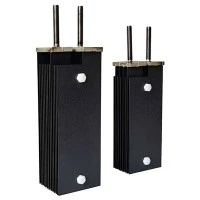
Product View
Unplanned maintenance, leaking joints, and costly downtime often stem from plates with inconsistent geometry and weak corrosion resistance. We developed our Titanium Plate for Electrolysis to solve these failures directly. By applying controlled rolling, stress-relief leveling, and a uniform pickled finish, each plate maintains guaranteed flatness and stable mechanical properties. This allows engineers to achieve leak-free sealing and reduce both installation time and lifetime operating costs.
Products parameter
Our titanium plates are produced under ASTM B265 and undergo full dimensional checks.
|
Property |
Specification / Notes |
|
Grade |
Gr1 / Gr2 Commercially Pure Titanium |
|
Thickness Range |
2 – 25 mm (others on request) |
|
Tolerance (5 mm) |
±0.15 mm, tighter than ASTM baseline |
|
Flatness |
≤0.5 mm/m across length |
|
Tensile Strength |
≥240 MPa |
|
Elongation |
≥24% minimum |
|
Corrosion Resistance |
<0.005 mm/year in seawater & oxidizing electrolytes |
|
Inspection |
Material Chemistry / Material Chemistry / Ultrasonic Testing / Mechanical Testing |
Typical Industrial Applications


- Flatness that Cuts Maintenance Costs
Stable geometry (≤0.5 mm/m) prevents sealing stress and gasket failure. The result is fewer leaks, lower maintenance, and reduced labor during both installation and long-term operation.
- Clean Surface, Strong Welds
Pickled plates eliminate oxide scale, minimizing preparation and enabling GTAW welds with full ductility. Welds match the corrosion resistance of the parent material.
- Where It's Used
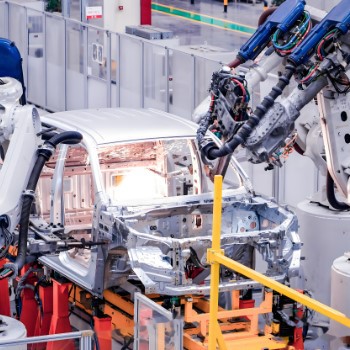
- Baffles and partitions in electrolyzers
- Protective linings in reactors and tanks
- Plate sections exposed to seawater and chloride-rich streams
Quality Control & Compliance


Why Us?
More user-friendly processing and delivery methods for electrolytic applications
We support pre-cutting, chamfering, drilling, and other pre-processing steps to avoid contamination or dimensional deviations caused by customers' own processing. We can also provide customized sizes based on the electrolytic cell structure, reducing the need for secondary processing on-site.
Controllable surface condition to suit different electrolysis requirements
Titanium plates with different surface conditions, such as polished, finely ground, or with specific roughness control, can be provided according to the type of electrolysis, to match subsequent coating, current distribution, or electrolyte contact requirements.
Material Selection for Electrolytic Applications
Our titanium plates for electrolytic systems are primarily based on Gr1/Gr2 industrial pure titanium, with a focus on controlling impurity elements and grain structure to ensure stable electrochemical performance in long-term operation under acidic or chlorine-containing media, rather than merely meeting mechanical specifications.
Batch consistency and traceability are ensured
Materials for the same project are sourced from the same smelting batch whenever possible, minimizing subtle differences in electrochemical performance between different batches. This contributes to the long-term stable operation of the system and facilitates subsequent maintenance and troubleshooting.
FAQ - Titanium Plate For Electrolysis
Q1: Which titanium grade is commonly used for electrolysis plates?
A: For most electrolysis applications, Grade 1 or Grade 2 titanium is selected due to its stable corrosion resistance and reliable performance as a substrate material.
The final choice depends on factors such as electrolyte composition, operating temperature, current density, and whether the plate is coated.
If your system involves higher mechanical stress, aggressive media, or specific coating requirements, confirming operating conditions in advance helps avoid material mismatch.
Q2: Are titanium plates used as bare electrodes or with coatings in electrolysis?
A: Titanium plates are typically used as a substrate, combined with functional coatings (such as MMO-type coatings) when acting as inert electrodes.
Bare titanium is generally not suitable as an active anode under sustained electrolysis conditions.
The coating type and loading are selected based on electrolyte chemistry, target reaction, and expected service life, and should be matched to your process rather than chosen generically.
Q3: What operating conditions affect the service life of titanium electrolysis plates?
A: Service life is influenced more by operating conditions than by plate thickness alone. Key factors include current density, electrolyte conductivity, chloride concentration, temperature, and polarity reversal frequency.
Providing these parameters allows for a more realistic life estimation and helps determine whether design adjustments are needed before production.
Q4: Can titanium electrolysis plates be customized in size and structure?
A: Yes. Titanium plates can be supplied in custom dimensions, thicknesses, and hole patterns, depending on the electrolyzer design.
Common customization includes effective area control, edge treatment, and connection features.
To ensure compatibility, it is recommended to confirm installation method, current collection design, and tolerance requirements at the quotation stage.
Q5: Do you support small quantities or trial orders for electrolysis projects?
A: Trial quantities are commonly supplied for process validation or pilot systems.
This allows customers to verify electrical behavior, installation fit, and compatibility before scaling up.
Discussing trial objectives in advance helps ensure the sample accurately reflects final operating conditions.
Request Titanium Sheet for Your Application
Practical support for grade selection, sizing, and machining requirements.
Typical inquiries include grade selection (Gr2, Gr5...), diameter tolerance, cut length, and order quantity.
we are here for you
Hot Tags: titanium plate for electrolysis, China titanium plate for electrolysis manufacturers, suppliers, factory