

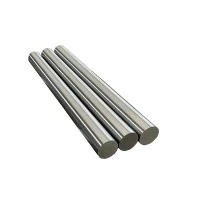


A Ru-Ir Coated Titanium Anode Tube can look simple on a drawing: outside diameter, wall thickness, length, and a connection at one end.
Those dimensions are enough to make the titanium part, but not enough to decide whether it will work correctly in an electrochemical cell. The supplier also needs to know what liquid surrounds the tube, which anodic reaction is expected, how much of the tube is actually coated, and how much current that surface will carry.
For a replacement anode, the old tube is useful. Its operating condition is usually more useful.
What Electrolyte and Reaction Will the Anode Tube Face?
Ru-Ir coatings are commonly considered for chloride-containing electrochemical systems, especially where chlorine evolution is an important anodic reaction.
That description is still too broad for final selection.
Chloride Content Should Be Confirmed First
A Ru-Ir coated titanium anode tube used in brine electrolysis does not operate under the same condition as one installed in dilute chloride water or industrial wastewater.
Useful information includes:
· Chloride concentration
· pH
· Conductivity
· Temperature
· Major dissolved salts
· Suspended solids
· Organic contaminants
· Normal operating range
The word "salt water" is not enough.
Prepared brine, seawater, cooling water, and wastewater can all contain chloride, but the coating may face very different conductivity, scaling, contamination, and reaction conditions.
Chlorine Evolution Should Be the Intended Duty
Ru-Ir based coatings are often selected when chlorine evolution is important, but that does not mean every chloride-containing system should automatically use the same Ru-Ir formulation.
If the cell mainly operates under oxygen evolution conditions, another coating direction may be more suitable.
The buyer should therefore confirm what the anode is expected to produce or support:
· Chlorine
· Sodium hypochlorite
· Another oxidizing species
· Electrochemical oxidation
· A specific process reaction
The coating should follow the reaction, not only the application name.
Wastewater Needs More Information Than Clean Brine
Industrial wastewater can change from one production batch to another.
Chloride may be only one part of the chemistry. Sulfate, ammonia, metal ions, oils, suspended solids, organic compounds, or cleaning chemicals may also reach the anode.
A Ru-Ir coated titanium anode tube that works well in controlled brine should not automatically be copied into a mixed wastewater stream.

How Should the Tube Size and Active Coated Area Be Checked?
The outside dimensions of a titanium tube do not tell you the real electrochemical area.
Total Tube Length Is Not Always Active Length
A 1000 mm long tube may have only part of its surface immersed or coated.
Some sections may be:
· Above the liquid level
· Used for connection
· Masked
· Covered by a holder
· Hidden inside a flange
· Left uncoated near a weld
Current density should be calculated from the coated area actually exposed to the electrolyte.
This is especially important when the tube is long and only one part of it works inside the cell.
Outside Surface or Inside Surface?
A tubular anode can be used in several arrangements.
The electrolyte may contact:
· Only the outside surface
· Only the inside surface
· Both inside and outside surfaces
· A perforated or slotted tubular surface
This changes both active area and flow.
If only the outside is exposed, coating the inner wall may add cost without adding useful working area. If electrolyte flows through the tube, the inside condition may become important.
The drawing should therefore identify the coating area clearly.
Tube Diameter Also Changes Current Distribution
Increasing the tube diameter gives more outside area for the same length, but it also changes the spacing between the anode and the counter-electrode.
A larger tube placed inside a fixed cell may reduce the electrode gap. A smaller tube may increase that gap and alter the electrical resistance.
Diameter should not be changed only because a certain tube size is easier to purchase.
The cell geometry needs to be checked at the same time.

Why Does Current Density Matter for a Ru-Ir Coated Titanium Anode Tube?
The rectifier current is only one part of the specification.
A buyer may say the cell operates at 50 A, but this value is difficult to judge until the exposed coated area is known.
The Same Current Can Produce Very Different Surface Loads
Consider two Ru-Ir coated titanium anode tubes operating at the same total current.
One has a long active section and large diameter.
The other has a shorter coated length and smaller diameter.
The electrical supply may show the same amperage, but the coating on the second tube carries a much higher current density.
This can affect:
· Gas evolution
· Local temperature
· Cell voltage
· Coating consumption
· Surface stability
· Expected service interval
For this reason, the buyer should provide both normal current and maximum current.
Local Current Density May Be Higher Near One End
Tubular structures can also develop uneven loading.
The area closer to the current connection or counter-electrode may not carry exactly the same load as the rest of the tube.
Potential problem locations include:
· Near the electrical lead
· Near welded joints
· Close to the cathode
· At the end of the active coating
· Around slots or holes
· Beside heavily scaled areas
If an old tube shows much stronger coating loss in one location, the failure pattern should be photographed before the part is discarded.
Pulsed or Reversing Current Should Be Mentioned
Some electrochemical systems do not operate at steady DC all the time.
If the equipment uses:
· Pulsed current
· Frequent start-stop cycles
· Periodic polarity reversal
· Short high-current stages
the supplier should know this before confirming the coating.
A coating selected for stable anodic operation should not be assumed to behave the same way under repeated polarity reversal.

How Do Flow, Gas Release, and Scaling Affect the Tube?
Tubular anodes are often chosen because they fit compact cells well and can work with controlled liquid flow.
That same geometry can create problems if the hydraulic condition is ignored.
Flow Around the Tube Should Be Even
If water flows mainly along one side of the tube, that area may see better mass transfer than the opposite side.
A tube located close to a tank wall, baffle, cathode, or inlet can experience different flow around its circumference.
This may lead to:
· Uneven gas removal
· Different local concentration
· Uneven deposits
· Different coating load around the tube
The installation drawing should show more than the tube itself.
It should also show the surrounding cell structure.
Gas Needs a Clear Escape Path
Chlorine evolution and other anodic reactions can generate gas at the coated surface.
If gas remains attached to the tube, part of the coating temporarily loses direct liquid contact.
This is more likely when:
· Tubes are installed too close together
· Electrode spacing is very narrow
· Flow is weak
· The tube is installed horizontally
· Deposits create pockets around the surface
Gas release should therefore be considered together with orientation and electrode spacing.
Scale Can Change the Effective Electrode Gap
A new electrolyzer may start with a clean and uniform gap between anode and cathode.
After operation, deposits can build on the cathode, spacers, or surrounding structures.
The original gap may gradually become smaller or less uniform.
This can change:
· Local current distribution
· Flow
· Gas release
· Cell voltage
· Cleaning frequency
If a replacement Ru-Ir coated titanium anode tube is being ordered because the old unit had a short life, the condition of the cathode should also be checked.
What Should Buyers Confirm About the Coating and Connection?
"Ru-Ir coating" is not a complete purchasing specification.
Coating Area Should Be Marked on the Drawing
A useful drawing should distinguish:
· Active coated length
· Uncoated connection section
· Masked areas
· Welded zones
· Threaded areas
· Immersed length
· Total tube length
If both inside and outside surfaces require coating, that should also be stated.
This avoids a common problem where the supplier coats the full tube while the equipment actually needs only a defined active section.
Coating Loading Should Not Be Reviewed Alone
A higher coating loading may provide more active material, but it does not automatically guarantee a longer service life.
Lifetime still depends on:
· Actual current density
· Chloride condition
· Temperature
· Flow
· Scaling
· Cleaning
· Electrical connection
· Operating cycle
A heavier coating cannot correct a serious current-distribution or hydraulic problem.
The Electrical Connection Must Carry the Full Current
Tubular anodes often use a welded lead, threaded rod, flange, plate extension, or custom busbar connection.
The connection should be checked against the actual current.
A connection that is mechanically strong but electrically too small can cause:
· Heating
· Voltage loss
· Discoloration
· Unstable current
· Local coating damage
· Failure close to the current entry point
If the old anode failed near the connection, copying the same connection size without reviewing the current may reproduce the problem.
What Should Buyers Send Before Ordering?
A useful Ru-Ir coated titanium anode tube inquiry should contain both the tube drawing and the operating condition.
Electrolyte Information
Provide:
· Application
· Target anodic reaction
· Chloride concentration
· pH
· Conductivity
· Temperature
· Main dissolved chemicals
· Suspended solids or contamination
· Normal and maximum operating condition
Electrical Information
Confirm:
· Normal current
· Maximum current
· Voltage range
· Number of anodes
· Number and position of cathodes
· Operating hours
· Continuous or intermittent service
· Pulse or polarity reversal, if any
Tube Structure
The drawing should show:
· Outside diameter
· Inside diameter or wall thickness
· Total length
· Active coated length
· Immersion depth
· Inside coating, outside coating, or both
· Masking areas
· Holes or slots
· Weld locations
· Connection structure
· Installation orientation
· Electrode spacing
Replacement Information
If the tube is replacing an existing anode, also provide:
· Existing coating, if known
· Previous service time
· Reason for replacement
· Failure location
· Scaling condition
· Cleaning method
· Voltage changes during service
· Photographs of the used tube
The old anode can show how the titanium tube was made. The used surface can show where the system placed the greatest load.
Choosing a Ru-Ir coated titanium anode tube should therefore start with the electrolyte and target reaction, then move to active area, current density, cell geometry, flow, gas release, scaling, and electrical connection.
Tube diameter and length are important, but they are only the fabrication side of the specification.
Once the actual working condition is clear, the Ru-Ir coating and tube structure can be reviewed as one electrochemical component rather than as a simple coated titanium tube.
ZXB Company Introduction
Baoji Zhongxinbao supplies custom Ru-Ir coated titanium anodes in tubular, plate, mesh, rod, and other structures for chloride-containing electrochemical systems.
For custom or replacement anode tubes, the coating area, current loading, connection structure, electrolyte conditions, and installation geometry can be reviewed together before the electrode specification is finalized.
FAQ
Q1: Is Ru-Ir coating suitable for every chloride-containing system?
A: No. Ru-Ir coatings are commonly considered where chlorine evolution is important, but the actual electrolyte, target reaction, current density, temperature, and operating conditions should still be reviewed.
Q2: Should the entire titanium tube be coated?
A: Not necessarily. Only the surface exposed as the active working area may need coating. The drawing should clearly identify active length, immersed area, connection sections, masking, and whether the inside surface also requires coating.
Q3: Does higher Ru-Ir coating loading always mean longer service life?
A: No. Coating loading is only one factor. Current density, electrolyte chemistry, flow, scaling, cleaning, electrical connection, and operating cycle can also affect service life.
Q4: What should buyers provide for a replacement Ru-Ir anode tube?
A: Provide the tube drawing, active coating area, electrolyte conditions, normal and maximum current, voltage, electrode spacing, connection structure, previous service time, failure location, and photographs of the used electrode.
Contact Us
For Ru-Ir Coated Titanium Anode Tube enquiries, drawings, or custom requirements:
Email: jack@zxb-titanium.com
Please include the grade, dimensions, quantity, application, and required standard where available.
Related Reading