


The coating composition of an MMO titanium anode has a direct influence on its chlorine evolution performance. Different metal oxides play different roles in the coating. Some provide the main catalytic activity, while others help control coating structure, stability, and service performance.
In chloride-containing electrolysis systems, the anode needs to promote chlorine evolution while maintaining stable operation. The balance between these requirements is one of the main considerations when selecting an MMO coating.
This article looks at the roles of common metal oxides and explains why coating composition needs to match the actual application.

1. Chlorine Evolution and Oxygen Evolution on MMO Anodes
During electrolysis of a chloride-containing solution, two reactions may take place at the anode surface.
- Chlorine Evolution Reaction (CER): Chloride ions are oxidized to produce chlorine gas.
- Oxygen Evolution Reaction (OER): Water is oxidized to produce oxygen gas.
The simplified chlorine evolution reaction is:
2Cl⁻ → Cl₂ + 2e⁻
The oxygen evolution reaction in acidic conditions can be written as:
2H₂O → O₂ + 4H⁺ + 4e⁻
For chlorine-producing applications, CER is the intended reaction. OER is generally a competing reaction because it consumes part of the electrical current without producing chlorine.
The coating composition affects how easily these reactions take place and how much current is used for chlorine production.
This is particularly relevant to:
- Chlor-alkali electrolysis.
- Sodium hypochlorite generation.
- Seawater electrochlorination.
- Saltwater swimming pool chlorination.
- Industrial chlorine production systems.
The required coating is not necessarily the same for every application. Electrolyte concentration, pH, temperature, and operating current also influence the reaction.
2. What Do the Main Metal Oxides Do?
MMO coatings are made from combinations of metal oxides. The exact formulation varies according to the intended application and manufacturing requirements.
Four commonly discussed components are RuO₂, TiO₂, IrO₂, and Ta₂O₅.
2.1 RuO₂ – The Main Chlorine Evolution Component
Ruthenium oxide (RuO₂) is widely used in MMO coatings designed for chlorine evolution.
It provides high electrocatalytic activity for chloride oxidation. This helps the anode produce chlorine at a suitable operating potential.
RuO₂ is therefore an important component in many Ru-based titanium anodes used in brine electrolysis and chlorine production.
However, increasing the RuO₂ content does not automatically produce a better anode.
Its proportion needs to be considered together with the other oxides, coating structure, and operating conditions. A suitable formulation should balance catalytic activity with coating stability and service requirements.
2.2 TiO₂ – Supporting the Coating Structure
Titanium dioxide (TiO₂) is commonly used together with RuO₂ in mixed metal oxide coatings.
It is not the main active component for chlorine evolution. Its role is more related to the composition and structure of the coating.
TiO₂ can help control the distribution of active oxide components and contribute to coating stability. It also allows the formulation to use less of the more expensive noble metal oxide.
However, the amount of TiO₂ needs to be controlled.
If the proportion is too high, the concentration of active catalytic components may become insufficient for the intended reaction.
The final formulation should therefore consider both catalytic activity and the physical condition of the coating.
2.3 IrO₂ – Adjusting Electrochemical Performance
Iridium oxide (IrO₂) is another important component used in MMO coatings.
Its electrochemical behavior differs from that of RuO₂. IrO₂ is also an active material for oxygen evolution, and it can influence the reaction balance when incorporated into a mixed coating.
Depending on the formulation, adding IrO₂ may change the potential difference between chlorine evolution and oxygen evolution. It can also contribute to the overall stability of the coating system.
This does not mean that adding IrO₂ will always improve chlorine production.
Its effect depends on the RuO₂ content, other oxide components, coating structure, and electrolyte conditions.
For this reason, Ru-Ir mixed coatings need to be evaluated as a complete formulation rather than by looking at the presence of one oxide alone.
2.4 Ta₂O₅ – Supporting Coating Stability
Tantalum pentoxide (Ta₂O₅) is used in some MMO coating formulations, often together with IrO₂ and other oxides.
It is generally introduced to help improve the stability and corrosion resistance of the coating system.
Ta₂O₅ is not the main catalytic component for chlorine evolution. Its contribution is more related to the supporting oxide structure and the behavior of the coating under operating conditions.
The proportion is important. Excessive addition may reduce the amount of active material or change the electrical properties of the coating.
Therefore, Ta₂O₅ content should be selected according to the complete coating formulation and intended service environment.

3. How Does Coating Composition Change Anode Performance?
The combination and proportion of metal oxides can affect several aspects of an MMO titanium anode.
3.1 Chlorine Evolution Activity
The active oxide components determine how the anode surface responds during electrolysis.
RuO₂ is particularly important in many chlorine evolution coatings. Its proportion and distribution influence the catalytic activity of the electrode.
If the coating formulation is not suitable, the anode may require a higher operating potential to achieve the required current.
This can affect the overall energy consumption of the electrolysis system.
3.2 Chlorine and Oxygen Selectivity
In chloride-containing solutions, chlorine evolution and oxygen evolution may occur at the same anode.
The coating composition can influence the balance between these reactions.
For chlorine-producing systems, the aim is generally to maintain good chlorine evolution performance while limiting unwanted oxygen production.
This is one reason why mixed oxide formulations are used instead of relying on a single oxide component.
The actual result still depends on the electrolyte and operating conditions. Coating composition alone cannot determine the final chlorine production efficiency.
3.3 Coating Stability During Operation
An MMO coating needs to maintain its condition under continuous electrochemical loading.
Different oxide components contribute differently to the coating's behavior.
The formulation needs to provide suitable catalytic activity without creating an unstable coating structure.
This is especially important in systems that operate continuously or have demanding operating conditions.
A coating with good initial activity is not necessarily the best choice if its stability is insufficient for the required service period.
4. Why the Same Coating Type May Produce Different Results
A coating name does not describe every detail of its formulation or manufacturing process.
For example, two products may both be described as Ru-Ir coated titanium anodes. However, their actual oxide proportions, coating loading, surface condition, and production procedures may differ.
Several factors should be considered.
Oxide proportions
Different ratios of RuO₂, IrO₂, TiO₂, and other components can produce different electrochemical behavior.
Coating application
The number of application cycles and the uniformity of each coating layer affect the finished coating.
Thermal treatment
Heating conditions influence oxide formation and the final coating structure.
Titanium substrate preparation
The substrate surface needs to be properly prepared before coating application.
Operating conditions
Chloride concentration, pH, temperature, and current density all affect the actual performance of the anode.
For buyers, this means that selecting an anode based only on a coating name may not provide enough information.
The intended application and operating conditions should also be reviewed.
5. How to Select an MMO Coating for Chlorine Production
The starting point should be the actual electrolysis process rather than simply choosing a coating with a particular oxide combination.
Before confirming an anode specification, the following information is useful.
- Application: Chlor-alkali electrolysis, seawater electrochlorination, pool chlorination, or sodium hypochlorite generation.
- Electrolyte: Salt concentration, chemical composition, and pH.
- Operating temperature: Normal working temperature and any temperature changes.
- Electrical conditions: Operating current, voltage, and current density.
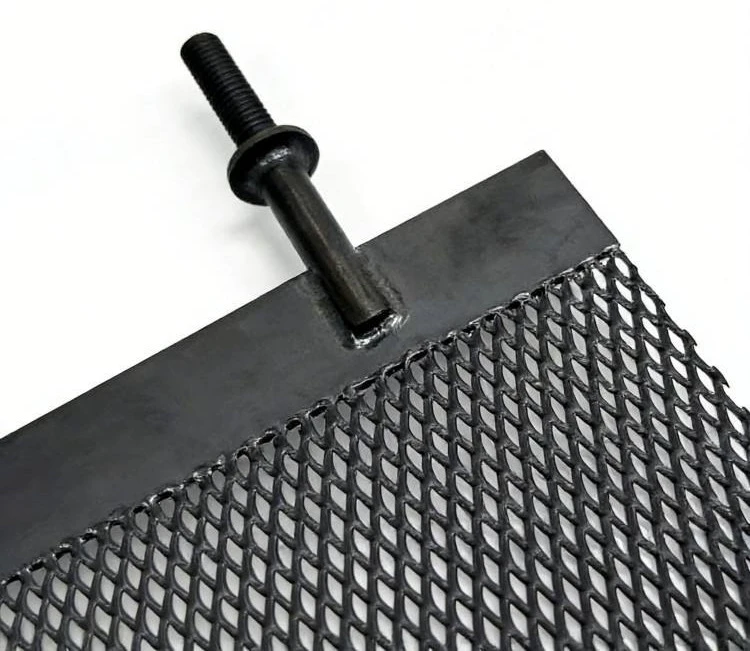
- Anode structure: Plate, mesh, tubular, or other customized geometry.
- Coating requirements: Ru-Ir, Ir-Ta, or another coating system, subject to technical evaluation.
- Service requirements: Expected operating conditions and applicable inspection requirements.
These details help determine whether the proposed coating system is suitable for the project.
For example, an anode used in a seawater electrochlorination system may have different requirements from one used in concentrated brine electrolysis.
Even when both systems produce chlorine-related products, their operating environments are not identical.
6. Customized MMO Titanium Anodes from ZXB
Different chlorine production systems require different anode structures and coating specifications.
ZXB supplies customized MMO titanium anodes for electrolysis and water treatment applications.
Available supply options include:
- Ru-Ir and other MMO coating systems, subject to application requirements.
- Titanium plate, mesh, and tubular substrates.
- Customized dimensions and active surface areas.
- Different connection and mounting structures.
- Coating specifications and agreed quality inspection arrangements.
Customers can provide drawings, existing electrode samples, or basic operating information.
For projects involving chlorine production, it is particularly helpful to include the electrolyte concentration, operating temperature, current density, and intended output.
ZXB can review these details and discuss suitable substrate structures and coating options before confirming the production arrangement.
The objective is to match the anode design with the actual equipment and operating conditions, rather than offer the same coating specification for every project.
Frequently Asked Questions
Q1: Does RuO₂ Increase Chlorine Evolution Activity?
A: RuO₂ is an important catalytic component in many chlorine evolution anodes. Its content and distribution influence the reaction activity, but the complete coating formulation also needs to be considered.
Q2: What Is The Difference Between Ru-Ir And Ir-Ta Coatings?
A: They use different oxide combinations and may be designed for different electrochemical applications. Their suitability depends on the intended reaction, electrolyte, and operating conditions.
Q3: Does Adding More IrO₂ Improve Chlorine Production?
A: Not necessarily. IrO₂ can influence both chlorine and oxygen evolution behavior. Its effect depends on the other coating components and their proportions.
Q4: Why Is TiO₂ Added To MMO Coatings?
A: TiO₂ helps control the mixed oxide composition and coating structure. It can also reduce the amount of noble metal oxide required in the formulation.
Q5: Does Ta₂O₅ Participate Directly In Chlorine Evolution?
A: Ta₂O₅ is generally used as a supporting oxide rather than the main chlorine evolution catalyst. Its role is related more to coating stability and formulation characteristics.
Q6: Can The Same MMO Coating Be Used For Seawater And Concentrated Brine?
A: Not automatically. The two applications can have different chloride concentrations, pH values, temperatures, and operating conditions. The coating system should be evaluated for the specific electrolyte.
Q7: What Information Is Needed To Recommend An MMO Anode?
A: The application, electrolyte composition, operating temperature, current density, anode dimensions, and required production capacity are useful starting points. Drawings and existing samples can also help with product selection.
Contact Us
Looking for MMO titanium anodes for chlorine production, seawater electrochlorination, or sodium hypochlorite generation?
ZXB can support customized anode structures and coating options based on your equipment and operating requirements.
Email: jack@zxb-titanium.com
You are welcome to send us your drawings, technical specifications, or existing electrode samples for evaluation.
Recommended Reading
What Determines the Coating Adhesion of MMO Titanium Anodes?