




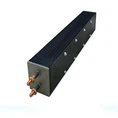

In the realm of copper electrowinning, titanium anodes play a pivotal role. As a supplier of Copper Electrowinning Titanium Anode, I am deeply involved in understanding the reaction mechanism of these anodes. This knowledge is not only crucial for the efficient operation of copper electrowinning processes but also for the development and improvement of our anode products.
The Basics of Copper Electrowinning
Copper electrowinning is an electrochemical process used to extract copper from its ores or solutions. It involves the deposition of copper onto a cathode from a copper - containing electrolyte. The overall reaction in copper electrowinning can be represented as:

[Cu^{2 + }+ 2e^-\rightarrow Cu]
This reaction occurs at the cathode. At the anode, oxidation reactions take place, and the anode material must be able to withstand the harsh electrochemical environment and promote the desired reactions.
Titanium Anodes in Copper Electrowinning
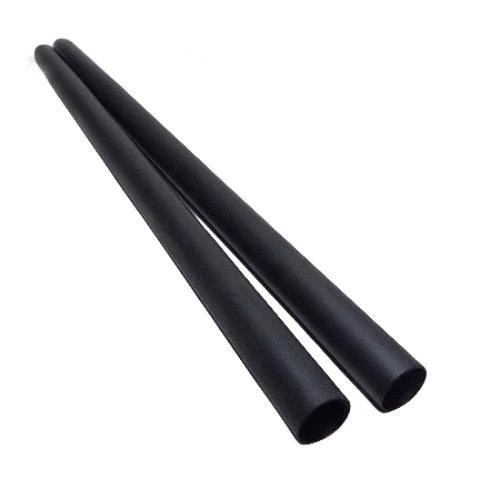
Titanium anodes are widely used in copper electrowinning due to their excellent corrosion resistance and high electrical conductivity. They are often coated with mixed metal oxides (MMO) to enhance their performance. For example, our MMO Coated Titanium Disc Anode and Ru - Ir Coated Titanium Anode Tube are designed to provide optimal performance in copper electrowinning applications.
Reaction Mechanism at the Titanium Anode
Oxygen Evolution Reaction (OER)
The main reaction that occurs at the titanium anode in copper electrowinning is the oxygen evolution reaction (OER). The OER can be represented by the following half - reaction:
[2H_2O\rightarrow O_2 + 4H^++4e^-]
This reaction is thermodynamically and kinetically complex. The MMO coating on the titanium anode plays a crucial role in facilitating this reaction. The coating provides active sites for the adsorption of water molecules and the subsequent oxidation steps.
The first step in the OER mechanism is the adsorption of water molecules on the anode surface. The MMO coating has a high surface area and specific catalytic properties that allow for efficient water adsorption. Once the water molecules are adsorbed, they undergo a series of electron - transfer steps.
The first electron transfer results in the formation of a hydroxyl radical ((OH)) on the anode surface:
[H_2O\rightarrow OH+ H^++e^-]
Subsequent electron transfers lead to the formation of oxygen gas. The overall process involves multiple intermediate steps, and the MMO coating helps to lower the activation energy for these steps, thereby increasing the reaction rate.
Side Reactions
In addition to the OER, there may be some side reactions at the anode. For example, the oxidation of chloride ions ((Cl^-)) in the electrolyte can occur if chloride is present. The reaction can be represented as:
[2Cl^-\rightarrow Cl_2+2e^-]
However, the MMO coating on the titanium anode is designed to suppress this side reaction to a large extent. The coating has a high selectivity for the OER, which means that it promotes the oxygen evolution reaction while minimizing the oxidation of other species in the electrolyte.
Factors Affecting the Reaction Mechanism
Electrolyte Composition
The composition of the electrolyte has a significant impact on the reaction mechanism at the titanium anode. The concentration of copper ions, sulfuric acid, and other additives in the electrolyte can affect the OER rate and the occurrence of side reactions. For example, a higher concentration of sulfuric acid can increase the conductivity of the electrolyte and promote the OER. However, it can also increase the corrosion rate of the anode if not properly controlled.
Temperature
Temperature is another important factor. An increase in temperature generally increases the reaction rate of the OER. However, high temperatures can also lead to increased corrosion of the anode and the degradation of the MMO coating. Therefore, an optimal temperature range needs to be maintained for efficient and long - term operation.
Current Density
The current density applied to the anode also affects the reaction mechanism. Higher current densities can increase the rate of the OER, but they can also lead to over - potential and the formation of unwanted by - products. A proper balance of current density is required to ensure efficient copper electrowinning.
Advantages of Our Titanium Anodes in Copper Electrowinning
Our Copper Electrowinning Titanium Anode offers several advantages in terms of the reaction mechanism. The MMO coating on our anodes is carefully designed to have high catalytic activity for the OER. This means that the anodes can operate at lower over - potentials, which reduces energy consumption and increases the efficiency of the copper electrowinning process.
The anodes also have excellent corrosion resistance, which ensures a long service life. The selectivity of the MMO coating helps to minimize side reactions, which improves the purity of the copper produced and reduces the need for additional purification steps.
Conclusion
Understanding the reaction mechanism of titanium anodes in copper electrowinning is essential for optimizing the process and improving the performance of the anodes. Our company, as a supplier of Copper Electrowinning Titanium Anode, is committed to continuous research and development to enhance the performance of our anodes.
If you are involved in the copper electrowinning industry and are looking for high - quality titanium anodes, we invite you to contact us for procurement and further discussions. We are confident that our anodes can meet your specific requirements and contribute to the efficient operation of your copper electrowinning process.
References
- Chen, J., & Wang, H. (2018). Electrochemical oxygen evolution reaction on transition metal oxides and (oxy)hydroxides: activity descriptors and design principles. Chemical Society Reviews, 47(20), 7561 - 7580.
- Trasatti, S. (1980). Electrocatalysis in the anodic evolution of oxygen and chlorine. Electrochimica Acta, 25(7), 733 - 745.
- Bard, A. J., & Faulkner, L. R. (2001). Electrochemical methods: fundamentals and applications. John Wiley & Sons.