


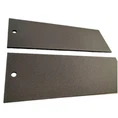

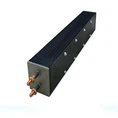

Hey there! As a supplier of Lead Dioxide Titanium Anodes, I often get asked about the charge - discharge behavior of these anodes. So, let's dive right into it.
First off, let's understand what a Lead Dioxide Titanium Anode is. It's a type of anode that consists of a titanium substrate with a lead dioxide coating. Titanium is used as the substrate because it's highly corrosion - resistant, which is super important in an anode. The lead dioxide coating is where the magic happens. It has excellent electro - catalytic properties, making it suitable for a wide range of applications, from electroplating to water treatment.
Charge Behavior
When it comes to the charge behavior of Lead Dioxide Titanium Anodes, it all starts with the application of an external electric current. The anode is connected to the positive terminal of a power source. As the current flows, oxidation reactions occur at the anode surface.
In an electrolytic cell, for example, when we're dealing with water electrolysis, the lead dioxide coating on the anode helps in the oxidation of water molecules. The reaction can be represented as:
2H₂O → O₂ + 4H⁺+ 4e⁻
The lead dioxide acts as a catalyst, lowering the activation energy required for this reaction to take place. This means that the reaction can occur more readily, and we can achieve higher current densities at a lower over - potential.
The charge behavior also depends on the composition of the electrolyte. Different electrolytes have different ions, and these ions can interact with the anode surface. For instance, in an acidic electrolyte, the hydrogen ions (H⁺) can affect the charge transfer process. The lead dioxide surface can adsorb these ions, which can either enhance or inhibit the oxidation reactions.
Another factor that influences the charge behavior is the surface area of the anode. A larger surface area provides more sites for the oxidation reactions to occur. This is why we often try to optimize the surface structure of the lead dioxide coating to increase its effective surface area.
Discharge Behavior
Now, let's talk about the discharge behavior. When the external power source is removed or the circuit is broken, the anode starts to discharge. The stored charge on the anode is released, and reduction reactions start to take place.
In some cases, the lead dioxide can undergo a reduction reaction. For example, it can be reduced back to lead(II) compounds. The reduction reaction can be written as:
PbO₂ + 4H⁺+ 2e⁻ → Pb²⁺+ 2H₂O
This discharge process is important because it can affect the long - term performance of the anode. If the discharge is not properly controlled, it can lead to the degradation of the lead dioxide coating. This is why it's crucial to understand the discharge behavior and take steps to minimize any negative effects.
Comparison with Other Anodes
It's also interesting to compare the charge - discharge behavior of Lead Dioxide Titanium Anodes with other types of anodes. For example, the Ruthenium - Iridium Coated Titanium Anode Plate. Ruthenium - iridium coated anodes are known for their high catalytic activity and stability in a wide range of electrolytes.
However, Lead Dioxide Titanium Anodes have some advantages in certain applications. They are relatively cheaper to produce, and they have a high oxygen evolution over - potential, which makes them suitable for applications where oxygen evolution is the main reaction, such as in some electroplating processes.
On the other hand, the High - Purity Iridium - Tantalum Coated Titanium Anode Plate is also a popular choice. These anodes have excellent corrosion resistance and high catalytic activity. But again, Lead Dioxide Titanium Anodes can offer a more cost - effective solution in some cases.
Applications and the Role of Charge - Discharge Behavior
The charge - discharge behavior of Lead Dioxide Titanium Anodes plays a crucial role in their applications. In electroplating, for example, the charge behavior determines how efficiently the metal ions can be deposited on the cathode. A well - behaved anode with a stable charge transfer process can lead to a more uniform and high - quality plating.
In water treatment, the oxidation reactions at the anode are used to remove contaminants from the water. The charge behavior of the anode affects the rate and efficiency of these oxidation reactions. A good anode should be able to maintain a high current density and a stable oxidation potential over a long period of time.
Factors Affecting Charge - Discharge Cycles
There are several factors that can affect the charge - discharge cycles of Lead Dioxide Titanium Anodes. One of the main factors is the temperature. Higher temperatures can increase the reaction rates, but they can also accelerate the degradation of the anode. So, it's important to operate the anode within a suitable temperature range.


The concentration of the electrolyte is another important factor. A high concentration of certain ions can cause passivation of the anode surface, which can reduce its performance. On the other hand, a low concentration may not provide enough ions for the reactions to occur efficiently.
Maintaining Anode Performance
To maintain the performance of Lead Dioxide Titanium Anodes, proper maintenance is essential. This includes regular cleaning of the anode surface to remove any deposits that may form during the charge - discharge cycles. It's also important to monitor the electrolyte composition and temperature to ensure optimal operating conditions.
If you're in the market for a reliable anode for your application, our Lead Dioxide Titanium Anode is a great choice. We've been in the business for a long time, and we know how to produce high - quality anodes that offer excellent charge - discharge behavior.
If you have any questions or if you're interested in purchasing our anodes, don't hesitate to get in touch. We're here to help you find the best solution for your specific needs.
References
- Bard, A. J., & Faulkner, L. R. (2001). Electrochemical Methods: Fundamentals and Applications. Wiley.
- Trasatti, S. (1980). Electrodes of Conductive Metallic Oxides. Elsevier.