


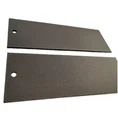
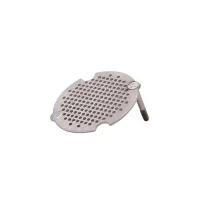


As a supplier of Lead Dioxide Titanium Anodes, I've witnessed firsthand the diverse applications and challenges these anodes face in various industrial environments. One critical factor that significantly impacts the performance and longevity of lead dioxide titanium anodes is the high - pressure environment. In this blog, I'll delve into how high - pressure conditions affect these anodes and what it means for industries relying on them.
Physical and Chemical Changes under High Pressure
High - pressure environments can induce a series of physical and chemical changes in lead dioxide titanium anodes. Physically, the anode material may experience compression. The titanium substrate, which provides mechanical support for the lead dioxide coating, can be affected by the high - pressure forces. Titanium is a relatively strong metal, but under extreme pressure, it may undergo elastic or even plastic deformation. Elastic deformation means that the titanium will return to its original shape once the pressure is removed. However, if the pressure exceeds the yield strength of titanium, plastic deformation occurs, which can lead to permanent shape changes.
These physical changes in the titanium substrate can have a cascading effect on the lead dioxide coating. The lead dioxide layer is typically deposited on the titanium substrate through a specialized coating process. When the substrate deforms, it can cause stress on the coating. This stress may result in cracking or delamination of the lead dioxide layer. Cracks in the coating expose the underlying titanium substrate to the electrolyte, which can lead to corrosion of the substrate. Once the substrate starts to corrode, it can compromise the mechanical integrity of the anode and affect its overall performance.
Chemically, high pressure can alter the electrochemical reactions occurring at the anode surface. The electrochemical performance of lead dioxide titanium anodes is based on the redox reactions involving lead dioxide. Under high pressure, the solubility of the reaction products and the diffusion rates of ions in the electrolyte can change. For example, the solubility of some metal ions produced during the anodic reactions may increase under high pressure. This can lead to a higher rate of dissolution of lead dioxide from the anode surface, reducing the thickness of the coating over time.
Impact on Anode Performance
The changes induced by high pressure have a direct impact on the performance of lead dioxide titanium anodes. One of the primary performance indicators is the anode potential. The anode potential is crucial for maintaining the desired electrochemical reactions in the system. Under high - pressure conditions, the physical and chemical changes mentioned above can cause fluctuations in the anode potential. If the anode potential deviates from the optimal range, it can affect the efficiency of the electrochemical process.
For instance, in electroplating applications, a stable anode potential is necessary to ensure uniform deposition of the metal on the cathode. If the anode potential changes due to high - pressure effects, the plating rate may vary, resulting in uneven coating thickness on the workpiece. This can lead to quality issues and increased production costs.
Another important performance aspect is the current efficiency. Current efficiency refers to the ratio of the actual amount of electrochemical reaction to the theoretical amount based on the applied current. High pressure can reduce the current efficiency of lead dioxide titanium anodes. The changes in ion diffusion rates and the dissolution of the anode coating can cause side reactions to occur more frequently. These side reactions consume electrical energy without contributing to the desired electrochemical process, thereby reducing the overall current efficiency.
Durability and Longevity
The durability and longevity of lead dioxide titanium anodes are also significantly affected by high - pressure environments. As mentioned earlier, the cracking and delamination of the lead dioxide coating due to substrate deformation can accelerate the degradation of the anode. Once the coating is damaged, the anode becomes more susceptible to corrosion and erosion.
Corrosion of the titanium substrate can further weaken the anode structure. The corrosion products can also accumulate on the anode surface, which can block the active sites for electrochemical reactions. This not only reduces the anode performance but also shortens its service life. In some industrial applications where the anodes are expected to operate continuously for long periods, the reduced durability can lead to frequent anode replacements, increasing maintenance costs and downtime.
Mitigation Strategies
To address the challenges posed by high - pressure environments, several mitigation strategies can be employed. One approach is to optimize the anode design and manufacturing process. For example, using a thicker titanium substrate can enhance its mechanical strength and resistance to deformation under high pressure. Additionally, improving the adhesion between the lead dioxide coating and the titanium substrate can reduce the risk of coating delamination.
Another strategy is to select the appropriate electrolyte and operating conditions. Some electrolytes are more stable under high - pressure conditions and can help minimize the corrosion and dissolution of the anode. Adjusting the temperature, pH, and current density of the electrochemical system can also help maintain the performance of the anode in a high - pressure environment.
Comparison with Other Anode Types
It's also interesting to compare the performance of lead dioxide titanium anodes with other types of anodes in high - pressure environments, such as MMO Coated Titanium Disc Anode and Ru - Ir Coated Titanium Anode Tube. MMO (Mixed Metal Oxide) coated titanium disc anodes are known for their high electrochemical activity and good corrosion resistance. In high - pressure environments, the MMO coating may also be affected by physical and chemical changes, but its performance characteristics may differ from those of lead dioxide titanium anodes.
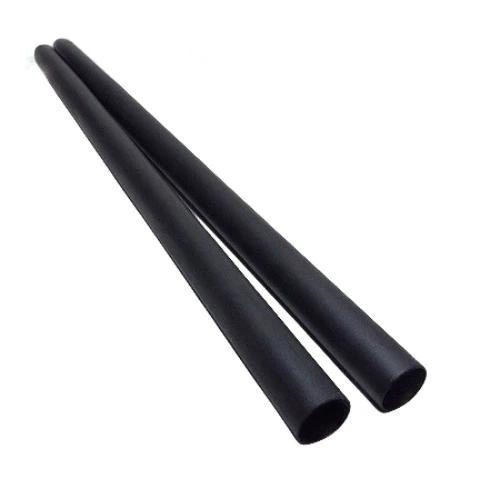
Ru - Ir coated titanium anode tubes are often used in applications where high current density and long - term stability are required. The ruthenium - iridium coating has unique electrochemical properties that may make it more or less suitable for high - pressure conditions compared to lead dioxide titanium anodes. Understanding these differences can help industries choose the most appropriate anode type for their specific high - pressure applications.

Conclusion
In conclusion, high - pressure environments have a profound impact on lead dioxide titanium anodes. The physical and chemical changes induced by high pressure can affect the anode's performance, durability, and longevity. However, by understanding these effects and implementing appropriate mitigation strategies, industries can still make effective use of lead dioxide titanium anodes in high - pressure applications.
As a supplier of Lead Dioxide Titanium Anode, I'm committed to providing high - quality anodes that can withstand the challenges of various environments, including high - pressure conditions. If you're in the market for lead dioxide titanium anodes or need more information about their performance in high - pressure applications, feel free to contact us for a detailed discussion and potential procurement.
References
- Bard, A. J., & Faulkner, L. R. (2001). Electrochemical Methods: Fundamentals and Applications. John Wiley & Sons.
- Conway, B. E. (1999). Electrochemical Supercapacitors: Scientific Fundamentals and Technological Applications. Kluwer Academic Publishers.
- Trasatti, S. (1991). Electrodes of Conductive Metallic Oxides. Elsevier.