


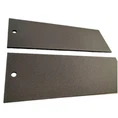

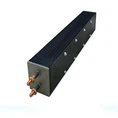

As a supplier of Titanium Anode For Copper Plating, I often encounter questions from clients regarding the suitability of our anodes for continuous copper plating operations. In this blog, I will delve into the technical aspects and practical considerations to answer the question: Can a titanium anode for copper plating be used in continuous copper plating operations?
Understanding Titanium Anodes for Copper Plating
Titanium anodes are widely used in copper plating due to their excellent corrosion resistance, high electrical conductivity, and long service life. Our Titanium Anode for Copper Plating is specifically designed to meet the stringent requirements of the copper plating industry. These anodes are coated with a special catalytic layer that enhances the electrochemical reaction, ensuring efficient and uniform copper deposition on the substrate.
The Process of Continuous Copper Plating
Continuous copper plating is a high - throughput process used in various industries, such as electronics manufacturing, automotive, and aerospace. In this process, workpieces are continuously fed through a plating bath, where copper is deposited on their surfaces. The key to a successful continuous plating operation is maintaining a stable and consistent plating environment, including the anode performance.
Advantages of Using Titanium Anodes in Continuous Copper Plating
1. Corrosion Resistance
In a continuous copper plating bath, the anode is constantly exposed to a highly corrosive environment. Titanium anodes have a natural oxide layer that provides excellent protection against corrosion. This means that they can withstand the harsh chemical conditions in the plating bath for an extended period, reducing the need for frequent anode replacement. For example, in a high - volume electronics manufacturing plant, using our titanium anodes can significantly reduce downtime associated with anode maintenance.


2. Uniform Current Distribution
In continuous plating, uniform copper deposition is crucial for achieving high - quality plated products. Titanium anodes are designed to provide a uniform current distribution across the plating bath. The catalytic coating on the anode surface promotes a more even electrochemical reaction, resulting in a consistent copper layer thickness on the workpieces. This is particularly important in applications where precise plating thickness is required, such as in the production of printed circuit boards.
3. Long Service Life
The long service life of titanium anodes is a significant advantage in continuous copper plating operations. Unlike traditional anodes that may need to be replaced frequently, our titanium anodes can last for a long time, reducing the overall cost of the plating process. This is especially beneficial for large - scale continuous plating operations, where anode replacement can be time - consuming and costly.
Challenges and Considerations
1. Initial Cost
One of the main challenges of using titanium anodes is their relatively high initial cost compared to some other types of anodes. However, when considering the long - term benefits, such as reduced maintenance and replacement costs, the overall cost - effectiveness of titanium anodes becomes evident.
2. Coating Maintenance
The catalytic coating on titanium anodes needs to be properly maintained to ensure optimal performance. Over time, the coating may wear out or become contaminated, which can affect the anode's efficiency. Regular monitoring and maintenance of the anode coating are essential for continuous copper plating operations.
3. Compatibility with Plating Bath Chemistry
The performance of titanium anodes can be affected by the chemistry of the plating bath. It is important to ensure that the plating bath composition is compatible with the titanium anode. For example, certain additives or contaminants in the bath may react with the anode coating, leading to reduced performance.
Case Studies
Let's take a look at some real - world examples of using titanium anodes in continuous copper plating operations. A leading electronics manufacturer was facing issues with inconsistent copper plating thickness and frequent anode replacement in their continuous plating line. After switching to our Titanium Anode for Copper Plating, they noticed a significant improvement in the quality of the plated products. The uniform current distribution provided by the titanium anodes resulted in a more consistent copper layer thickness, and the long service life of the anodes reduced downtime and maintenance costs.
Another case is a copper recovery operation from an etching solution. Our Titanium Anode for Copper Recovery From Etching Solution was used in a continuous process to recover copper from the solution. The high corrosion resistance of the titanium anode allowed it to operate effectively in the corrosive etching solution, and the efficient electrochemical reaction ensured a high copper recovery rate.
Conclusion
In conclusion, a titanium anode for copper plating can indeed be used in continuous copper plating operations. The advantages of corrosion resistance, uniform current distribution, and long service life make titanium anodes a suitable choice for high - volume, continuous plating processes. However, it is important to consider the initial cost, coating maintenance, and compatibility with the plating bath chemistry.
If you are interested in learning more about our titanium anodes for copper plating or have any questions regarding their application in continuous copper plating operations, please feel free to contact us. We are committed to providing high - quality products and professional technical support to meet your specific needs.
References
- Jones, A. (2018). Electroplating Technology Handbook. Elsevier.
- Smith, B. (2019). Advances in Anode Materials for Electroplating. Journal of Electrochemical Science.
- Brown, C. (2020). Continuous Plating Processes in the Electronics Industry. Industrial Plating Magazine.