Product Introduction
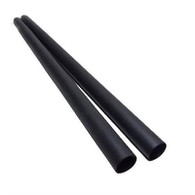
- Grade 5 seamless titanium tube is used for structural and load-bearing applications requiring higher strength and stiffness than commercially pure titanium.
- Ti-6Al-4V tubing is selected where wall thickness, tube geometry, and resistance to deformation are defined by the final assembly.
- Typical uses include high-strength structural tubing, motorsport components, machined tubular parts, and mechanically loaded assemblies.
Product Parameter
- Grade 5 seamless titanium tube is normally ordered by outside diameter, wall thickness, length, and required material condition.
- Straightness, ovality, surface finish, end preparation, and inspection requirements should be confirmed according to the final machining, welding, or assembly process.
- The table below shows the general supply range. Non-standard dimensions can be reviewed based on drawings, quantity, and application requirements.
| Item | Specification |
|
Material Grade |
Titanium Grade 5 (Ti-6Al-4V Alloy) |
|
Standard |
ASTM B861 |
|
Manufacturing Process |
Extrusion / Hot Working → Cold Working as Required → Annealing → Sizing & Straightening → Surface Treatment |
|
Diameter Range |
Ø20 mm – Ø114 mm (Customized Available) |
|
Length |
Up to 6000 mm (cut-to-length or fixed length) |
|
Wall Thickness |
0.5 mm – 8 mm (depending on OD and process) |
|
Surface Finish |
Pickled / Bright Annealed / Precision Drawn |
|
Mechanical Properties |
Tensile Strength: ≥ 895 MPa, Yield Strength (0.2%): ≥ 828 MPa, Elongation: ≥ 10% |
|
Chemical Composition |
Al 5.5–6.75%, V 3.5–4.5%, Fe ≤ 0.40%, O ≤ 0.20%, C ≤ 0.08%, N ≤ 0.05%, H ≤ 0.015%, Ti balance |
|
Testing |
Ultrasonic Testing (UT), Eddy Current Testing (ECT), Chemical Composition Analysis (PMI), Mechanical Properties Test, Hydrostatic Test (when specified), Flattening / Flaring Test |
| Common Applications | Aerospace Structural Tubes, Aerospace Structural Components, High-Load Automotive Tubing, Motorsport Components, High-Strength Industrial Equipment |
Quality Management
Quality inspection

Hydrostatic Test

Ultrasonic Testing (UT)

Chemical Composition Analysis (PMI)

Mechanical Properties Test

Flaring Test / Flattening Test

EddyCurrentTesting (ECT)
- Inspection for Grade 5 seamless titanium tube begins with the load case and the condition in which the tube will enter machining, welding or final assembly. The main review points are wall-thickness distribution, ovality, straightness, alloy condition and any nondestructive testing required for fatigue-sensitive or pressure-bearing sections.
- Where a drawing identifies a critical section, the inspection scope should correspond to that location rather than relying only on general catalog values. Heat-lot identification, mechanical test results, dimensional records and any agreed ultrasonic or pressure-test report are linked to the supplied production batch.
- The purpose is to confirm that the tube is ready for the next controlled operation, with the geometry and material condition required for the planned load path.
Common applications
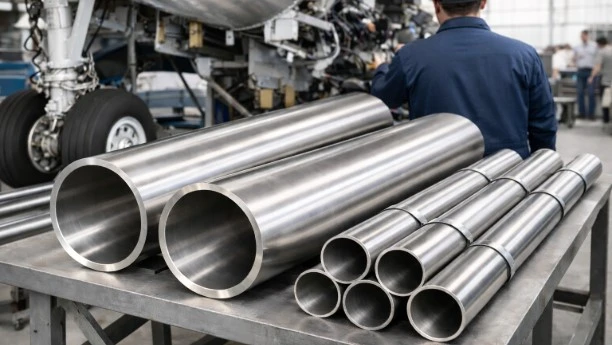
Aerospace and high-load tubular components
Used in aircraft and aerospace systems where tubes are exposed to combined mechanical loads and weight limits.
Grade 5 is selected when structural contribution and fatigue resistance are required rather than simple fluid transfer.
Performance automotive and motorsport tubing
Applied in chassis-related tubing, suspension-linked structures, and reinforced fluid lines where reduced weight, high stiffness, and resistance to vibration are critical under dynamic operating conditions.


High-strength industrial and energy system tubing
Used in pressure-containing or mechanically stressed tube assemblies where commercially pure titanium is insufficient, and long-term dimensional stability under load is part of the design requirement.
Packaging and Transportation
- Grade 5 seamless titanium tubes are packed according to tube length, wall thickness and the next manufacturing step. Tubes intended for machining or welded structural assemblies are supported at controlled points, separated to prevent local contact marks and restrained against movement that could introduce bow or end damage.
- Size groups and heat lots can be identified during packing so the material can move more efficiently through receiving inspection and into the planned production batch.


Why Choose Grade 5 Seamless Titanium Tube
Higher Strength for Load-Bearing Designs
Grade 5 provides higher strength and stiffness than commercially pure titanium, making it suitable for structural tubes and mechanically loaded assemblies.
Dimensions Matched to the Final Design
Outside diameter, wall thickness, length, and tolerances can be prepared according to drawings, machining allowances, and connection requirements.
Inspection Based on Service Requirements
Straightness, ovality, chemical composition, mechanical properties, UT, and hydrostatic testing can be specified according to the intended application.
Packed to Protect Tube Geometry
Long or thin-wall tubes are separated and supported to reduce bending, contact marks, and local deformation during transportation.
FAQ
Q: Is Grade 5 seamless tubing necessary for my application, or is it over-specified?
A: This is a common question, especially when projects initially consider commercially pure titanium.
Grade 5 is usually chosen when load, vibration, or long-term reliability leaves limited margin.
Many customers come to this conclusion after reviewing operating conditions rather than material data alone. Clarifying how the tube will actually be used often makes the decision clearer.
Q: Do I need to finalize all dimensions before discussing Grade 5 tubing?
A: Not necessarily. In practice, many inquiries start with partial information such as a drawing, a target load, or a connection requirement.
Outer diameter, wall thickness, or tolerance levels are often refined after checking feasibility and processing needs.
Early discussion usually helps avoid locking in sizes that are difficult to machine or assemble later.
Q: How sensitive is Grade 5 tubing to straightness and machining conditions?
A: Compared with lower-strength grades, Grade 5 leaves less room for correction once processing begins.
Straightness, residual stress, and machining allowance tend to matter more, especially for longer tubes or tight setups.
This is why customers often raise these points early, before material is released for fabrication.
Q: What should be considered before shipment if the tubes go directly into production?
A:Many Grade 5 seamless tubes are delivered for immediate machining or welding.
In these cases, maintaining geometry during handling and transport is more important than surface appearance.
Customers usually review packaging approach, support points, and tube length in advance to ensure the material can move straight into the next operation.
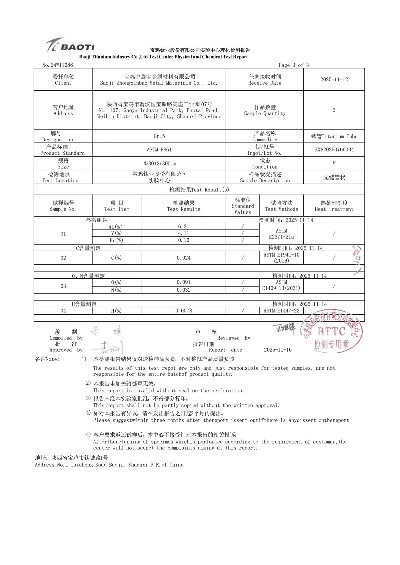
Product testing certificate


Contact us
Whats App
Address
No. 107, Gaoya Industrial Park, Baotai Road, Weibin District, Baoji City, Shaanxi Province
Hot Tags: ti-6al-4v grade 5 seamless titanium tube, China ti-6al-4v grade 5 seamless titanium tube manufacturers, suppliers, factory