


What Is Ruthenium-Iridium Coated Titanium Anode Plate Used For?
A Ruthenium-Iridium Coated Titanium Anode Plate is usually found in chloride electrolysis equipment. The most familiar examples are sodium hypochlorite generators and electrochlorination cells.
The reason is simple. Ru-Ir based MMO coatings are well suited to chlorine-evolution service. The titanium plate itself is not the active material. It supports the coating, carries the current, and fits the electrode into the cell.
Sodium Hypochlorite and Electrochlorination Systems
Many Ru-Ir coated anode plates are made for salt-water electrolysis. The feed may be prepared brine. It may also be seawater.
Inside the cell, current passes between the electrodes. Chloride is oxidized at the anode surface. From a purchasing point of view, this is where the application starts to matter.
A small hypochlorite generator may use compact rectangular plates. A larger electrochlorination unit may use several plates arranged in parallel. Some designs expose both sides of the anode, while others use only one active face.
The product name can be the same. The actual electrode specification is not.
This is why an enquiry such as Ru-Ir titanium anode plate, 300 × 200 mm is still missing useful information. We would normally also want to know what water is being treated and how the plate sits inside the cell.
That often explains the design better than the dimensions alone.
The Plate Shape Fits Flat Electrode Cells
Plate anodes are easy to understand from an equipment drawing. They are normally installed opposite a cathode, and the gap between them is controlled by the cell design.
Several electrode pairs can be placed inside the same housing. For this kind of arrangement, a flat titanium plate is practical.
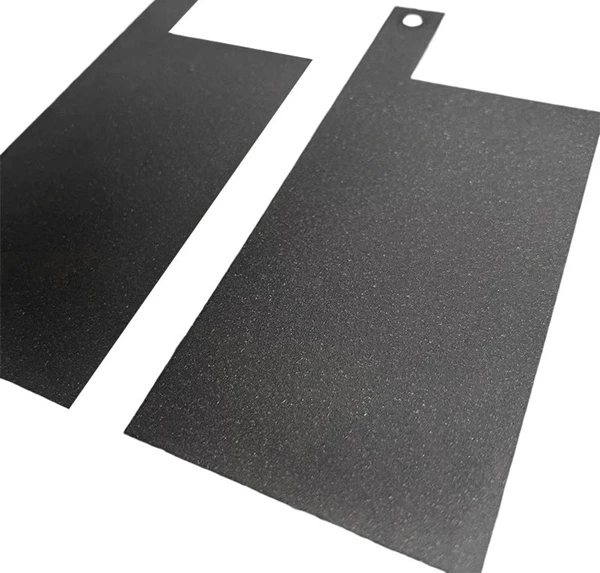
It is easy to cut. Holes or slots can be added. A titanium strip, rod, tab, or other connection can also be welded to it. The coating area can then be defined according to the working zone.
This part needs attention. A plate may be 400 mm long, but the upper 80 mm may be left bare for the connection. Another plate may have uncoated edges. Bolt holes may also remain outside the active coating.
So the total plate area and the working area are often different. This matters when the operating current is already fixed.
Ru-Ir Coating Is Commonly Chosen for Chloride Service
For chloride-containing electrolysis, Ru-Ir based MMO coating is a common choice. Ruthenium oxide provides strong activity for chlorine evolution.
Iridium oxide can be included in the mixed oxide coating to adjust the coating system and its operating behavior.
The exact formulation is not always shown on a customer drawing. Sometimes the drawing only says Ru-Ir MMO coating.
That may be enough for an initial quotation. It is not always enough for final production.
If the customer already has a fixed coating specification, we follow that requirement. If not, the application becomes more important.
Prepared brine and natural seawater are not the same service. A unit running continuously is also different from equipment operated only for short periods.
The coating should be discussed around the actual cell rather than around the words "Ru-Ir" alone.
Seawater Service Brings Its Own Problems
Seawater electrochlorination looks straightforward on paper. In practice, the electrode surface may see scale and deposits during operation.
That can change the condition around the plate. A used electrode often shows this clearly.
One side may be relatively clean, while another area may carry heavy deposits. Sometimes the coating is still present, but the cell voltage has already increased.
In other cases, the connection area shows signs of heating while the active surface still looks acceptable. These are different problems, and they should not all be treated as coating failure.
For seawater equipment, cleaning also needs care. The coated plate is not bare titanium.
Hard scraping or aggressive mechanical cleaning can damage the active layer. This is especially relevant when operators are used to cleaning stainless steel or plain titanium parts in the same way.
What About Other Chloride Electrolysis Applications?
Ru-Ir coated titanium plates are not limited to sodium hypochlorite production. They can also appear in other industrial chloride electrolysis systems.
The common point is the anodic reaction. If chlorine evolution is part of the process, a Ru-Ir based titanium anode may be considered.
The plate form is then selected because it suits the cell geometry. For another piece of equipment, mesh or tubular anodes may fit better.
There is no reason to force a plate into every application. A mesh may provide better liquid passage in one cell. A tube may fit a cylindrical chamber.
A plate is useful where a flat, clearly defined working face is needed. The structure follows the equipment.
Replacement Orders Need More Than an Old Size
A large share of custom anode enquiries are replacement jobs. The customer may send an old plate, or only a drawing.
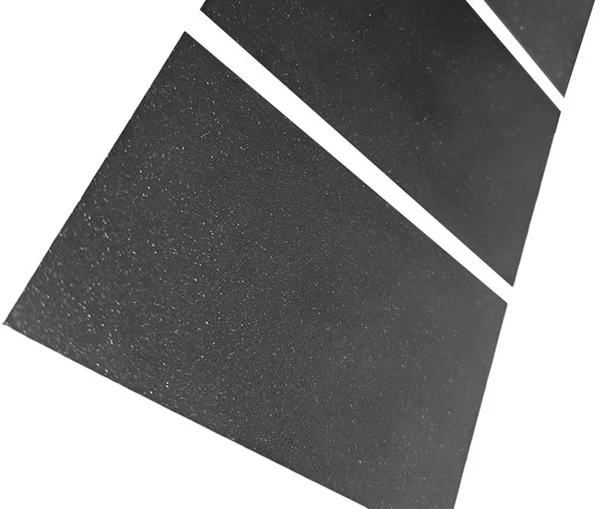
That is enough to reproduce many mechanical details. We can measure the thickness, copy the hole position, see where the coating starts and stops, and reproduce the connection.
What the old plate does not tell us clearly is how it was operated.
If the previous anode worked normally, this may not be a problem. If it failed early, the operating history becomes useful.
For example:
- Was the wear even across the plate?
- Was one edge much worse?
- Was there heavy scaling?
- Did the voltage rise before replacement?
- Was the connection loose or overheated?
These observations can change what should be checked before making the next batch. Simply increasing coating loading is not always the right answer.
What Should Be Sent With an RFQ?
For a Ruthenium-Iridium Coated Titanium Anode Plate, a clear drawing is still the best starting point.
The most useful information is usually:
- Plate size and thickness
- Quantity
- One-side or double-side coating
- Coated length and width
- Uncoated connection area
- Holes, slots, tabs, or welded parts
- Electrolyte or water type
- Operating current
- Application
If the project is a replacement, photos of the old electrode are also useful. A close photo of the coating surface can help. So can a photo of the connection section.
ZXB Company Introduction
Baoji Zhongxinbao manufactures custom Ru-Ir coated titanium anode plates for sodium hypochlorite generation, electrochlorination, brine electrolysis, and other chloride-based electrochemical equipment.
The plate, coating boundary, masking area, and connection structure can be made according to the actual cell design.
FAQ
Q1: Is Ru-Ir coated titanium anode plate used for sodium hypochlorite generation?
A: Yes. This is one of its common applications, especially in chloride-based electrolytic cells.
Q2: Can Ru-Ir coated titanium anode plate be used with seawater?
A: Yes. Ru-Ir coated titanium anodes are commonly used in seawater electrochlorination systems. Scaling and cleaning conditions should also be considered.
Q3: Does the entire plate need Ru-Ir coating?
A: No. Connection areas, holes, edges, or other installation sections may remain uncoated.
Q4: Can an old titanium anode plate be reproduced?
A: Yes. Its dimensions and connection structure can normally be copied. If the old plate had abnormal wear or early failure, operating information should also be reviewed.
Contact Us
For Ru-Ir Coated Titanium Anode Plate enquiries, drawings, or custom requirements:
Email: jack@zxb-titanium.com
Please include the grade, dimensions, quantity, application, and required standard where available.
Related Reading
How Do You Choose A Titanium Anode For Sodium Hypochlorite Generation?