

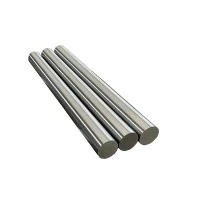


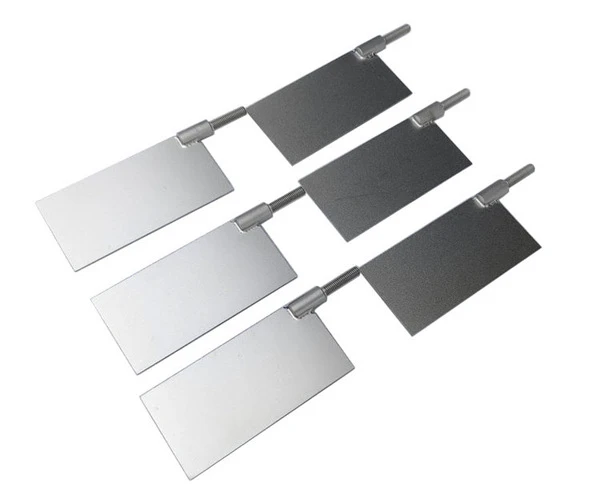
A Titanium Anode for Water Ionizers is usually a small part of a compact electrolysis cell, but replacing one is not simply a matter of matching the plate length and width.
The original electrode may be platinum-coated titanium. Both faces may be active. Part of the surface may be hidden behind a gasket. In some machines, the polarity is periodically reversed during cleaning, so the same electrode does not remain on the anodic side all the time.
These details can be difficult to see from an old plate.
For a replacement or OEM order, the cell design is usually more useful than the outside dimensions alone.
Check the Ionizer Type Before Choosing the Coating
The term "water ionizer" covers more than one type of electrolysis equipment.
A household alkaline water ionizer commonly separates water produced around the cathode and anode through an internal membrane or separator. Hydrogen evolution occurs on the cathodic side, while oxidation takes place on the anodic side.
Platinum-coated titanium electrodes are commonly found in this type of equipment.
Titanium gives the plate or mesh its supporting structure. The platinum surface provides a conductive and electrochemically active interface while protecting the titanium from relying on its naturally passive surface for the working reaction.
This does not mean every product described as an ionizer should automatically use the same platinum specification.
Industrial electrochemical water equipment may have a different purpose.
Some units are designed mainly for water electrolysis. Others may generate disinfecting species or perform another electrochemical treatment.
An MMO coating may make sense in some industrial systems, while a conventional drinking-water ionizer may have been designed around platinized titanium electrodes.
Before quoting a replacement electrode, it is useful to know what the equipment actually produces.
The word "ionizer" is not enough to define the surface.
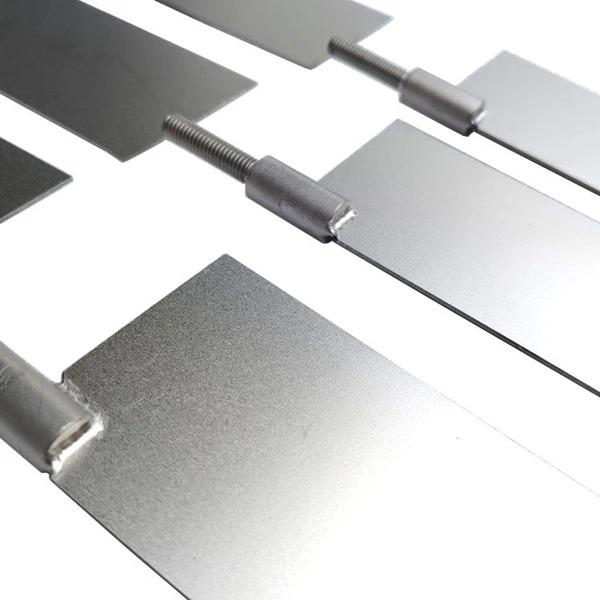
Water Quality Shows Up Quickly Inside a Small Cell
Water ionizer electrodes normally operate with the water supplied to the machine rather than a carefully prepared laboratory electrolyte.
Mineral content therefore matters.
Calcium and magnesium in harder water can contribute to deposits inside the electrolysis chamber. Scale does not have to cover the entire electrode before the equipment begins behaving differently.
A narrow gap between plates can make even moderate buildup noticeable.
This is one reason many commercial water ionizers include an automatic cleaning cycle.
A common approach is temporary polarity reversal. An electrode that was operating on one side of the electrochemical cell is driven with the opposite polarity for part of the cleaning cycle.
For an OEM buyer, this point should be confirmed.
An electrode specified on the assumption that it will remain permanently anodic is not being asked to do exactly the same job as an electrode that repeatedly changes polarity.
The power program therefore belongs in the electrode discussion.
Cleaning outside the automatic cycle matters too.
If mineral deposits are removed with an unsuitable abrasive method, the coating can be damaged even though the titanium underneath still looks normal.
A used plate may then appear mechanically intact while its working surface has already changed.
For replacement projects, it is useful to know whether the old electrode was removed because of visible damage, declining electrolysis performance, scale buildup, or simply routine replacement.
Plate Count Is Less Useful Than the Real Working Surface
Water ionizers are often marketed by the number of electrode plates.
That number alone tells an electrode manufacturer very little.
Five large plates and five small plates do not provide the same active surface.
A solid plate and a mesh electrode also present water to the working surface differently.
Then there are the hidden areas.
Part of the plate may sit behind a gasket. A hole may be used for assembly. An edge may not be coated.
Some electrodes have platinum on both faces because both surfaces take part in the cell arrangement.
When buyers request an OEM Titanium Anode for Water Ionizers, it is therefore better to provide the coated dimensions rather than only the gross titanium dimensions.
Operating current should be read together with that area.
The same electrical load placed on a much smaller active surface creates a different electrode condition.
The electrode gap also belongs to the original cell design.
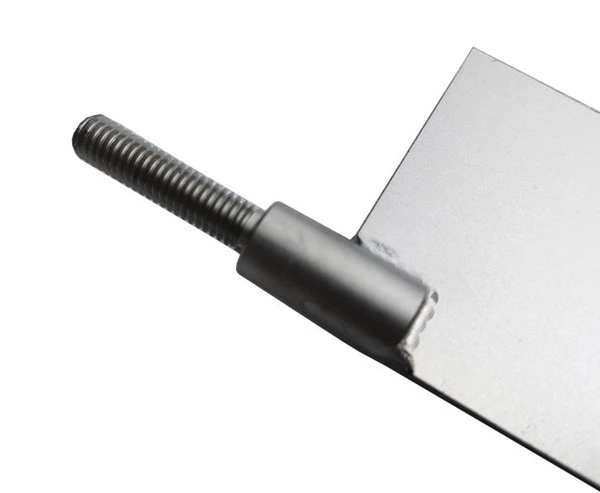
Changing plate thickness or adding a thicker connection section can affect how the assembly fits between separators and gaskets.
This is why copying only the visible part of an old electrode can cause trouble during installation even when the length and width are correct.
Platinum Thickness Should Not Be Treated as a Marketing Number
Buyers sometimes compare water-ionizer electrodes by asking which one has more platinum.
Platinum coating thickness is a legitimate specification. It is not the only one.
A thicker platinum layer may provide more coating material, but useful electrode life also depends on whether the coating is continuous, how well it adheres to the titanium, which surfaces are coated, and what the cell does during operation.
The substrate preparation matters because the coating has to remain attached through repeated electrolysis and cleaning cycles.
Electrical contact matters as well.
A high-quality coated surface does little good if the current enters the electrode through a poor connection.
For this reason, an OEM specification such as:
Titanium plate + 5 μm platinum
still leaves several manufacturing questions open.
Is 5 μm required on both faces?
Is the edge coated?
Which part remains bare for connection or welding?
Does the finished assembly reverse polarity?
What water quality range is the machine designed for?
A drawing can answer some of these questions.
The operating description answers the rest.
For an exact replacement, the safest approach is usually to reproduce the original electrode structure first and change the coating specification only when there is a technical reason to do so.
What Should Buyers Send for an OEM or Replacement Order?
A clear photo of the complete electrode assembly is a useful start.
Removing one plate and measuring it is better.
For custom production, the most useful information normally includes:
· plate or mesh dimensions and thickness;
· titanium grade if known;
· original coating type;
· platinum thickness if specified;
· one-side or two-side coating;
· quantity of electrodes in the cell;
· working voltage and current;
· whether automatic polarity reversal is used;
· electrode spacing and separator arrangement;
· water source or basic mineral/conductivity information;
· gasket, sealing, hole, and connection positions.
If the original coating specification is unknown, that should be stated rather than guessed from the surface color.
ZXB Company Introduction
Baoji Zhongxinbao supplies custom platinum-coated titanium electrodes and coated titanium anodes for water electrolysis and ionizer equipment.
For replacement projects, the electrode drawing, active coating area, polarity mode, and existing cell structure can be reviewed before the production specification is confirmed.
FAQ
Q1: Are Water Ionizer Electrodes Usually Made From Platinum-Coated Titanium?
A: Platinum-coated titanium is commonly used in commercial alkaline water-ionizer electrolysis cells. The exact coating and electrode construction should still be confirmed from the original equipment specification.
Q2: Why Do Some Water Ionizers Reverse Electrode Polarity?
A: Polarity reversal is commonly used as part of an automatic cleaning strategy to reduce mineral accumulation on the electrode surfaces. This operating mode should be disclosed when a replacement electrode is specified.
Q3: Does More Platinum Always Mean A Better Water-Ionizer Electrode?
A: No. Platinum thickness is only one specification. Coating continuity, adhesion, active area, titanium preparation, electrical contact, and the way the cell is operated also affect performance.
Q4: Can An Old Water-Ionizer Electrode Be Copied From A Sample?
A: Usually yes for its mechanical structure. Dimensions, holes, mesh or plate form, coating boundaries, and connection details can be reproduced, but the original coating type and polarity program should also be confirmed when possible.
Contact Us
For Titanium Anode for Water Ionizers enquiries, drawings, or custom requirements:
Email: jack@zxb-titanium.com
Please include the grade, dimensions, quantity, application, and required standard where available.