


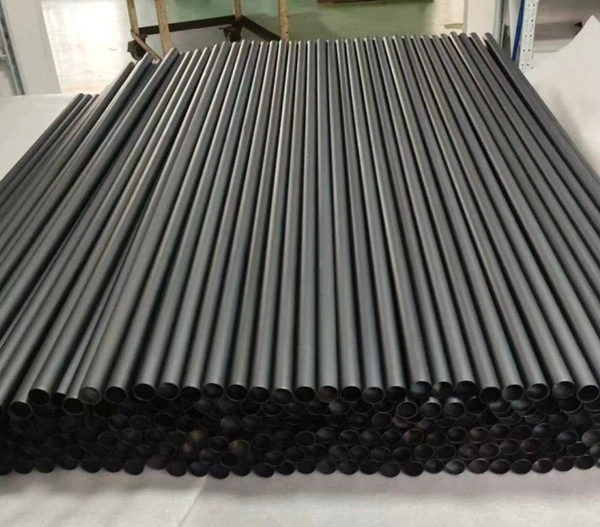
A tubular anode usually appears because the electrolyzer itself gives the electrode a cylindrical space to work in.
The anode may sit inside a larger tubular cathode, around another electrode, or along the center of a narrow electrolysis chamber. In these arrangements, replacing the tube with a flat plate would change much more than the appearance of the electrode.
An MMO Tubular Titanium Anode gives the designer a coated cylindrical working surface while keeping a relatively simple titanium structure underneath.
Its usefulness comes from that combination of geometry and active coating.
The Tube Follows the Shape of the Electrolyzer
Some electrolysis cells are naturally built around flat electrode pairs.
Others are not.
A cylindrical chamber may place a tubular anode along the center with a cathode surrounding it. Another design may reverse that arrangement. Small flow-through cells can also use concentric electrodes so the electrolyte passes through the annular space between them.
A tubular electrode fits these layouts without forcing the cell into a plate-type structure.
The working surface is distributed around the circumference of the tube.
Where the complete outer surface is coated and exposed, the surrounding electrolyte can contact the anode around the cylindrical body rather than mainly from one face.
This can be useful when the counter-electrode also surrounds the anode.
The electrode gap can then be controlled around much of the circumference.
That does not mean a tube automatically gives perfect current distribution.
If the tube is off-center, part of the gap becomes smaller and another part becomes larger.
A connection or support can disturb the geometry as well.
For a replacement MMO Tubular Titanium Anode, the diameter therefore matters together with the position of the tube inside the cell.
The Active Length Is Usually More Important Than the Total Length
A tubular titanium anode may be 500 mm long without having 500 mm of active coating.
The upper section may be used for connection.
One end may pass through a seal.
Part of the tube may sit outside the electrolyte.
Those areas do not necessarily belong in the current-density calculation.
This becomes important in compact electrolysis equipment.
Suppose two tubes have the same outside diameter and total length.
One has 400 mm of exposed MMO coating.
The other has only 250 mm because a longer section is used for installation.
At the same total current, the coating does not see the same electrical load.
For custom production, we therefore prefer to separate:
total tube length
from:
active coated length
The coating boundary should also be clear on the drawing.
This sounds like a small detail until an old tubular electrode is copied from dimensions alone and the new coating starts or stops in the wrong position inside the chamber.
The MMO Coating Still Depends on the Reaction
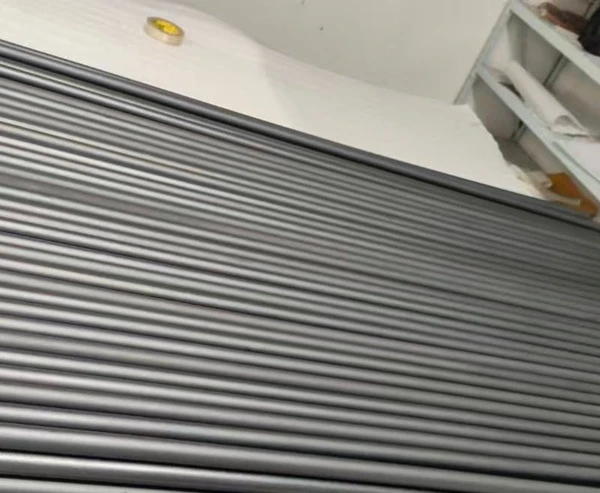
The word "tubular" tells us the electrode shape.
It does not tell us which MMO coating should be applied.
For chloride electrolysis, electrochlorination, or sodium hypochlorite generation, Ru-containing MMO systems are commonly used because chlorine evolution is an intended anodic reaction.
A tubular anode used mainly for oxygen evolution may need a different surface.
Ir-based coatings, including Ir-Ta systems, are widely used for oxygen-evolution duty.
Both electrodes can use a titanium tube as the substrate.
Their electrochemical jobs are different.
This is why an RFQ saying:
MMO titanium tube anode, OD 25 × 500 mm
is still incomplete.
We need to know what solution is being electrolyzed and what should be produced at the anode.
The same issue appears with replacement electrodes.
An old tube may be easy to measure.
Its coating chemistry is much harder to identify from appearance.
If the original specification is unavailable, the process information is more reliable than guessing from coating color.
Tubular Cells Have Their Own Flow and Gas-Release Problems
Electrolyte has to move around the active surface while gas leaves it.
In a concentric cell, both may be happening inside a relatively narrow annular passage.
That makes flow important.
If electrolyte enters from one end and leaves from the other, the tube length becomes part of the hydraulic path.
Gas generated at the anode may travel along the same space.
When gas accumulates around part of the tube, that section no longer has the same liquid contact as the rest of the surface.
The result can be higher local resistance and uneven loading.
Orientation changes this behavior.
A vertical tubular electrode can allow gas to rise along the cell.
A horizontal installation creates a different bubble path.
Flow-through operation changes it again.
This is one reason tubular anodes are often designed together with the reactor rather than purchased as generic coated tubes.
The same outside diameter can perform differently in two cells with different flow directions and electrode gaps.
A Tubular Anode Can Still Fail at the Connection
The coated tube receives most of the attention.
The current enters somewhere else.
A titanium rod, threaded end, welded tab, cable connection, or other current-feed structure has to transfer electrical current into the tube.
If that section develops excessive resistance, the problem can appear as heat or increased operating voltage even while the MMO surface is still usable.
Long tubes deserve particular attention.
Current has to travel through the titanium structure before reaching different parts of the active surface.
Connection design and titanium cross-section therefore need to match the operating current.
For an old electrode, discoloration near the terminal can be useful information.
So can a burned weld or loosened mechanical connection.
These should not automatically be classified as coating failure.
Changing to a heavier MMO coating will not correct a poor current feed.
Why Not Use a Plate or Mesh Instead?
Sometimes a plate really is the better choice.
Sometimes mesh is.
The geometry should follow the equipment.
A flat plate is convenient where two broad electrode faces are arranged opposite each other.
Mesh gives open space for liquid and gas passage and works well in many flow-through or plating arrangements.
A tubular anode is particularly useful where the installation space is cylindrical or where the designer wants an active surface distributed around a central electrode.
The choice also affects active area.
Changing a tubular anode to a rod with a smaller diameter reduces working surface.
Changing to a larger tube increases area but also changes the electrode gap.
Replacing the tube with mesh changes both flow and current distribution.
For an existing electrolyzer, these are cell-design changes rather than simple substitutions.
If the original tube has worked normally, reproducing its geometry is usually the safer starting point.
If there has been uneven wear, high voltage, deposits, or premature coating loss, then the surrounding cell should also be reviewed.
What Information Helps With a Custom Tubular Anode?
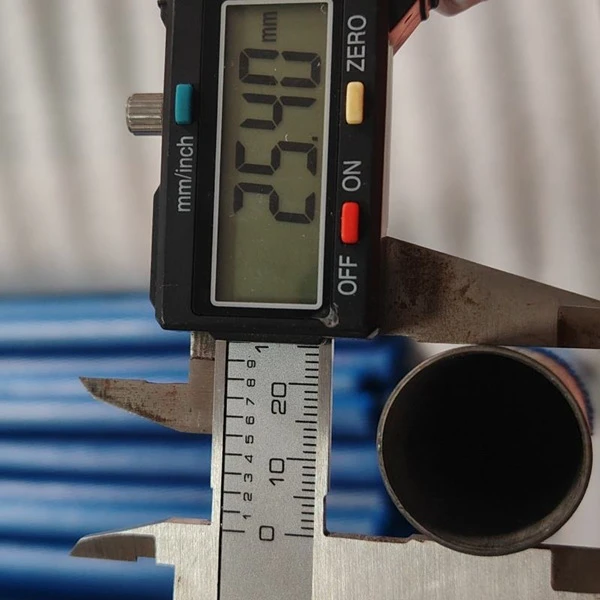
For an MMO Tubular Titanium Anode, the mechanical drawing should show more than outside diameter and length.
Useful information normally includes:
· tube outside diameter and wall thickness;
· total length and active coated length;
· coating type if already specified;
· electrolyte and intended anodic reaction;
· normal operating current;
· anode-to-cathode spacing;
· installation direction;
· connection structure;
· flow direction;
· quantity.
For replacement work, photographs of the complete electrode and the installed cell are helpful.
If the old anode developed problems, photos taken before cleaning can show where deposits or uneven wear actually occurred.
ZXB Company Introduction
Baoji Zhongxinbao supplies custom MMO tubular titanium anodes for electrolysis, electrochlorination, water treatment, and other industrial electrochemical equipment.
Tube dimensions, active coating length, connection structure, and coating system can be reviewed according to the actual cell arrangement.
FAQ
Q1: Is An MMO Tubular Titanium Anode Better Than A Plate Anode?
A: Not automatically. Tubular anodes are useful when the electrolyzer geometry suits a cylindrical electrode. Plate and mesh anodes may be more appropriate in other cell designs.
Q2: Can The Whole Titanium Tube Be Coated?
A: Yes, if the design requires it, but connection, sealing, or mounting sections are often left uncoated. The active coating boundary should be defined on the drawing.
Q3: Which MMO Coating Is Used On Tubular Titanium Anodes?
A: It depends on the reaction. Ru-containing MMO coatings are commonly associated with chlorine evolution, while Ir-based systems are widely used for oxygen-evolution duty.
Q4: Can An Old Tubular Anode Be Reproduced From A Sample?
A: Usually yes for its dimensions and connection structure. The electrolyte, active coated length, operating current, and original coating type should also be confirmed where possible.
Contact Us
For MMO Tubular Titanium Anode enquiries, drawings, or custom requirements:
Email: jack@zxb-titanium.com
Please include the grade, dimensions, quantity, application, and required standard where available.
Related Reading
What Should Buyers Confirm Before Using MMO Tubular Titanium Anodes?