



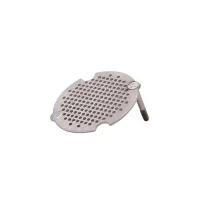


Hey there! I'm a supplier of Copper Electrowinning Titanium Anodes, and today I wanna chat about something super important in the copper electrowinning process: the influence of anode material impurities on copper electrowinning with titanium anodes.
First off, let's quickly go over what copper electrowinning is. It's a key process in the copper industry where copper is extracted from a solution using an electric current. Titanium anodes are widely used in this process because they're corrosion - resistant and can withstand the harsh chemical environment. But here's the thing, impurities in the anode material can really mess things up.
Types of Impurities and Their Sources
There are various types of impurities that can find their way into anode materials. One common type is metallic impurities. These can come from the raw materials used to make the anode. For example, if the titanium used to make the anode has traces of iron, nickel, or other metals, these can act as impurities. Another source could be the manufacturing process itself. If the equipment isn't properly cleaned between different production runs, cross - contamination can occur, introducing unwanted metals into the anode.
Non - metallic impurities are also a concern. Things like sulfur, phosphorus, and carbon can be present. Sulfur, for instance, might come from the chemicals used during the anode coating process. If the chemicals aren't of high - quality, they can leave behind sulfur residues on the anode surface.


Impact on Anode Performance
Let's start with how these impurities affect the anode's performance. One of the most significant impacts is on the anode's overpotential. Overpotential is the extra voltage needed to drive an electrochemical reaction. When there are impurities in the anode material, they can increase the overpotential. This means that more energy is required to carry out the copper electrowinning process. As a supplier, I know that this is a big deal for my customers because higher energy consumption means higher production costs.
Impurities can also cause uneven corrosion of the anode. For example, if there are areas on the anode where metallic impurities are concentrated, these areas are more likely to corrode faster than the rest of the anode. This uneven corrosion can lead to a shorter anode lifespan. A shorter lifespan means that my customers have to replace the anodes more frequently, which again adds to their costs.
Impact on Copper Quality
The quality of the copper produced is also affected by anode material impurities. When impurities are present in the anode, they can dissolve into the electrolyte solution during the electrowinning process. These dissolved impurities can then be deposited on the cathode along with the copper. This leads to a decrease in the purity of the copper. In the copper market, high - purity copper commands a higher price. So, if the copper produced has a lower purity due to anode impurities, my customers will get less money for their product.
For example, if there are iron impurities in the anode, iron ions can be released into the electrolyte. These iron ions can then be reduced at the cathode and end up in the copper deposit. This not only reduces the copper's purity but can also affect its physical and chemical properties, making it less suitable for certain applications.
Impact on Coating Integrity
Most titanium anodes used in copper electrowinning are coated with a special material, usually a mixed metal oxide (MMO). Impurities in the anode material can have a negative impact on the integrity of this coating. The impurities can react with the coating material, causing it to degrade more quickly.
A degraded coating means that the anode loses its effectiveness. The MMO coating is designed to enhance the anode's performance by reducing overpotential and improving the efficiency of the electrochemical reaction. When the coating is damaged, these benefits are lost. For example, if there are sulfur impurities in the anode, they can react with the MMO coating, forming compounds that can flake off the anode surface. This exposes the underlying titanium to the harsh electrolyte environment, leading to more rapid corrosion.
Solutions to Mitigate the Impact of Impurities
As a supplier, I'm always looking for ways to help my customers deal with these issues. One solution is to use high - quality raw materials. When I source the titanium for my anodes, I make sure it meets strict purity standards. This reduces the likelihood of metallic impurities being present in the anode.
Another approach is to improve the manufacturing process. By implementing strict quality control measures, we can minimize the introduction of impurities during production. For example, we clean our equipment thoroughly between different production runs to prevent cross - contamination.
Regular maintenance and monitoring of the anodes can also help. Customers can periodically check the anode's performance and look for signs of corrosion or coating degradation. If any issues are detected early, they can take corrective actions, such as replacing the anode or adjusting the operating conditions.
Our Product Range
We offer a wide range of Copper Electrowinning Titanium Anodes to meet different customer needs. For example, we have the MMO Coated Titanium Disc Anode. This type of anode is great for applications where a large surface area is required. The MMO coating provides excellent performance and durability, even in the presence of some impurities.
Our MMO Tubular Titanium Anode is another popular option. The tubular design allows for efficient electrolyte flow, which can improve the overall efficiency of the electrowinning process. And if you're looking for a high - end option, our Platinum - Coated Titanium Anode offers superior performance and long - term stability.
Conclusion
In conclusion, the influence of anode material impurities on copper electrowinning with titanium anodes is significant. These impurities can affect the anode's performance, the quality of the copper produced, and the integrity of the anode coating. As a supplier, I'm committed to providing high - quality anodes with minimal impurities. By using high - quality raw materials, strict manufacturing processes, and offering a diverse product range, I aim to help my customers overcome these challenges.
If you're in the copper electrowinning business and are looking for reliable titanium anodes, don't hesitate to reach out. We can have a detailed discussion about your specific needs and how our products can fit into your operations. Let's work together to improve your production efficiency and reduce costs.
References
- Bockris, J. O'M., & Reddy, A. K. N. (1970). Modern Electrochemistry. Plenum Press.
- Bard, A. J., & Faulkner, L. R. (2001). Electrochemical Methods: Fundamentals and Applications. Wiley.
- Durney, C. H., & Iskander, M. F. (1984). Introduction to Modern Electromagnetics. McGraw - Hill.