



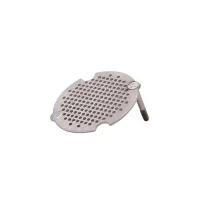


Water treatment is a critical process in various industries, and the use of titanium anodes has become increasingly popular due to their excellent corrosion resistance, high catalytic activity, and long service life. In the water treatment field, the water flow pattern around the titanium anode can significantly influence its performance. As a leading supplier of titanium anodes for water treatment, we have in - depth knowledge and practical experience regarding how water flow patterns impact the anode's functionality.
Characteristics of Titanium Anodes for Water Treatment
Titanium anodes offer several advantages in water treatment applications. They are typically coated with precious metal oxides, such as ruthenium oxide, iridium oxide, or a combination of both. These coatings enhance the anode's catalytic activity, allowing for efficient electrochemical reactions during water treatment. For example, in the electrolysis of water, the anode can facilitate the oxidation of various contaminants, such as organic pollutants, heavy metals, and microorganisms.
We offer a wide range of titanium anodes for different water treatment needs, including the Titanium Mesh Anode for Water Treatment, Titanium Anode for Electrolytic Wastewater Treatment, and Titanium Anode for Antifouling Electrolysis. Each type of anode is designed to meet specific requirements in different water treatment scenarios.
Influence of Water Flow Pattern on Mass Transfer
One of the primary ways water flow pattern affects the titanium anode is through mass transfer. Mass transfer refers to the movement of substances, such as ions and reactants, to and from the anode surface. In a stagnant or slow - flowing water environment, the rate of mass transfer is limited. Reactants may not reach the anode surface quickly enough, and reaction products may accumulate around the anode, leading to a decrease in reaction efficiency.
For instance, in the case of electrolytic wastewater treatment, if the water flow is too slow, the organic pollutants in the wastewater may not be effectively transported to the anode surface for oxidation. This can result in incomplete treatment and lower removal rates of contaminants. On the other hand, a well - designed water flow pattern can enhance mass transfer. Turbulent flow, for example, can break up the boundary layer around the anode, allowing for better mixing of reactants and more efficient transport of substances to and from the anode surface.


Impact on Anode Fouling
Water flow pattern also plays a crucial role in preventing anode fouling. Fouling occurs when unwanted substances, such as scale, biofilms, or particulate matter, accumulate on the anode surface, which can reduce the anode's performance and lifespan. In a low - flow or laminar flow situation, the likelihood of fouling is higher. The slow - moving water allows particles and contaminants to settle on the anode surface, and biofilms can easily form due to the relatively stable environment.
However, a high - velocity or turbulent water flow can help prevent fouling. The force of the flowing water can physically remove the deposited substances from the anode surface. Additionally, the increased mixing caused by turbulent flow can prevent the formation of stagnant zones where fouling is more likely to occur. For our Titanium Anode for Antifouling Electrolysis, a proper water flow pattern is essential to ensure its long - term antifouling performance.
Effect on Anode Temperature Distribution
The water flow pattern can influence the temperature distribution on the anode surface. During the electrochemical reactions at the anode, heat is generated. In a poor - flow situation, heat may accumulate on the anode surface, leading to an increase in temperature. High temperatures can have several negative effects on the anode. It can accelerate the degradation of the anode coating, reduce the anode's catalytic activity, and even cause physical damage to the anode structure.
A well - controlled water flow can act as a coolant, dissipating the heat generated at the anode surface. Turbulent flow, in particular, can enhance heat transfer by increasing the contact between the water and the anode surface. This helps maintain a more uniform temperature distribution across the anode, which is beneficial for its long - term stability and performance.
Optimization of Water Flow Pattern for Titanium Anodes
To fully utilize the advantages of titanium anodes in water treatment, it is necessary to optimize the water flow pattern. This can be achieved through several methods. First, the design of the water treatment reactor plays a critical role. The shape, size, and arrangement of the anode and the water inlet and outlet ports can all affect the water flow pattern. For example, the use of baffles or flow - guiding structures in the reactor can help create a more turbulent and uniform water flow around the anode.
Second, the flow rate of water also needs to be carefully controlled. Different water treatment processes and anode types may require different optimal flow rates. For some highly reactive water treatment processes, a higher flow rate may be necessary to ensure efficient mass transfer and prevent fouling. However, in other cases, an excessively high flow rate may cause excessive wear on the anode surface.
Case Studies
We have conducted numerous case studies to demonstrate the importance of water flow pattern on titanium anode performance. In one case, a wastewater treatment plant was using our Titanium Anode for Electrolytic Wastewater Treatment with a relatively low - flow water supply. The treatment efficiency was low, and the anode showed signs of fouling after a short period of operation.
After optimizing the water flow pattern by installing flow - guiding baffles and adjusting the water flow rate, the treatment efficiency increased significantly. The removal rate of organic pollutants increased by over 30%, and the fouling on the anode surface was greatly reduced. The anode's service life was also extended, resulting in lower operating costs for the wastewater treatment plant.
Conclusion
In conclusion, the water flow pattern has a profound impact on the performance of titanium anodes in water treatment. It affects mass transfer, anode fouling, temperature distribution, and overall treatment efficiency. As a reliable supplier of Titanium Mesh Anode for Water Treatment, Titanium Anode for Electrolytic Wastewater Treatment, and Titanium Anode for Antifouling Electrolysis, we understand the significance of optimizing the water flow pattern for the best use of our products.
If you are interested in our titanium anodes for water treatment or need further advice on optimizing the water flow pattern in your water treatment system, we encourage you to contact us for in - depth procurement discussions. Our team of experts is ready to assist you in selecting the most suitable anode and providing customized solutions.
References
- Bockris, J. O'M., & Reddy, A. K. N. (1970). Modern Electrochemistry. Plenum Press.
- Comninellis, C. (1994). Electrocatalysis in the electrochemical conversion/combustion of organic pollutants for waste water treatment. Electrochimica Acta, 39(11 - 12), 1857 - 1862.
- Lin, J. G., & others. (2008). Design and optimization of reactor for electrochemical advanced oxidation processes. Journal of Environmental Science and Health, Part A, 43(12), 1347 - 1353.