


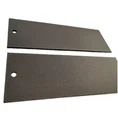
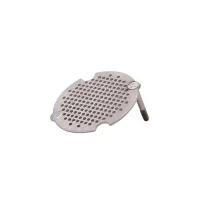


Hey there! As a supplier of Titanium Anode For Chrome Plating, I often get asked about the hardness of chrome plating achieved with a titanium anode. So, let's dive right into it and explore this topic in detail.
First off, let's understand what chrome plating is. Chrome plating is a technique used to deposit a thin layer of chromium onto a metal surface. This process not only enhances the appearance of the object but also provides excellent corrosion resistance and wear resistance. And when it comes to achieving high - quality chrome plating, the choice of anode plays a crucial role. That's where our Titanium Anode for Chrome Plating comes in.
Titanium anodes have several advantages in the chrome - plating process. They are highly durable, resistant to corrosion in the harsh plating environments, and can maintain a stable performance over a long period. These properties make them an ideal choice for achieving consistent and high - quality chrome plating.
Now, let's talk about the hardness of the chrome plating. The hardness of chrome plating is typically measured using the Rockwell or Vickers hardness scales. The hardness of chrome plating achieved with a titanium anode can vary depending on several factors.


One of the key factors is the plating bath composition. The concentration of chromium salts, additives, and other chemicals in the plating bath can significantly affect the hardness of the chrome layer. For example, the presence of certain additives can promote the formation of a more compact and hard chrome structure. Our team has conducted extensive research on optimizing the plating bath composition to ensure that the chrome plating achieved with our titanium anodes has excellent hardness.
The plating parameters also play a vital role. Parameters such as current density, temperature, and plating time can all influence the hardness of the chrome plating. Higher current densities generally lead to a harder chrome layer, but there is a limit. If the current density is too high, it can cause problems such as burning of the plating layer or uneven deposition. We've fine - tuned these parameters through countless experiments to find the sweet spot that results in the hardest and most uniform chrome plating.
Another important aspect is the surface preparation of the substrate. A well - prepared substrate surface allows for better adhesion of the chrome layer and can contribute to its overall hardness. The substrate should be thoroughly cleaned and polished before the plating process to remove any contaminants or oxides.
In general, chrome plating achieved with a titanium anode can have a hardness ranging from around 600 to 1000 HV (Vickers hardness). This level of hardness makes the chrome - plated objects highly resistant to wear and abrasion. For instance, in automotive applications, chrome - plated parts such as bumpers and wheels need to withstand the rigors of daily use, and the high hardness provided by our titanium - anode - assisted chrome plating ensures their long - term durability.
Our Platinum Coated Titanium Anodes are also a great option in some cases. The platinum coating further enhances the anode's performance, especially in high - demand plating processes. It can improve the conductivity and stability of the anode, which in turn can have a positive impact on the hardness and quality of the chrome plating.
Similarly, our High Stability Electroplating Titanium Anode is designed to provide a stable and consistent performance during the plating process. This stability is crucial for achieving uniform and high - hardness chrome plating. With its advanced design and high - quality materials, it can help you get the best results in your chrome - plating operations.
We've received a lot of positive feedback from our customers who have used our titanium anodes for chrome plating. They've noticed a significant improvement in the hardness and quality of their chrome - plated products. Whether it's for small - scale manufacturing or large - scale industrial applications, our anodes have proven to be reliable and effective.
If you're in the business of chrome plating and are looking to improve the hardness and quality of your chrome - plated products, we're here to help. Our team of experts can provide you with in - depth technical support and guidance on using our titanium anodes effectively. We can also assist you in optimizing your plating process to achieve the best possible results.
So, if you're interested in learning more about our Titanium Anode For Chrome Plating or want to discuss your specific requirements, don't hesitate to reach out. We're eager to start a conversation and see how we can work together to take your chrome - plating operations to the next level.
References
- "Electroplating Engineering Handbook" by Lowenheim F. A.
- "Modern Electroplating" by Schlesinger M. and Paunovic M.