



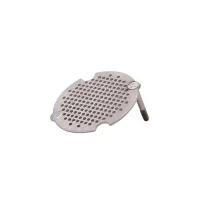


In the realm of water treatment, the electrodeionization (EDI) system stands as a remarkable technology that combines ion exchange resins and ion exchange membranes to produce high - purity water. At the heart of an EDI system lies the titanium anode, a crucial component that significantly influences the system's performance. One of the key factors that can have a profound impact on the titanium anode in an EDI system is the pH value of the solution. As a supplier of Titanium Anode In EDI System, I am well - versed in the complex relationship between solution pH and the performance of titanium anodes.


Understanding the Basics of an EDI System and Titanium Anodes
Before delving into the effects of pH on titanium anodes, it is essential to understand the basic principles of an EDI system. EDI is a continuous, chemical - free water purification process that uses electricity to remove ions from water. The system consists of a series of compartments separated by ion - exchange membranes, with electrodes (anode and cathode) at either end. When an electric current is applied, ions are attracted to the electrodes, and the ion - exchange membranes selectively allow the passage of cations or anions, resulting in the production of purified water.
Titanium anodes are widely used in EDI systems due to their excellent corrosion resistance, high electrical conductivity, and long service life. Titanium itself is a relatively inert metal, but it can be coated with various catalytic materials such as iridium oxide, ruthenium oxide, or platinum to enhance its electrochemical performance. These coatings enable the anode to efficiently generate oxygen or chlorine gas during the electrolysis process, which is crucial for the removal of ions from the water.
The Impact of Low pH on Titanium Anodes
When the pH of the solution in an EDI system is low (acidic), several chemical and electrochemical reactions can occur that affect the titanium anode. At low pH values, the concentration of hydrogen ions (H⁺) in the solution is high. One of the primary concerns at low pH is the potential for the dissolution of the catalytic coating on the titanium anode.
In an acidic environment, the catalytic coating may react with the hydrogen ions, leading to its gradual dissolution. For example, if the coating contains metal oxides such as iridium oxide (IrO₂), the following reaction can occur:
IrO₂ + 4H⁺ + 4e⁻ → Ir + 2H₂O
This reaction results in the loss of the catalytically active material from the anode surface, which can significantly reduce the anode's efficiency in generating oxygen or chlorine gas. As a result, the overall performance of the EDI system may decline, leading to a decrease in the quality of the purified water produced.
Another issue associated with low pH is the increased risk of corrosion of the titanium substrate. Although titanium is generally corrosion - resistant, in extremely acidic conditions, it can react with the acid to form titanium ions (Ti⁴⁺). The reaction can be represented as:
Ti + 4H⁺ → Ti⁴⁺+ 2H₂
The formation of titanium ions not only weakens the anode structure but can also contaminate the water being treated. This can lead to fouling of the ion - exchange membranes and other components in the EDI system, further reducing its performance and lifespan.
The Impact of High pH on Titanium Anodes
On the other hand, when the pH of the solution is high (alkaline), different chemical and electrochemical processes come into play. At high pH values, the concentration of hydroxide ions (OH⁻) is high. One of the main effects of high pH on titanium anodes is the formation of a passive oxide layer on the anode surface.
Titanium has a natural tendency to form a thin, protective oxide layer (TiO₂) in the presence of oxygen. In an alkaline environment, this oxide layer can thicken due to the reaction between titanium and hydroxide ions:
Ti + 4OH⁻ → TiO₂ + 2H₂O + 4e⁻
While the passive oxide layer can provide some protection against corrosion, it can also increase the electrical resistance of the anode. As the thickness of the oxide layer increases, the voltage required to drive the electrochemical reactions at the anode surface also increases. This can lead to higher energy consumption in the EDI system and a decrease in its overall efficiency.
In addition, at very high pH values, the catalytic coating on the titanium anode may also be affected. Some catalytic materials may react with the hydroxide ions, leading to changes in their chemical composition and catalytic activity. For example, certain metal oxides may undergo hydrolysis reactions in an alkaline environment, which can alter their crystal structure and reduce their ability to catalyze the desired electrochemical reactions.
Optimal pH Range for Titanium Anodes in EDI Systems
To ensure the optimal performance and longevity of titanium anodes in EDI systems, it is crucial to maintain the pH of the solution within a suitable range. Generally, a pH range of 5 - 9 is considered optimal for most EDI systems using titanium anodes.
Within this pH range, the catalytic coating on the titanium anode remains stable, and the risk of corrosion of the titanium substrate is minimized. The electrical resistance of the anode remains relatively low, allowing for efficient electrochemical reactions to occur with minimal energy consumption. Moreover, the ion - exchange membranes and other components in the EDI system are also less likely to be damaged or fouled within this pH range.
Monitoring and Controlling pH in EDI Systems
As a supplier of Titanium Anode In EDI System, I understand the importance of monitoring and controlling the pH of the solution in EDI systems. Regular pH measurements should be taken at various points in the system to ensure that the pH remains within the optimal range.
There are several methods available for controlling the pH of the solution in an EDI system. One common approach is to use a pH controller, which can automatically add acid or base to the water to adjust the pH as needed. Another method is to pre - treat the feed water to remove any substances that may cause significant pH fluctuations. For example, if the feed water contains high levels of carbon dioxide, it can be removed through degasification to prevent the formation of carbonic acid, which can lower the pH of the solution.
Other Applications of Titanium Anodes and Their pH Sensitivity
Titanium anodes are not only used in EDI systems but also in other water treatment applications such as swimming pool disinfection and electrodialysis. In swimming pool disinfection, Titanium Anode Tablets For Swimming Pool Disinfection are used to generate chlorine gas or other disinfectants through electrolysis. Similar to EDI systems, the pH of the pool water can affect the performance of the titanium anode. In an acidic pool environment, the catalytic coating may dissolve, reducing the anode's ability to generate disinfectants. In an alkaline environment, the formation of a passive oxide layer can increase the electrical resistance and decrease the efficiency of the electrolysis process.
In electrodialysis, Titanium Anode for Electrodialysis is used to drive the separation of ions from a solution. The pH of the solution can influence the selectivity of the ion - exchange membranes and the performance of the anode. Maintaining the appropriate pH is crucial for achieving efficient ion separation and high - quality product water.
Conclusion
In conclusion, the pH value of the solution in an EDI system has a significant impact on the performance and lifespan of titanium anodes. Low pH can lead to the dissolution of the catalytic coating and corrosion of the titanium substrate, while high pH can cause the formation of a passive oxide layer and changes in the catalytic activity of the coating. By maintaining the pH within the optimal range of 5 - 9 and implementing appropriate monitoring and control measures, the efficiency and longevity of the titanium anode can be maximized, ensuring the reliable operation of the EDI system.
As a trusted supplier of Titanium Anode In EDI System, I am committed to providing high - quality titanium anodes and technical support to help our customers optimize the performance of their EDI systems. If you are interested in learning more about our products or have any questions regarding the impact of pH on titanium anodes, please feel free to contact us for further discussion and potential procurement opportunities.
References
- Bockris, J. O'M., & Reddy, A. K. N. (1970). Modern Electrochemistry. Plenum Press.
- Bard, A. J., & Faulkner, L. R. (2001). Electrochemical Methods: Fundamentals and Applications. Wiley.
- Lin, C. F., & Lee, D. J. (2004). Electrochemical water treatment technologies for the removal of contaminants from water and wastewater. Journal of Hazardous Materials, 114(1 - 3), 1 - 15.