



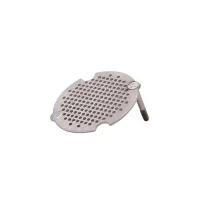


In the realm of wastewater treatment, the titanium anode stands as a pivotal component, revolutionizing the way we approach water purification. As a leading supplier of titanium anodes for water treatment, I am excited to delve into the intricate workings of these remarkable devices and their significance in wastewater treatment systems.


The Basics of Titanium Anodes
Titanium anodes are electrodes made primarily of titanium, a metal known for its exceptional corrosion resistance, high strength, and low density. In wastewater treatment applications, titanium anodes are coated with a thin layer of precious metals or metal oxides, such as ruthenium, iridium, or platinum. These coatings enhance the anode's electrochemical properties, making it more efficient and durable in harsh wastewater environments.
Electrochemical Reactions in Wastewater Treatment
The operation of a titanium anode in a wastewater treatment system is based on electrochemical reactions. When an electric current is applied to the anode and cathode in a wastewater treatment cell, a series of chemical reactions occur at the electrode surfaces. At the titanium anode, oxidation reactions take place, while reduction reactions occur at the cathode.
One of the most common electrochemical reactions in wastewater treatment is the oxidation of organic pollutants. Organic compounds in wastewater are broken down into simpler molecules, such as carbon dioxide and water, through a process called electro-oxidation. This reaction is facilitated by the high potential difference between the anode and the wastewater, which drives the transfer of electrons from the organic molecules to the anode surface.
In addition to organic oxidation, titanium anodes can also be used to remove inorganic pollutants from wastewater. For example, heavy metals such as lead, mercury, and cadmium can be removed through electroplating or electrocoagulation processes. In electroplating, the heavy metal ions in the wastewater are reduced to their metallic form at the cathode and deposited on its surface. In electrocoagulation, the anode releases metal ions into the wastewater, which react with the pollutants to form insoluble precipitates that can be easily removed from the water.
Advantages of Titanium Anodes in Wastewater Treatment
There are several advantages to using titanium anodes in wastewater treatment systems. Firstly, titanium anodes have a long service life due to their excellent corrosion resistance. This means that they can withstand the harsh chemical and physical conditions in wastewater treatment plants without significant degradation, reducing the need for frequent replacement and maintenance.
Secondly, titanium anodes are highly efficient in removing pollutants from wastewater. The electro-oxidation and electrocoagulation processes facilitated by titanium anodes can achieve high removal rates of organic and inorganic pollutants, even at low concentrations. This makes them an ideal choice for treating a wide range of wastewater types, including industrial wastewater, municipal sewage, and agricultural runoff.
Thirdly, titanium anodes are environmentally friendly. Unlike some traditional wastewater treatment methods that rely on the use of chemicals, electrochemical treatment using titanium anodes produces fewer secondary pollutants. The electro-oxidation process can break down organic pollutants into harmless by-products, while electrocoagulation can remove heavy metals without the need for chemical precipitation agents.
Applications of Titanium Anodes in Wastewater Treatment
Titanium anodes are used in a variety of wastewater treatment applications, each tailored to specific treatment needs. One common application is in the treatment of industrial wastewater. Industries such as chemical manufacturing, food processing, and metal finishing generate large volumes of wastewater containing high concentrations of organic and inorganic pollutants. Titanium anodes can be used to treat this wastewater by removing pollutants and reducing its chemical oxygen demand (COD) and biological oxygen demand (BOD).
Another important application is in the treatment of municipal sewage. Municipal wastewater treatment plants use titanium anodes in various treatment processes, such as primary treatment, secondary treatment, and tertiary treatment. In primary treatment, titanium anodes can be used to remove large particles and debris from the wastewater through electrocoagulation. In secondary treatment, electro-oxidation can be used to further break down organic pollutants and reduce the BOD of the wastewater. In tertiary treatment, titanium anodes can be used to remove nutrients such as nitrogen and phosphorus, which can cause eutrophication in water bodies.
Titanium anodes are also used in the treatment of agricultural runoff. Agricultural activities, such as farming and livestock production, generate large amounts of wastewater containing fertilizers, pesticides, and animal manure. These pollutants can contaminate surface water and groundwater sources, posing a threat to human health and the environment. Titanium anodes can be used to treat agricultural runoff by removing pollutants and reducing its nutrient content.
Our Product Offerings
As a supplier of titanium anodes for water treatment, we offer a wide range of products to meet the diverse needs of our customers. Our Titanium Anode for Fruit and Vegetable Machine is specifically designed for use in fruit and vegetable washing machines, where it can effectively remove pesticides and other contaminants from the surface of fruits and vegetables.
Our Titanium Electrolyzer for Water Treatment is a complete electrochemical treatment system that includes a titanium anode, a cathode, and a power supply. This system can be used for a variety of wastewater treatment applications, such as industrial wastewater treatment, municipal sewage treatment, and agricultural runoff treatment.
We also offer Titanium Anode In EDI System, which is used in electrodeionization (EDI) systems for the production of high-purity water. EDI is a continuous, chemical-free water purification process that uses ion exchange membranes and electrodes to remove ions from water. Our titanium anodes in EDI systems are designed to provide high efficiency and long service life, ensuring reliable operation of the EDI system.
Contact Us for Procurement
If you are interested in our titanium anodes for water treatment or have any questions about their application in wastewater treatment systems, please do not hesitate to contact us. Our team of experts is ready to provide you with detailed information and technical support to help you choose the right product for your specific needs. We look forward to the opportunity to work with you and contribute to the development of a cleaner and more sustainable environment.
References
- "Electrochemical Oxidation of Organic Pollutants in Wastewater Treatment" - Journal of Electrochemical Science and Technology
- "Titanium Anodes for Electrochemical Water Treatment" - International Journal of Electrochemical Science
- "Wastewater Treatment Technologies: An Overview" - Water Research