


In the quieter corners of China's economy, a transformation led by titanium materials is reshaping the country's chlor-alkali industry.
Once constrained by high energy consumption, heavy pollution, and short equipment lifespans, this critical sector - which supports over 30% of downstream industries - is now moving rapidly toward green and low-carbon production, driven by the large-scale adoption of titanium.
This shift marks China's steady rise from a latecomer to a world leader in advanced titanium applications.

Technological Breakthrough: Titanium Reshapes the Core of Chlor-Alkali Production
In chlor-alkali electrolysis, the ion-exchange membrane cell faces one of the harshest working environments - strong acid, high temperature, and severe corrosion.
For decades, graphite electrodes survived only a few months, and mercury cells left behind heavy pollution.
The introduction of titanium changed that reality. Its corrosion resistance, structural strength, and stable thermal performance made it a practical and durable choice for both anode meshes and electrolyzer bodies.
By using precision-etched titanium meshes, the effective surface area can be tripled. When combined with ruthenium–iridium coatings, the cells run more efficiently - roughly 15% higher electrolysis output and around 150 kWh of electricity saved per ton of caustic soda.
Cost Breakthrough: China's Titanium Industry Enables Scalable Adoption
Titanium's industrial use was once limited by cost. In the 1990s, 1 mm titanium plate relied entirely on imports and cost nearly ¥800 per kg. After China developed a full domestic supply chain in 2005, the price dropped to ¥120 per kg, opening the door for widespread application.
Today, China accounts for 60% of global titanium production, with chemical-grade titanium making up 35% of the total. High-purity titanium alloys produced by companies such as BaoTi Group now meet international standards at only 60% of the cost of imported materials.
In coating technology, a rare-earth-modified electrode developed by the Institute of Metal Research, Chinese Academy of Sciences extended anode lifespan to 15 years with 97.5% current efficiency.
The related patents have been registered in over 20 countries, marking China's shift from titanium importer to technology exporter.
This achievement has reduced operating costs for chlor-alkali producers and reshaped the global titanium industry landscape.
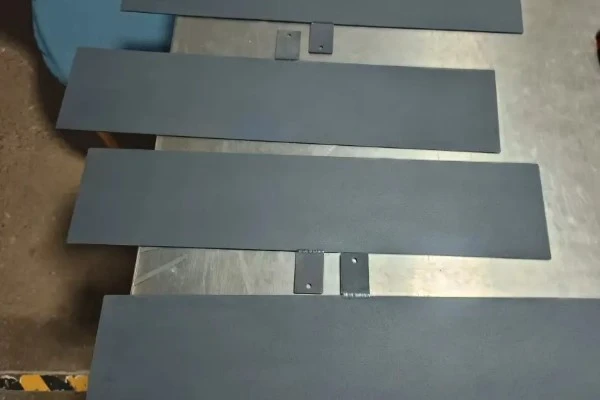
Toward a Green Future: Titanium Powers the "Zero-Carbon Factory" Vision
As China advances its dual-carbon strategy, titanium materials are helping the chlor-alkali sector move toward carbon neutrality.
A leading company has piloted a "titanium-based electrolyzer + renewable power" project using solar electricity, cutting carbon emissions by 62%.
Next-generation 3D porous titanium electrodes under development could improve electrolysis efficiency by another 5%, accelerating the shift to the "green power era."
Industry reports show that titanium's long lifespan enables 95% recyclability and a substantial reduction in lifecycle costs, providing key material support for the circular economy.
Industrial Upgrade: Material Innovation Reinforces Manufacturing Foundations
From water bottle caps to EV battery separators, the products of the chlor-alkali industry reach every corner of daily life - and titanium has redefined how these materials are made.
For a medium-sized plant producing 100,000 tons of caustic soda annually, adopting titanium anode electrolyzers increased its overall annual benefit by 12 million yuan.
Over the past decade, 100% of new projects have adopted titanium materials, and more than 85% of existing plants have completed technological upgrades - a clear sign that China's chlor-alkali industry has transformed from energy-intensive to green benchmark.
"At the heart of this transformation is independent material innovation," said one senior engineer involved in the industry's upgrade.
"Titanium's deep application not only solved long-standing bottlenecks in chlor-alkali production but also strengthened China's position in advanced chemical materials."
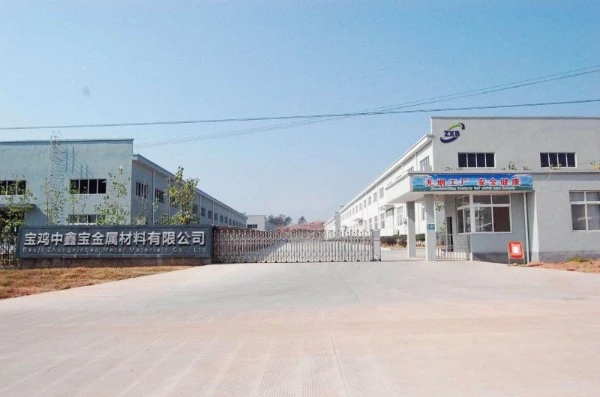
The continued expansion of titanium applications is helping make chlor-alkali production cleaner, safer, and more efficient. At Baoji Zhongxinbao Metal Materials Co., Ltd., we focus on the practical side of titanium anode innovation - stability, coating quality, and long-term reliability. Our Ruthenium–Iridium Coated Titanium Anode Plate has proven its performance in chlor-alkali membrane systems, known for its steady voltage, strong catalytic activity, and long operating life under chlorine evolution conditions.