





Hey there! As a supplier of titanium anodes for water treatment, I often get asked about the oxidation capacity of these anodes. So, I thought I'd take a moment to break it down for you all.
First off, let's talk about what oxidation capacity means in the context of water treatment. Oxidation is a chemical reaction that involves the transfer of electrons. In water treatment, oxidation is used to break down contaminants, remove impurities, and disinfect water. The oxidation capacity of a titanium anode refers to its ability to facilitate these oxidation reactions effectively.
Titanium anodes are popular in water treatment for several reasons. One of the main advantages is their high corrosion resistance. Titanium forms a passive oxide layer on its surface, which protects it from corrosion in harsh chemical environments. This means that titanium anodes can last a long time, even when exposed to acidic or alkaline water, making them a cost - effective solution for long - term water treatment applications.
Now, let's dig into how titanium anodes achieve oxidation in water treatment. There are a few different mechanisms at play. One of the most common is the generation of hydroxyl radicals. When an electric current is applied to a titanium anode in water, water molecules can be oxidized at the anode surface. This process can generate highly reactive hydroxyl radicals (·OH). These radicals are extremely powerful oxidants. They can react with a wide range of organic and inorganic contaminants in the water, breaking them down into smaller, less harmful compounds.
For example, hydroxyl radicals can react with organic pollutants such as pesticides, pharmaceuticals, and dyes. They can break the carbon - carbon and carbon - hydrogen bonds in these organic molecules, ultimately converting them into carbon dioxide and water. This is a great way to remove these persistent pollutants from water sources.
Another way titanium anodes contribute to oxidation is through the production of other oxidizing species. Depending on the electrolyte composition in the water, titanium anodes can also generate chlorine, ozone, and hydrogen peroxide. Chlorine is a well - known disinfectant that can kill bacteria, viruses, and other pathogens in water. Ozone is an even more powerful oxidant than chlorine and can be used for both disinfection and the removal of organic contaminants. Hydrogen peroxide is also a strong oxidant that can help in breaking down pollutants and improving water quality.
The oxidation capacity of a titanium anode depends on several factors. One of the key factors is the coating on the titanium surface. Different coatings can enhance the anode's ability to generate specific oxidizing species. For instance, a titanium anode with a ruthenium - iridium oxide coating is very effective at generating chlorine in chloride - containing water. This type of anode is commonly used in swimming pool disinfection and industrial wastewater treatment where the presence of chloride ions is significant.
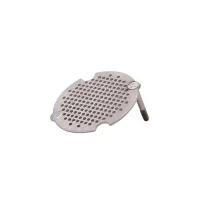
The surface area of the anode also plays a role. A larger surface area provides more sites for oxidation reactions to occur. This means that an anode with a larger surface area can generally achieve a higher oxidation capacity. Anodes come in different shapes and sizes, such as flat plates, mesh, and baskets. The Titanium Anode Basket for Water Treatment is a great example. Its basket - like structure provides a large surface area for efficient oxidation reactions, making it suitable for applications where a high - volume water treatment is required.
The current density applied to the anode is another important factor. A higher current density generally leads to a higher rate of oxidation. However, there is a limit to how much current density can be applied. If the current density is too high, it can cause over - oxidation, which may lead to the formation of unwanted by - products or damage to the anode itself.
In electrolytic wastewater treatment, titanium anodes are often used to remove heavy metals, organic pollutants, and nitrogen - containing compounds. The Titanium Anode for Electrolytic Wastewater Treatment is specifically designed for this purpose. It can generate the necessary oxidizing species to break down complex contaminants in wastewater. For example, it can oxidize heavy metals from their lower oxidation states to higher oxidation states, making them easier to precipitate and remove from the water.


The Titanium - Based Lead Dioxide Anode is another type of anode that offers high oxidation capacity. Lead dioxide has excellent electrocatalytic properties, which can enhance the generation of oxidizing species at the anode surface. It is particularly effective in the oxidation of organic pollutants and can be used in both industrial and municipal water treatment applications.
In summary, the oxidation capacity of a titanium anode in water treatment is quite remarkable. Through the generation of hydroxyl radicals, chlorine, ozone, and other oxidizing species, titanium anodes can effectively remove a wide range of contaminants from water. Their high corrosion resistance and the ability to be customized with different coatings make them a versatile and reliable option for various water treatment needs.
If you're in the market for a water treatment solution and are interested in the benefits of titanium anodes, I'd love to have a chat with you. Whether you're dealing with industrial wastewater, municipal water supply, or a small - scale swimming pool, we can find the right titanium anode solution for your specific requirements. Reach out to us to start a discussion about your water treatment project and how our titanium anodes can help you achieve your water quality goals.
References
- "Water Treatment: Principles and Design" by David W. Hendricks, George Tchobanoglous, and Franklin L. Burton
- "Electrochemical Oxidation for Wastewater Treatment" by Carlos A. Martínez - Huitle and Enric Brillas