


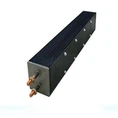



Water treatment is a critical process in various industries and daily life, ensuring the availability of clean and safe water. Titanium anodes have emerged as a popular choice in water treatment systems due to their excellent corrosion resistance, high electrical conductivity, and long service life. One important aspect to consider when using titanium anodes in water treatment is their effect on water oxygen content. In this blog, as a supplier of titanium anodes for water treatment, I will delve into this topic and explore the implications of using titanium anodes on the oxygen levels in water.
Understanding the Role of Titanium Anodes in Water Treatment
Titanium anodes are commonly used in electrochemical water treatment processes, such as electrocoagulation, electro - oxidation, and electro - disinfection. In these processes, an electric current is passed through the water via the anode and cathode. The anode plays a crucial role in initiating chemical reactions in the water.
When a titanium anode is used in water treatment, it can generate different types of reactive species depending on the applied voltage and the composition of the water. For instance, in electro - oxidation, the anode can produce hydroxyl radicals ((·OH)), which are powerful oxidizing agents that can break down organic pollutants in the water.
Impact on Water Oxygen Content
Oxygen Generation
One of the primary ways titanium anodes affect water oxygen content is through the generation of oxygen. During the electrolysis process, water molecules can be oxidized at the anode surface according to the following reaction:
[2H_2O(l)\rightarrow O_2(g)+4H^+(aq)+4e^-]
This reaction occurs when the applied potential is high enough to overcome the over - potential for oxygen evolution. The rate of oxygen generation depends on several factors, including the anode material, the current density, the temperature, and the pH of the water.
Titanium anodes, especially those coated with precious metal oxides such as iridium oxide ((IrO_2)) or ruthenium oxide ((RuO_2)), are efficient in catalyzing the oxygen evolution reaction. The coating enhances the electro - catalytic activity of the anode, allowing for a lower over - potential and a higher rate of oxygen production.
In some water treatment applications, such as in aquaculture or in the treatment of water for industrial processes where high oxygen levels are required, the oxygen generation from titanium anodes can be beneficial. Higher oxygen content in water can improve the survival rate of aquatic organisms, enhance the efficiency of aerobic biological treatment processes, and prevent the formation of anaerobic conditions that can lead to the production of foul - smelling compounds like hydrogen sulfide ((H_2S)).
Oxygen Consumption
On the other hand, titanium anodes can also indirectly lead to oxygen consumption in water. As mentioned earlier, the anodes can generate reactive species such as hydroxyl radicals. These radicals react with organic and inorganic substances in the water, and in some cases, the oxidation reactions consume dissolved oxygen.
For example, when hydroxyl radicals react with organic pollutants, they can oxidize the pollutants to carbon dioxide ((CO_2)) and water. This oxidation process requires oxygen from the water. If the rate of oxygen consumption due to the oxidation of pollutants is higher than the rate of oxygen generation at the anode, the overall oxygen content in the water may decrease.
Applications and Considerations
Aquaculture
In aquaculture, maintaining an appropriate oxygen level in the water is crucial for the health and growth of fish and other aquatic organisms. Titanium anodes can be used in water treatment systems to generate oxygen and improve water quality. For example, Titanium Anode Basket for Water Treatment can be installed in fish ponds or aquariums to provide a continuous supply of oxygen.
However, it is important to carefully control the current density and the operating time of the anode to avoid excessive oxygen generation, which can lead to supersaturation of oxygen in the water. Supersaturated oxygen can cause gas bubble disease in fish, which can be fatal.


Industrial Water Treatment
In industrial water treatment, titanium anodes are used in processes such as the removal of heavy metals, the degradation of organic dyes, and the disinfection of water. In some cases, the oxygen generated by the anode can be used to enhance the efficiency of subsequent biological treatment steps. For example, in the treatment of wastewater from the textile industry, Titanium Anode In EDI System can be used to generate oxygen and oxidize the organic dyes before the water enters the biological treatment unit.
But, in other industrial processes where low oxygen levels are required, such as in the production of certain chemicals or in the treatment of water for boiler systems, the oxygen generation from titanium anodes may need to be minimized. This can be achieved by adjusting the operating parameters or by using alternative anode materials or treatment methods.
Drinking Water Treatment
In drinking water treatment, titanium anodes can be used for disinfection purposes. The oxygen generated during the electrolysis process can also help in the oxidation of some contaminants, such as iron and manganese. Titanium Electrolyzer for Water Treatment can be integrated into the water treatment system to provide a safe and effective way of treating drinking water.
However, the increase in oxygen content may also have some potential drawbacks. For example, higher oxygen levels can promote the growth of certain microorganisms, which may require additional disinfection steps to ensure the safety of the drinking water.
Factors Affecting the Effect on Oxygen Content
Anode Coating
The type of coating on the titanium anode has a significant impact on the oxygen generation rate. As mentioned earlier, precious metal oxide coatings such as (IrO_2) and (RuO_2) are highly catalytic for the oxygen evolution reaction. Different coatings may have different electro - catalytic activities, and the choice of coating depends on the specific water treatment application.
Current Density
The current density, which is the amount of current per unit area of the anode, also affects the oxygen generation rate. Higher current densities generally lead to a higher rate of oxygen production. However, extremely high current densities can cause over - heating of the anode and may also lead to the formation of other unwanted by - products.
Water Composition
The composition of the water, including the presence of ions, organic matter, and dissolved gases, can influence the oxygen generation and consumption processes. For example, the presence of chloride ions ((Cl^-)) in the water can compete with the oxygen evolution reaction at the anode, leading to the production of chlorine gas ((Cl_2)) instead of oxygen.
Conclusion
Titanium anodes have a significant effect on water oxygen content in water treatment processes. They can generate oxygen through the oxidation of water molecules at the anode surface, which can be beneficial in some applications such as aquaculture and certain industrial processes. However, they can also indirectly lead to oxygen consumption through the oxidation of pollutants in the water.
As a supplier of titanium anodes for water treatment, we understand the importance of providing high - quality products that can meet the specific needs of different water treatment applications. Our anodes are designed to be efficient, durable, and customizable to ensure optimal performance.
If you are interested in our titanium anodes for water treatment and would like to discuss your specific requirements, please feel free to contact us for a detailed consultation. We are committed to providing you with the best solutions for your water treatment needs.
References
- Chen, G. (2004). Electrochemical technologies in wastewater treatment. Separation and Purification Technology, 38(1), 11 - 41.
- Comninellis, C. (1994). Electrocatalysis in the electrochemical conversion/combustion of organic pollutants for waste water treatment. Electrochimica Acta, 39(11 - 12), 1857 - 1862.
- Li, X., & Yuan, Z. (2017). Recent advances in electrode materials for electro - catalytic oxidation of organic pollutants in wastewaters. Journal of Electroanalytical Chemistry, 803, 1 - 13.