


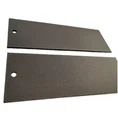
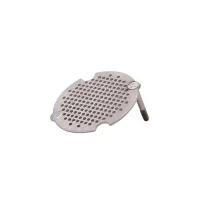


Adhesion between the platinum coating and the titanium substrate in a platinum-coated titanium anode is a critical factor that significantly influences the anode's performance, durability, and overall effectiveness in various electrochemical applications. As a leading supplier of Platinum-Coated Titanium Anodes, we understand the importance of this adhesion and have extensive knowledge and experience in ensuring high-quality bonding between the platinum layer and the titanium base.
Understanding the Basics of Platinum-Coated Titanium Anodes
Platinum-coated titanium anodes are widely used in a variety of industries, including electroplating, electrochemical synthesis, cathodic protection, and water treatment. These anodes combine the excellent corrosion resistance of titanium with the high electrical conductivity and catalytic activity of platinum. The titanium substrate provides a strong and stable support structure, while the platinum coating offers a reactive surface for electrochemical reactions.
The Significance of Adhesion
The adhesion between the platinum coating and the titanium substrate is crucial for several reasons. Firstly, it ensures the mechanical integrity of the anode. During operation, the anode is subjected to various mechanical stresses, such as vibration, thermal expansion and contraction, and fluid flow. A strong adhesion prevents the platinum coating from peeling off or delaminating from the titanium substrate, which could lead to a loss of functionality and a decrease in the anode's lifespan.
Secondly, good adhesion is essential for maintaining electrical contact between the platinum coating and the titanium substrate. A weak bond can result in increased electrical resistance at the interface, leading to higher energy consumption and reduced efficiency of the electrochemical process. In some cases, poor adhesion can even cause electrical arcing, which can damage the anode and other components of the electrochemical system.
Thirdly, the adhesion affects the corrosion resistance of the anode. If the platinum coating is not well-adhered to the titanium substrate, corrosive agents can penetrate the interface and attack the titanium, leading to corrosion and degradation of the anode. This can not only shorten the anode's lifespan but also contaminate the electrolyte and affect the quality of the electrochemical process.
Factors Affecting Adhesion
Several factors can influence the adhesion between the platinum coating and the titanium substrate. These include the surface preparation of the titanium substrate, the coating process, the composition and thickness of the platinum coating, and the operating conditions of the anode.
Surface Preparation
Proper surface preparation of the titanium substrate is crucial for achieving good adhesion. The surface of the titanium should be clean, smooth, and free of contaminants, such as oil, grease, oxides, and dirt. This can be achieved through a series of cleaning and etching processes, such as degreasing, pickling, and sandblasting. These processes not only remove surface contaminants but also create a rough surface topography, which increases the surface area available for bonding and improves the mechanical interlocking between the platinum coating and the titanium substrate.
Coating Process
The coating process also plays a significant role in determining the adhesion of the platinum coating. There are several methods for depositing platinum on a titanium substrate, including electroplating, chemical vapor deposition (CVD), and physical vapor deposition (PVD). Each method has its own advantages and disadvantages, and the choice of method depends on various factors, such as the desired coating thickness, the surface morphology, and the cost.
In electroplating, a platinum salt solution is used as the electrolyte, and an electric current is passed through the solution to deposit platinum ions onto the titanium substrate. The adhesion of the electroplated platinum coating can be improved by optimizing the plating parameters, such as the current density, the plating time, and the composition of the electrolyte.
CVD and PVD are vacuum-based coating processes that involve the deposition of platinum atoms onto the titanium substrate from a vapor phase. These processes can produce high-quality platinum coatings with excellent adhesion, but they require specialized equipment and are generally more expensive than electroplating.
Coating Composition and Thickness
The composition and thickness of the platinum coating can also affect its adhesion to the titanium substrate. In some cases, adding a thin intermediate layer between the platinum coating and the titanium substrate can improve the adhesion. This intermediate layer can act as a buffer zone, reducing the stress at the interface and improving the chemical compatibility between the two materials.
The thickness of the platinum coating also needs to be carefully controlled. A too-thin coating may not provide sufficient protection or catalytic activity, while a too-thick coating can increase the stress at the interface and reduce the adhesion.
Operating Conditions
The operating conditions of the anode, such as the temperature, the pH of the electrolyte, and the presence of corrosive agents, can also affect the adhesion between the platinum coating and the titanium substrate. High temperatures can cause thermal expansion and contraction of the materials, which can lead to stress at the interface and reduce the adhesion. A highly acidic or alkaline electrolyte can also attack the titanium substrate and the platinum coating, leading to corrosion and degradation of the anode.
Our Approach to Ensuring Adhesion
As a Platinum-Coated Titanium Anode supplier, we take several measures to ensure the strong adhesion between the platinum coating and the titanium substrate. Firstly, we pay great attention to the surface preparation of the titanium substrate. We use a multi-step cleaning and etching process to ensure that the surface is clean, smooth, and free of contaminants. This creates an ideal surface for the deposition of the platinum coating.
Secondly, we have developed a proprietary coating process that allows us to deposit a high-quality platinum coating with excellent adhesion. Our process is carefully optimized to control the coating thickness, composition, and morphology, ensuring that the platinum coating is well-bonded to the titanium substrate.


Thirdly, we conduct extensive quality control tests on our anodes to ensure that the adhesion meets our high standards. We use various testing methods, such as scratch testing, peel testing, and electrochemical impedance spectroscopy, to evaluate the adhesion strength and the integrity of the anode.
Applications of Our Platinum-Coated Titanium Anodes
Our Platinum-Coated Titanium Anodes are widely used in various applications. For example, in the field of cathodic protection, our anodes are used to protect metal structures, such as pipelines, storage tanks, and offshore platforms, from corrosion. The strong adhesion between the platinum coating and the titanium substrate ensures the long-term reliability and effectiveness of the cathodic protection system.
In the electroplating industry, our anodes are used to deposit various metals, such as gold, silver, and copper, onto different substrates. The high electrical conductivity and catalytic activity of the platinum coating, combined with the strong adhesion, result in a high-quality electroplating process with excellent uniformity and adhesion of the plated metal.
We also offer a range of specialized anodes, such as MMO Coated Titanium Disc Anode, Lead Dioxide Titanium Anode, and Copper Electrowinning Titanium Anode, which are designed to meet the specific requirements of different applications.
Contact Us for Your Anode Needs
If you are looking for high-quality Platinum-Coated Titanium Anodes with excellent adhesion and performance, we are here to help. Our team of experts can provide you with professional advice and customized solutions based on your specific requirements. Whether you need an anode for a small-scale laboratory experiment or a large industrial application, we have the expertise and resources to meet your needs. Contact us today to discuss your anode requirements and start a successful partnership.
References
- Davis, J. R. (Ed.). (2001). Titanium and Titanium Alloys: A Technical Guide. ASM International.
- Revie, R. W., & Uhlig, H. H. (2008). Uhlig's Corrosion Handbook. Wiley-Interscience.
- Schlesinger, M., & Paunovic, M. (2010). Modern Electroplating. Wiley.