



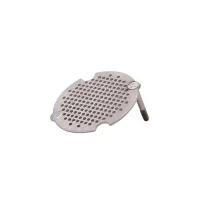


As a supplier of Titanium - Based Lead Dioxide Anodes, I've witnessed firsthand the growing interest in these anodes across various industries. Their unique properties make them highly desirable for applications such as electroplating, wastewater treatment, and electrochemical synthesis. However, like any technology, using Titanium - Based Lead Dioxide Anodes comes with its fair share of challenges. In this blog, I'll delve into some of the most significant challenges that users may encounter when working with these anodes.
1. Anode Preparation and Coating Adhesion
One of the primary challenges in using Titanium - Based Lead Dioxide Anodes is the preparation of the titanium substrate and ensuring proper adhesion of the lead dioxide coating. Titanium has a natural oxide layer that can interfere with the bonding of the lead dioxide coating. If the surface preparation is not done correctly, the coating may delaminate or peel off during operation, leading to reduced anode performance and a shorter lifespan.
To address this issue, the titanium substrate must undergo a series of surface treatment steps, including cleaning, etching, and activation. These processes help to remove impurities, roughen the surface, and create a reactive layer that promotes better adhesion of the lead dioxide coating. However, these steps require careful control of process parameters such as temperature, time, and chemical concentrations. Any deviation from the optimal conditions can result in poor coating adhesion and compromised anode performance.
2. Coating Uniformity and Thickness Control
Achieving a uniform and consistent coating thickness is crucial for the performance of Titanium - Based Lead Dioxide Anodes. A non - uniform coating can lead to uneven current distribution, which may cause localized overheating and accelerated coating degradation. Additionally, variations in coating thickness can affect the anode's electrochemical activity and efficiency.
The deposition of the lead dioxide coating is typically carried out using electrochemical methods such as electrodeposition. Controlling the coating thickness during electrodeposition requires precise control of parameters such as current density, deposition time, and electrolyte composition. Even small fluctuations in these parameters can result in significant variations in coating thickness. Moreover, the shape and geometry of the anode can also influence the coating uniformity. Complex - shaped anodes may be more challenging to coat evenly, as the current distribution can be affected by the presence of edges, corners, and irregular surfaces.
3. Chemical Stability in Harsh Environments
Titanium - Based Lead Dioxide Anodes are often used in harsh chemical environments, such as acidic or alkaline solutions, high - temperature conditions, and in the presence of aggressive ions. In these environments, the lead dioxide coating can be susceptible to chemical attack and dissolution. For example, in acidic solutions, lead dioxide can react with hydrogen ions to form soluble lead salts, leading to the loss of the active coating material.
To improve the chemical stability of the anode, various strategies can be employed. One approach is to modify the composition of the lead dioxide coating by incorporating additives or dopants. These additives can enhance the corrosion resistance of the coating and reduce its susceptibility to chemical attack. Another strategy is to use protective layers or coatings on top of the lead dioxide layer to provide an additional barrier against chemical degradation. However, these protective layers must be carefully selected to ensure that they do not interfere with the electrochemical performance of the anode.
4. Mechanical Stability and Wear Resistance
During operation, Titanium - Based Lead Dioxide Anodes may be subjected to mechanical stresses, such as vibration, agitation, and abrasion. These mechanical forces can cause the coating to crack, chip, or delaminate, leading to a decrease in anode performance. The mechanical stability of the anode is particularly important in applications where the anode is in contact with moving parts or where there is a high - velocity flow of the electrolyte.
To improve the mechanical stability of the anode, the coating must have good adhesion to the substrate and sufficient flexibility to withstand mechanical stresses. Additionally, the choice of the titanium substrate material and its mechanical properties can also influence the overall mechanical stability of the anode. For example, using a titanium alloy with higher strength and toughness may help to reduce the risk of coating damage due to mechanical forces.
5. Cost and Production Efficiency
The production of Titanium - Based Lead Dioxide Anodes can be relatively expensive compared to other types of anodes. The cost of raw materials, such as titanium and lead salts, as well as the complex manufacturing processes involved in anode production, contribute to the high cost. Moreover, the low production efficiency, especially when producing anodes with complex shapes or large sizes, can further increase the cost per unit.
To reduce the cost, suppliers need to optimize the production process, improve the utilization rate of raw materials, and increase production efficiency. This may involve the development of new manufacturing techniques, such as advanced coating methods or automated production lines. Additionally, exploring alternative raw materials or reducing the consumption of expensive materials can also help to lower the production cost.
6. Environmental and Safety Concerns
Lead is a toxic heavy metal, and the use of Lead Dioxide in anodes raises environmental and safety concerns. During the production, use, and disposal of Titanium - Based Lead Dioxide Anodes, there is a risk of lead contamination. For example, if the anode coating is damaged or dissolved, lead ions can be released into the environment, posing a threat to human health and the ecosystem.
To address these concerns, strict environmental and safety regulations must be followed during the entire lifecycle of the anode. This includes proper handling and storage of raw materials, waste management during production, and safe disposal of used anodes. Additionally, research is being conducted to develop lead - free alternatives or to minimize the amount of lead used in the anode while maintaining its performance.
Applications and Related Links
Despite these challenges, Titanium - Based Lead Dioxide Anodes have found wide applications in many fields. For example, in water treatment, they are used in systems such as the Titanium Anode In EDI System. These anodes play a crucial role in the electrochemical processes that help to remove impurities and contaminants from water.
In desalination plants, Desalination Plant Titanium Anode are used to facilitate the separation of salt from water through electrolysis. Their high electrochemical activity and stability make them suitable for this demanding application.


Moreover, in general water treatment plants, Titanium Anode for Water Treatment Plant are employed to treat various types of wastewater, including industrial effluents and domestic sewage.
Conclusion and Call to Action
In conclusion, while Titanium - Based Lead Dioxide Anodes offer many advantages in terms of their electrochemical performance, they also face several challenges related to anode preparation, coating quality, chemical and mechanical stability, cost, and environmental concerns. As a supplier, we are constantly working on research and development to overcome these challenges and improve the performance and reliability of our anodes.
If you are interested in learning more about our Titanium - Based Lead Dioxide Anodes or would like to discuss your specific application requirements, please feel free to contact us. We are committed to providing high - quality products and professional technical support to meet your needs. Let's work together to find the best anode solutions for your projects.
References
- Chen, J., & Li, H. (2018). Electrochemical performance and stability of titanium - based lead dioxide anodes. Journal of Electroanalytical Chemistry, 823, 1 - 8.
- Wang, X., & Zhang, Y. (2019). Surface modification of titanium substrates for improved adhesion of lead dioxide coatings. Electrochimica Acta, 305, 234 - 242.
- Liu, Z., & Zhao, S. (2020). Environmental impact and safety assessment of lead - containing anodes in electrochemical processes. Environmental Science & Technology, 54(12), 7213 - 7220.