


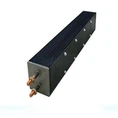
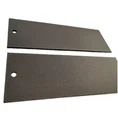


As a supplier of Titanium - Based Lead Dioxide Anodes, I've witnessed firsthand the growing demand for these anodes in various industrial applications, from water treatment to electroplating. Optimizing the preparation process of Titanium - Based Lead Dioxide Anodes is crucial for enhancing their performance, durability, and cost - effectiveness. In this blog, I'll share some insights and strategies on how to achieve this optimization.
Understanding the Basics of Titanium - Based Lead Dioxide Anodes
Titanium - Based Lead Dioxide Anodes consist of a titanium substrate and a lead dioxide coating. The titanium substrate provides mechanical strength and corrosion resistance, while the lead dioxide coating offers high catalytic activity and electrical conductivity. These anodes are widely used in electrochemical processes due to their excellent performance in harsh environments.
Substrate Preparation
The first step in optimizing the preparation process is proper substrate preparation. The titanium substrate must be thoroughly cleaned to remove any impurities, oxides, or contaminants. This can be achieved through a series of steps:
- Mechanical Cleaning: Use sandblasting or grinding to roughen the surface of the titanium substrate. This increases the surface area and improves the adhesion of the lead dioxide coating.
- Chemical Cleaning: Immerse the substrate in a cleaning solution, such as a mixture of hydrochloric acid and hydrogen peroxide. This helps to remove any remaining organic or inorganic contaminants.
- Etching: Etch the substrate in a suitable etchant, like oxalic acid solution. Etching creates a micro - rough surface that promotes better coating adhesion.
Coating Deposition
The deposition of the lead dioxide coating is a critical step in the anode preparation process. There are several methods for depositing lead dioxide, including electrochemical deposition and thermal decomposition.
- Electrochemical Deposition: This is the most common method for preparing Titanium - Based Lead Dioxide Anodes. In this process, the titanium substrate is immersed in a lead - containing electrolyte solution, and a direct current is applied. The lead ions in the solution are reduced and deposited on the substrate surface as lead dioxide.
- Electrolyte Composition: The composition of the electrolyte solution plays a crucial role in the quality of the coating. It typically contains lead salts, such as lead nitrate or lead acetate, and additives to improve the coating properties. For example, the addition of fluorides can enhance the stability and catalytic activity of the lead dioxide coating.
- Deposition Conditions: The deposition conditions, including current density, temperature, and deposition time, need to be carefully controlled. A higher current density can increase the deposition rate, but it may also lead to a porous and less - adherent coating. Optimal deposition conditions should be determined through experimentation.
- Thermal Decomposition: In this method, a lead - containing precursor is applied to the titanium substrate and then heated to a high temperature. The precursor decomposes, leaving behind a lead dioxide coating. This method can produce coatings with different crystal structures and properties compared to electrochemical deposition.
Doping and Modification
Doping the lead dioxide coating with other elements can significantly improve the anode performance. Some common dopants include antimony, bismuth, and fluorine.
- Antimony Doping: Antimony doping can enhance the electrical conductivity and catalytic activity of the lead dioxide coating. It also improves the stability of the coating in acidic environments.
- Bismuth Doping: Bismuth doping can increase the oxygen evolution overpotential, which is beneficial in applications where oxygen evolution needs to be suppressed.
- Fluorine Doping: Fluorine doping can improve the corrosion resistance and stability of the lead dioxide coating. It also reduces the formation of lead sulfate, which can degrade the anode performance.
Post - Treatment
After the coating deposition, post - treatment processes can be carried out to further improve the anode properties.


- Heat Treatment: Heat treatment can improve the crystallinity and adhesion of the lead dioxide coating. It can also relieve internal stresses in the coating.
- Surface Polishing: Polishing the anode surface can reduce the roughness and improve the mass transfer characteristics of the anode.
Quality Control
Quality control is essential throughout the preparation process to ensure the consistency and performance of the Titanium - Based Lead Dioxide Anodes.
- Coating Thickness Measurement: Use techniques such as X - ray fluorescence or scanning electron microscopy to measure the coating thickness. A uniform coating thickness is crucial for consistent anode performance.
- Adhesion Testing: Conduct adhesion tests, such as the scratch test or the tape test, to evaluate the adhesion strength of the coating to the substrate.
- Electrochemical Testing: Perform electrochemical tests, such as cyclic voltammetry and polarization curves, to evaluate the electrochemical performance of the anode.
Applications and Benefits of Optimized Anodes
Optimized Titanium - Based Lead Dioxide Anodes offer several advantages in various applications:
- Water Treatment: In water treatment processes, such as Titanium Anode for Antifouling Electrolysis and Titanium Anode for Electrodialysis, these anodes can effectively remove contaminants, such as heavy metals, organic compounds, and microorganisms. Their high catalytic activity and corrosion resistance ensure long - term operation and low maintenance costs.
- Electroplating: In electroplating applications, optimized anodes can provide a uniform and high - quality metal deposition. They can also improve the efficiency of the electroplating process and reduce the consumption of energy and chemicals.
- Other Applications: These anodes are also used in other electrochemical processes, such as battery manufacturing and chemical synthesis. Their excellent performance makes them a preferred choice in many industrial applications.
Conclusion
Optimizing the preparation process of Titanium - Based Lead Dioxide Anodes is a complex but rewarding task. By carefully controlling the substrate preparation, coating deposition, doping, post - treatment, and quality control steps, we can produce anodes with superior performance, durability, and cost - effectiveness. If you're interested in our Titanium - Based Lead Dioxide Anodes or have any questions about the optimization process, please feel free to contact us for procurement and further discussion. We're committed to providing high - quality products and excellent technical support to meet your specific needs.
References
- Trasatti, S. Electrodes of Conductive Metallic Oxides. Part II: Applications. Electrochimica Acta, 1980, 25(7), 737 - 749.
- Comninellis, C. Electrocatalysis in the electrochemical conversion/combustion of organic pollutants for waste water treatment. Electrochimica Acta, 1994, 39(11 - 12), 1857 - 1862.
- Feng, Y. - P.; Li, X. - H.; Zhang, J. - C. Preparation and performance of PbO₂ electrode doped with rare earth elements for electro - oxidation of phenol. Journal of Hazardous Materials, 2009, 162(2 - 3), 1274 - 1280.