


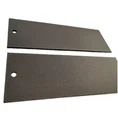
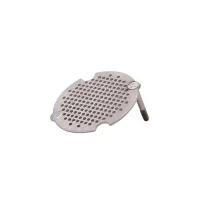


Hey there! As a supplier of Iridium - Tantalum Coated Titanium Anodes, I've been getting a lot of questions lately about how to control the coating process parameters. So, I thought I'd share some insights based on my experience in this field.
First off, let's talk about why controlling these parameters is so important. The performance of an Iridium - Tantalum Coated Titanium Anode depends heavily on the quality of the coating. A well - controlled coating process can ensure uniform distribution of the iridium - tantalum layer, which in turn affects the anode's conductivity, corrosion resistance, and overall lifespan.
Substrate Preparation
The first step in the coating process is substrate preparation. The titanium substrate needs to be clean and free of any contaminants. We usually start by degreasing the titanium. You can use a simple solvent like acetone or a specialized degreasing agent. This helps to remove any oil, grease, or dirt on the surface.
After degreasing, we perform a surface etching. This is crucial because it creates a rough surface on the titanium, which allows the iridium - tantalum coating to adhere better. We typically use an acid solution, like hydrochloric acid or sulfuric acid, for etching. The concentration of the acid and the etching time are important parameters. If the acid is too concentrated or the etching time is too long, it can damage the titanium substrate. On the other hand, if the acid is too weak or the time is too short, the surface won't be rough enough for good adhesion.
Coating Solution Preparation
Next, we move on to preparing the coating solution. The coating solution contains iridium and tantalum compounds, usually in the form of salts. The ratio of iridium to tantalum in the solution is a key parameter. Different applications may require different ratios. For example, in some electroplating processes, a higher iridium content may be needed for better conductivity, while in other cases, a more balanced ratio may be optimal for corrosion resistance.
The concentration of the coating solution also matters. If the concentration is too high, the coating may be too thick and uneven. If it's too low, the coating may not be thick enough to provide the desired performance. We usually adjust the concentration based on the specific requirements of the anode and the coating method we're using.


Coating Application
There are several methods for applying the coating solution to the titanium substrate, such as dip - coating, spray - coating, and brush - coating. Each method has its own advantages and disadvantages.
Dip - coating is a simple and cost - effective method. You just dip the titanium substrate into the coating solution for a certain period of time. The dipping time and the number of dips are important parameters. Longer dipping times and more dips generally result in a thicker coating. However, you need to be careful not to over - dip, as this can lead to a non - uniform coating.
Spray - coating allows for more precise control of the coating thickness and distribution. You can adjust the spray pressure, spray distance, and spray time to get the desired coating. But it requires more specialized equipment and a well - controlled environment to avoid overspray and ensure uniform coverage.
Brush - coating is a more manual method. It's suitable for small - scale production or for applying the coating to complex - shaped substrates. The pressure and the number of brush strokes are the main parameters to control.
Heat Treatment
After applying the coating solution, the anode needs to go through a heat treatment process. Heat treatment helps to convert the iridium and tantalum compounds in the coating into their oxide forms, which are more stable and have better performance.
The heat treatment temperature and time are critical parameters. If the temperature is too low or the time is too short, the conversion may not be complete, and the coating may not have the desired properties. If the temperature is too high or the time is too long, it can cause the coating to crack or delaminate from the substrate.
We usually use a furnace for heat treatment. The furnace needs to be well - calibrated to ensure accurate temperature control. Some furnaces also allow for a controlled atmosphere, which can further improve the quality of the coating.
Quality Control
Throughout the coating process, it's important to perform quality control checks. We use various techniques to monitor the quality of the coating. For example, we can use microscopy to check the coating thickness and uniformity. X - ray diffraction can be used to analyze the crystal structure of the coating and ensure that the iridium and tantalum have been properly converted to their oxide forms.
We also test the electrical conductivity and corrosion resistance of the anode. If the test results don't meet the required standards, we may need to adjust the coating process parameters and repeat the coating process.
Applications and Related Products
Iridium - Tantalum Coated Titanium Anodes have a wide range of applications, especially in the electroplating industry. If you're in the chrome plating business, you might be interested in our Titanium Anode for Chrome Plating. It's designed to provide high - quality plating results with excellent stability.
For those who need an anode with high stability in electroplating processes, our High Stability Electroplating Titanium Anode is a great choice. It can withstand harsh electroplating conditions and has a long service life.
We also offer Mesh Platinum - Coated Titanium Anode, which is suitable for applications where a large surface area and good conductivity are required.
Contact for Purchase
If you're interested in our Iridium - Tantalum Coated Titanium Anodes or have any questions about the coating process, feel free to reach out to us. We're always happy to discuss your specific needs and provide you with the best solutions. Whether you're a small - scale manufacturer or a large - scale industrial user, we can work with you to ensure you get the right anode for your application.
References
- "Electrochemical Engineering" by Enrique R. Gonzalez
- "Handbook of Electroplating Engineering" by Oscar K. Medved
So, that's a wrap on how to control the coating process parameters of an Iridium - Tantalum Coated Titanium Anode. I hope this blog post has been helpful to you. If you have any more questions, don't hesitate to ask!