


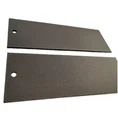
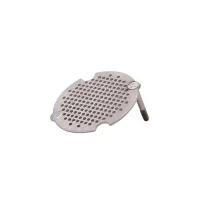


Hey there! I'm a supplier of Compact Electrolysis Titanium Anodes, and today I wanna chat about how the porosity of these anodes can affect their performance.
First off, let's understand what porosity in a compact electrolysis titanium anode means. Porosity refers to the presence of tiny holes or pores within the anode material. These pores can vary in size, shape, and distribution. You might be wondering why this even matters. Well, it turns out that porosity has a huge impact on several key aspects of the anode's performance.
One of the most important things affected by porosity is the surface area. When an anode has a higher porosity, it effectively increases its surface area. This is a big deal because a larger surface area means more sites for electrochemical reactions to take place. In the context of electrolysis, more reaction sites can lead to a higher current density. Current density is basically the amount of electric current flowing through a unit area of the anode surface. A higher current density can speed up the electrolysis process, which is often a desirable outcome in many industrial applications.
For example, in Acidic Water Electrolysis Titanium Anode systems, a higher current density can result in a faster production of hydrogen and oxygen gases. This can be crucial for industries that rely on these gases, such as the chemical and energy sectors. The increased surface area due to porosity allows for more efficient transfer of electrons between the anode and the electrolyte, which in turn promotes the electrochemical reactions that produce these gases.
Another aspect influenced by porosity is the mass transfer. Mass transfer refers to the movement of substances (like ions) between the anode and the electrolyte. In an anode with appropriate porosity, the pores act as channels for the ions to move in and out of the anode. This facilitates better contact between the anode material and the electrolyte, ensuring a more uniform distribution of reactants and products.


Let's take Titanium Anode for Ionizers as an example. In ionizers, the anode needs to interact with the water to produce ionized water. The porosity of the anode can enhance the mass transfer of ions between the anode and the water. This leads to a more effective ionization process, resulting in better-quality ionized water. If the anode has low porosity, the movement of ions can be restricted, leading to a less efficient ionization process and potentially lower-quality ionized water.
However, porosity isn't all sunshine and rainbows. There are also some potential drawbacks. One of the main issues is the mechanical strength of the anode. As the porosity increases, the anode material becomes more porous and less dense. This can reduce its mechanical strength, making it more prone to breakage or deformation. In industrial applications where the anode is subjected to mechanical stress, such as in high - pressure electrolysis cells, a less mechanically strong anode can be a significant problem.
Another concern is the long - term stability of the anode. High porosity can sometimes lead to a faster degradation of the anode material. The pores can act as entry points for corrosive substances in the electrolyte, which can gradually eat away at the anode. This can shorten the lifespan of the anode and increase the maintenance costs for the electrolysis system.
So, finding the right balance in porosity is crucial. It's not a one - size - fits - all situation. Different applications require different levels of porosity to achieve optimal performance. For instance, in some applications where high current density and fast mass transfer are the top priorities, a relatively higher porosity might be acceptable, even if it means sacrificing a bit of mechanical strength. On the other hand, in applications where long - term stability and mechanical integrity are essential, a lower porosity might be more appropriate.
As a supplier of Compact Electrolysis Titanium Anode, we understand the importance of this balance. We work closely with our customers to understand their specific needs and requirements. We use advanced manufacturing techniques to control the porosity of our anodes precisely. This allows us to customize the anodes to suit different applications, whether it's for acidic water electrolysis, ionizers, or other industrial processes.
If you're in the market for high - quality compact electrolysis titanium anodes, we'd love to hear from you. We have a team of experts who can help you choose the right anode with the optimal porosity for your specific application. Whether you're looking to improve the efficiency of your electrolysis process, enhance the quality of your products, or reduce your maintenance costs, we're here to assist you. Don't hesitate to reach out and start a conversation about your anode needs.
In conclusion, the porosity of a compact electrolysis titanium anode plays a vital role in its performance. It affects the surface area, current density, mass transfer, mechanical strength, and long - term stability of the anode. By carefully controlling the porosity, we can optimize the anode's performance for different applications. If you're interested in learning more or making a purchase, just get in touch, and we'll be happy to guide you through the process.
References
- "Electrochemical Engineering Principles" by John Newman and Karen E. Thomas --Alyea
- "Handbook of Electrode Processes" by A. J. Bard and L. R. Faulkner