


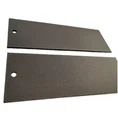
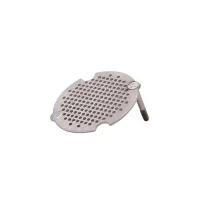


Hey there! As a supplier of titanium anodes for water treatment, I'm super excited to dive into how these bad boys work in a membrane bioreactor (MBR) system. It's a topic that combines the best of both worlds: advanced water treatment technology and the power of titanium anodes. So, let's get started!
What's a Membrane Bioreactor System?
First things first, let's quickly go over what a membrane bioreactor system is. In simple terms, an MBR system is a type of wastewater treatment process that combines biological treatment with membrane filtration. It's like having a double - whammy to clean up that dirty water.
The biological part involves using microorganisms to break down organic matter in the wastewater. These little guys, like bacteria, feast on the pollutants, turning them into simpler, less harmful substances. Meanwhile, the membrane filtration step acts as a super - fine sieve, separating the treated water from the solid waste and any remaining contaminants.
The Role of Titanium Anodes in MBR Systems
Now, let's talk about the star of the show: the titanium anode. Titanium anodes play a crucial role in enhancing the performance of an MBR system. They do this through a process called electro - chemical oxidation.
When an electric current is applied to the titanium anode in the MBR system, it creates an environment where chemical reactions can take place. At the anode surface, water molecules and other substances in the wastewater are oxidized. This oxidation process can break down a wide range of pollutants, including organic compounds, heavy metals, and even some types of pathogens.
One of the great things about titanium anodes is their durability. Titanium is a super - strong and corrosion - resistant metal. In the harsh environment of a wastewater treatment system, where there are all sorts of chemicals and contaminants, a regular anode would quickly degrade. But titanium anodes can withstand these conditions for a long time, which means less maintenance and replacement costs in the long run.
How the Electro - chemical Process Works
Let's dig a little deeper into the electro - chemical process that happens at the titanium anode. When the electric current flows through the anode, it causes a transfer of electrons. At the anode, oxidation occurs, which means that substances lose electrons.
For example, organic compounds in the wastewater can be oxidized into carbon dioxide and water. This is a huge deal because it reduces the amount of organic matter in the water, making it cleaner. Heavy metals can also be oxidized and precipitated out of the water, which makes them easier to remove.
Another important aspect of this electro - chemical process is the production of reactive oxygen species (ROS). ROS, such as hydroxyl radicals, are highly reactive and can break down even the most stubborn pollutants. These radicals can attack the chemical bonds in organic compounds, breaking them down into smaller, more manageable pieces.
Benefits of Using Titanium Anodes in MBR Systems
There are several benefits to using titanium anodes in MBR systems.
1. Improved Treatment Efficiency
As we've seen, the electro - chemical oxidation process at the titanium anode can break down a wide range of pollutants. This means that the MBR system can achieve a higher level of water treatment. It can remove more contaminants, resulting in cleaner water that meets or exceeds regulatory standards.
2. Reduced Fouling
Fouling is a major problem in MBR systems. It occurs when solids and contaminants build up on the membrane surface, reducing its efficiency. Titanium anodes can help reduce fouling by breaking down the organic matter that causes it. This means that the membranes can operate for longer periods without needing to be cleaned or replaced, saving both time and money.
3. Disinfection
The production of ROS at the titanium anode also has a disinfection effect. These reactive species can kill bacteria, viruses, and other pathogens in the wastewater. This is an added bonus, as it helps to ensure that the treated water is safe for reuse or discharge into the environment.
Different Applications of Titanium Anodes in Water Treatment
Titanium anodes have a wide range of applications in water treatment beyond MBR systems. For example, they are used in EDI (Electrodeionization) systems. In an EDI system, the titanium anode helps to remove ions from the water through an electro - chemical process. You can learn more about this application by checking out Titanium Anode In EDI System.
They are also used in electrolytic wastewater treatment. In this process, the titanium anode is used to break down pollutants in the wastewater through electro - chemical oxidation. To find out more about this application, visit Titanium Anode for Electrolytic Wastewater Treatment.
Another application is electrodialysis. In electrodialysis, the titanium anode is used to drive the separation of ions in the water. If you're interested in this application, you can read more at Titanium Anode for Electrodialysis.
Choosing the Right Titanium Anode for Your MBR System
When it comes to choosing a titanium anode for your MBR system, there are a few things to consider.
1. Coating
The coating on the titanium anode is very important. Different coatings have different properties and are suitable for different types of wastewater. For example, some coatings are better at breaking down organic compounds, while others are more effective at removing heavy metals.
2. Size and Shape
The size and shape of the anode can also affect its performance. You need to choose an anode that is the right size for your MBR system. A too - small anode may not be able to provide enough electro - chemical oxidation, while a too - large anode can be a waste of resources.


3. Current Density
The current density is the amount of electric current per unit area of the anode. You need to choose an anode that can operate at the right current density for your system. If the current density is too high, it can cause the anode to wear out quickly. If it's too low, the electro - chemical oxidation process may not be effective.
Wrapping Up and Reaching Out
In conclusion, titanium anodes are a game - changer in MBR systems. They enhance the treatment efficiency, reduce fouling, and provide disinfection. With their durability and versatility, they are a great investment for any water treatment facility.
If you're in the market for a high - quality titanium anode for your MBR system or any other water treatment application, I'd love to have a chat with you. Whether you have questions about the product, need help choosing the right anode, or are ready to place an order, don't hesitate to reach out. Let's work together to make your water treatment process more efficient and effective!
References
- Huang, C. P., & Zhang, H. (2004). Electrochemical advanced oxidation processes: A review on their application to synthetic and real wastewaters. Journal of Hazardous Materials, 114(1 - 3), 1 - 10.
- Kim, J. H., & Kang, J. W. (2009). Electrochemical treatment of textile wastewater using a boron - doped diamond anode. Journal of Hazardous Materials, 161(1), 60 - 66.
- Zhang, X., & Li, Y. (2010). Application of electro - Fenton process for the treatment of landfill leachate. Journal of Environmental Sciences, 22(10), 1507 - 1513.